School Meals Funding Is an Invaluable Investment in Humanity
Hungry children do not build prosperous economies or peaceful societies. School meals represent one of the most affordable and effective investments we can ever make in humanity.

Hungry children do not build prosperous economies or peaceful societies. School meals represent one of the most affordable and effective investments we can ever make in humanity.
“While one segment of society is dreaming of life on Mars, over 113 million others are facing acute hunger and dreaming of food…Good nutrition is the bed-rock of sustainable development, peace and security.”
How a single mother in a Jordanian refugee camp chose not to just survive, but to thrive.

What does waste and environmental sustainability look like for the world’s largest humanitarian organization?
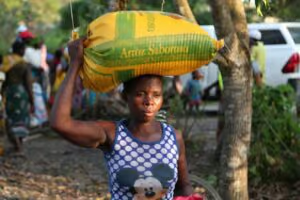
At a time when 1 in 9 people go to bed hungry every day while obesity is on the rise, the United Nations has challenged the world to cut global food waste in half by 2030.
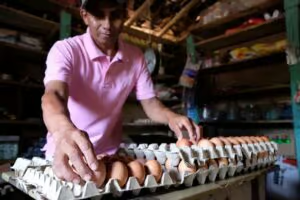
Providing food to hungry people is just one part of ending hunger. We also need long-term solutions like sustainable farming, increasing the efficiency of local markets and making sure people earn enough money to support themselves.
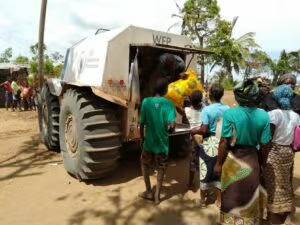
Mozambique has suffered two record-breaking cyclones in one month. WFP’s amphibious vehicles help deliver food to stranded communities. See how.

In times of disaster, WFP responds immediately to meet the need. Here’s how we’re responding to Cyclone Kenneth, and how you can help.

Paula Bonde, director of marketing and communications, explains how her work at WFP USA brings purpose and meaning.

As Mozambique reels from the consequences of Cyclone Idai, Cyclone Kenneth hits the north of the country.