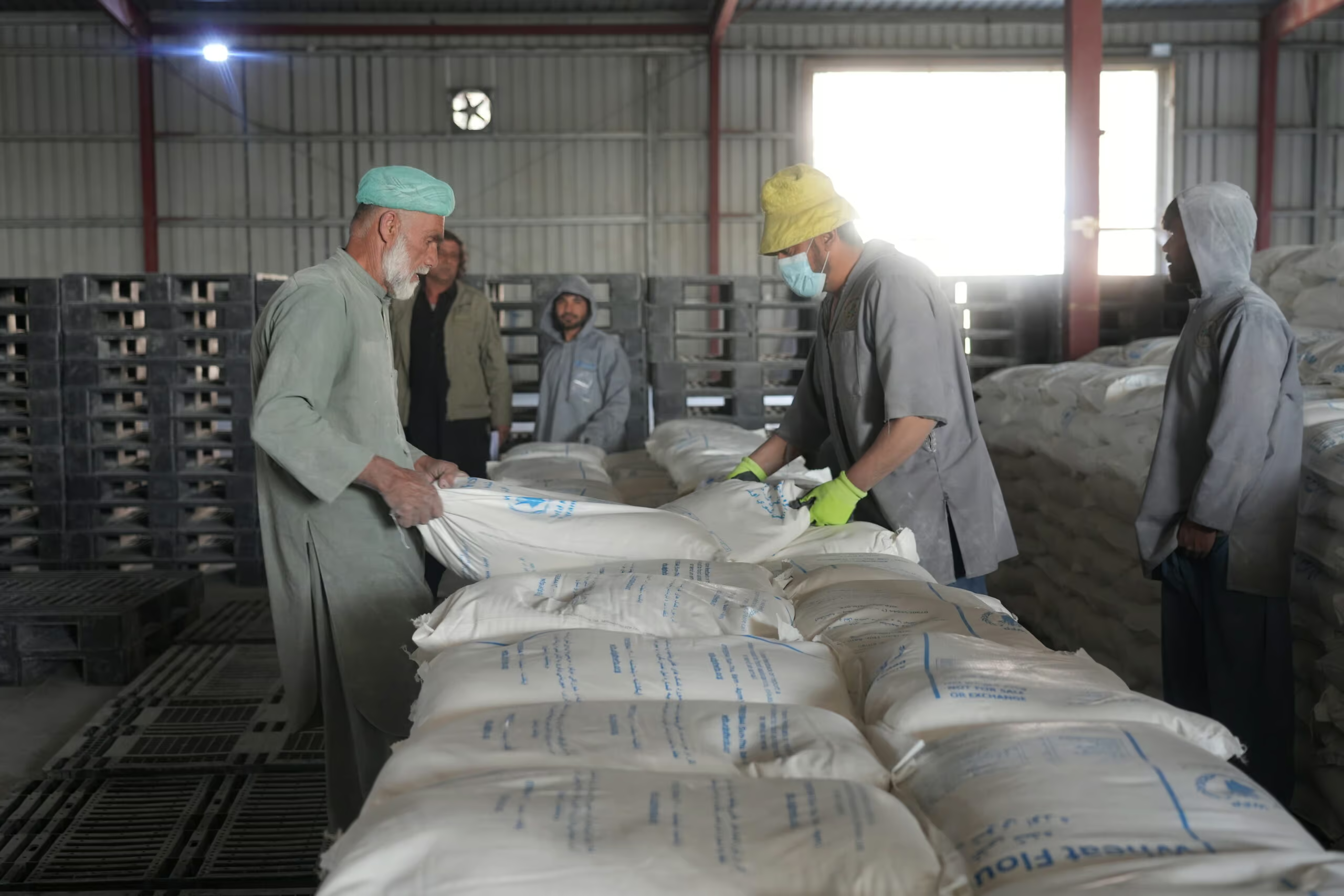
How Blockchain Technology Is Helping Refugees Grocery Shop in Conflict Zones
In some of the most remote parts of the world, blockchain technology is helping to feed the hungriest people. It’s secure to use, offers privacy and is quickly scalable.

In some of the most remote parts of the world, blockchain technology is helping to feed the hungriest people. It’s secure to use, offers privacy and is quickly scalable.

Most of us would have to strain to imagine what life would be like if 80 percent of all the people around us were in desperate need of humanitarian assistance. For the people of Yemen, that is the relentless reality.

WFP works hard to ensure that everyone has the nutrition they need to thrive – but we need your help.

Technology is changing the future of work, and there’s no reason refugees should be left behind in the process. Enter EMPACT.

As we move into the next decade, we need to re-imagine how we do our work. What technologies and approaches could we develop in the future to solve humanitarian crises?

Nonprofits have the tools and experience to heal the world, and expectations are high. We must do everything we can to live up to them.
Much as we are humbled by and proud of the Nobel Committee’s ultimate acknowledgment of all we’ve done, we are just as grateful to it for highlighting the growing need in the immediate future.
Hear one aid worker’s account of feeding a makeshift city of 1 million Rohingya refugees – and the new threats that loom.

More than 800 U.N. Volunteers have served with WFP in the past decade, helping us save lives in over 70 countries.

This is a “failure is not an option” moment. At a time when our own wellbeing is inextricably tied up with others’ around the globe, we will be better off only when others are, too.