Scaling Up in Silicon Valley to Disrupt Global Hunger
Meet the advanced-stage innovation teams participating in the first-ever WFP Innovation Accelerator Bootcamp and Pitch Nigh in Silicon Valley.

Meet the advanced-stage innovation teams participating in the first-ever WFP Innovation Accelerator Bootcamp and Pitch Nigh in Silicon Valley.

Meet the early-stage innovation teams participating in the first-ever WFP Innovation Accelerator Bootcamp and Pitch Night in Silicon Valley.
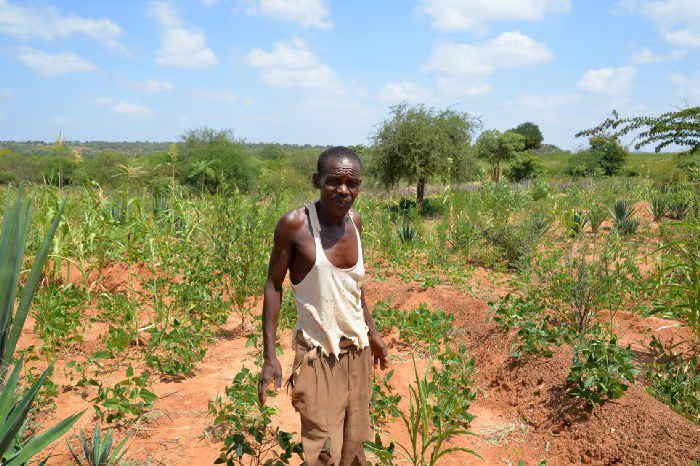
In Kenya, 65-year-old Matei Nziru has an obsession-like devotion to water, storing some gallons that are more than four years old. His tactics hold lessons for other farmers in dry climates.

WFP will resume food distributions for the 850,000 people in Sana’a City who have not received food rations from WFP for the last two months.
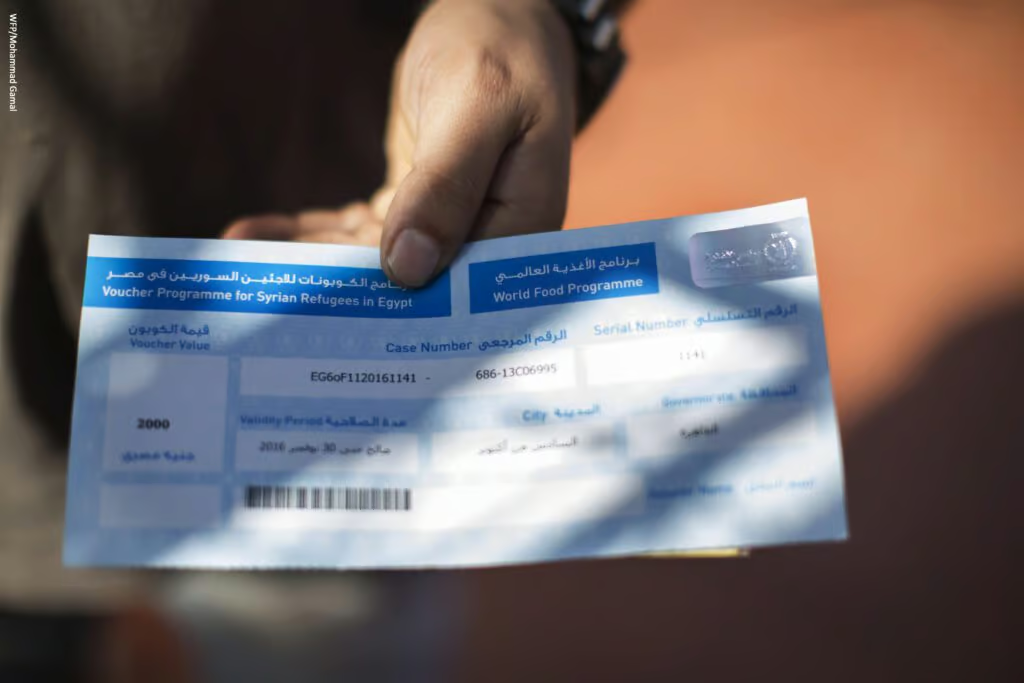
These policies will deliver funds to people threatened by drought before it reaches catastrophic levels. Collectively, the purchased policies could release a total of $49.5 million across five countries.
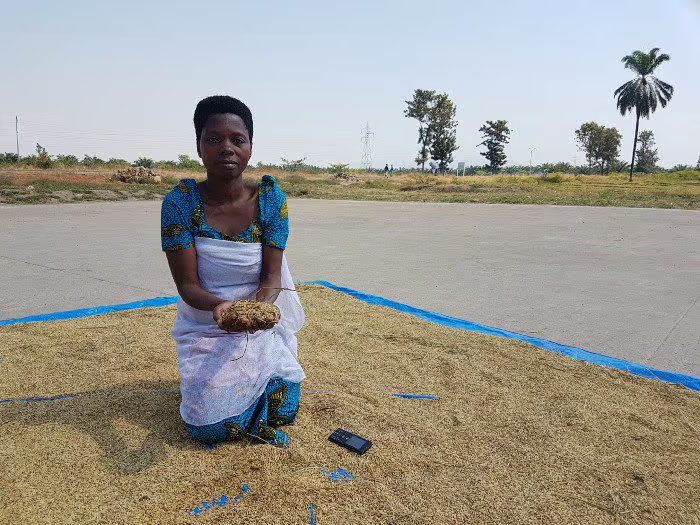
90 percent of Burundi’s population is entirely dependent on agriculture, yet the country doesn’t produce nearly enough food to feed everyone. Cutting food loss can help.

Three-hundred farmers each received eight specially-made, airtight, 110-pound bags to protect their grains from insects, rodents, mold and moisture. The results were astonishing.
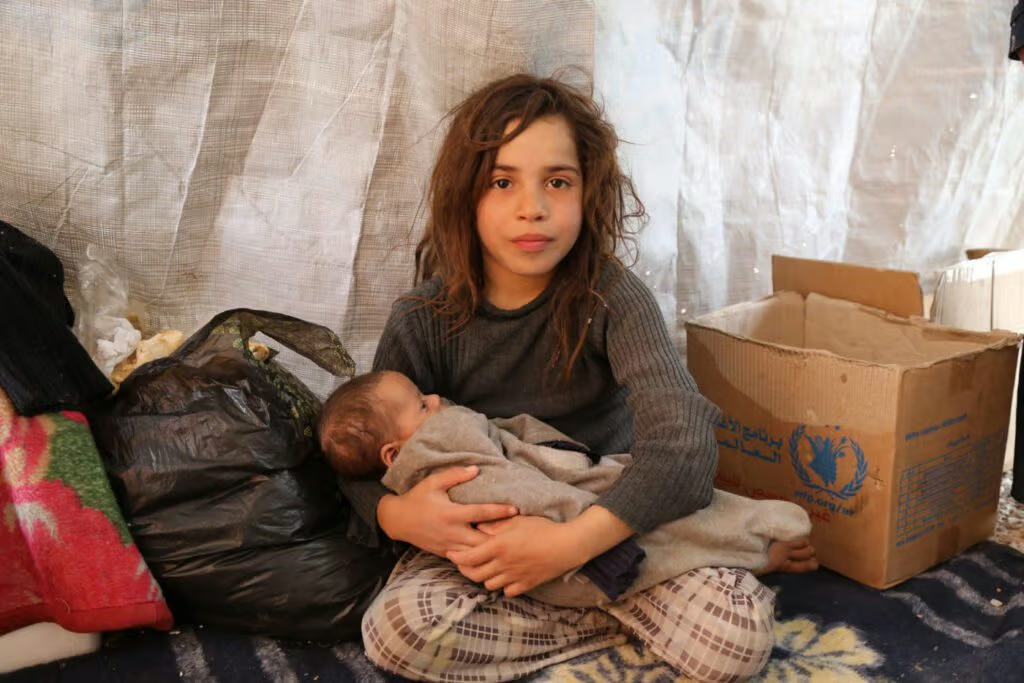
The additional allocation of $43.8 million is transferred through electronic cards to 358,000 people. The majority of that cash is spent on essentials like food, shelter, health care and education.

With more than 700 rivers, Bangladesh is increasingly seeing the impact of climate change. To help, 5,000 households have now received $53 through an innovative forecast-based financing project.

With an investment of $72 million, the Government is set to reach 100,000 women with livelihood training, behavior change education and food assistance.