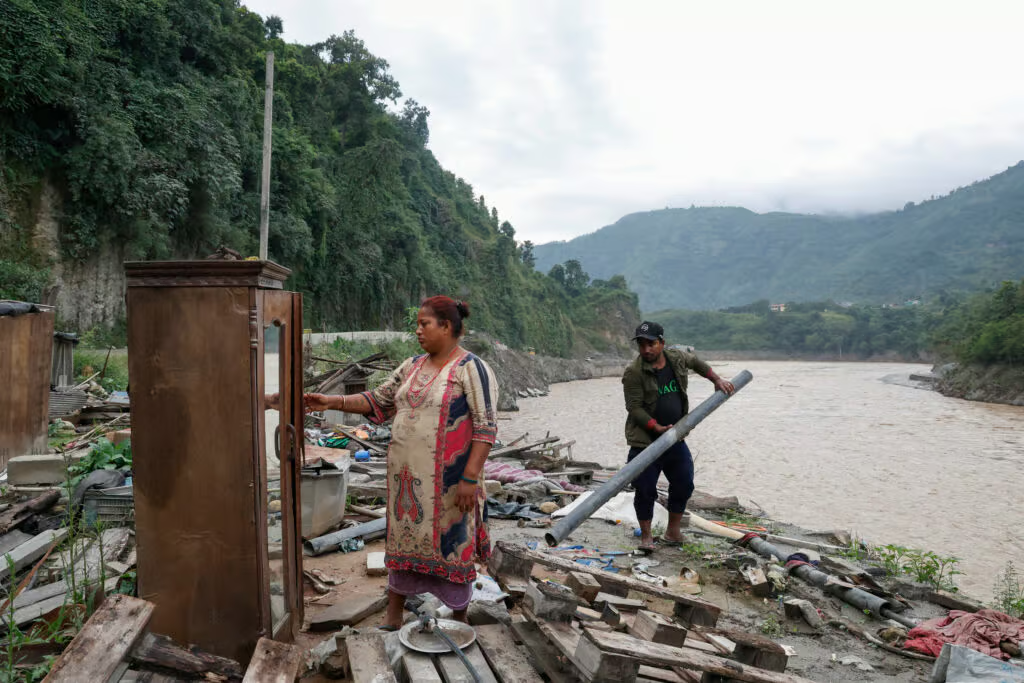
KATHMANDU, Nepal – As the winter season begins, the United Nations World Food Programme (WFP) today called for sustained support to help communities impacted by devastating floods that hit the country exactly three months ago this week.
Since the floods in August, recovery challenges remain immense. Damaged infrastructure and disrupted transport links continue to affect access to markets, essential services, and economic opportunities. The loss of homes, farmland, livestock, and other productive assets has undermined household incomes and food security – which could worsen under the winter colder temperatures.
In the immediate aftermath of the disaster, WFP supported the Government-led emergency response, providing immediate food assistance to more than 20,000 people. This was followed by multipurpose cash assistance for 22,400 people. WFP has also been providing logistics services for the humanitarian response, transporting 919 MT of humanitarian cargo for WFP and partners via trucks, helicopters, and cargo drones to reach communities where damaged roads and bridges restricted access.
“It has been three months and families are still working hard to rebuild, but efforts are hampered by the loss of the assets and livelihoods they depended on,” said Andrea Berardo, WFP Deputy Country Director in Nepal. “Emergency assistance helped families through the first weeks of this crisis, but recovery will take much longer. With winter approaching in Nepal’s highlands, many families are still living in temporary shelters and are facing increasingly harsh conditions. We need to help families restore their incomes, reconnect with markets, and rebuild the foundations of their lives.”
The Post-Disaster Needs Assessment, released by Nepal’s National Planning Commission this month, identified extensive damage to housing, transport, energy systems, livelihoods, and local economies. It estimated recovery and reconstruction needs at NPR 706.65 billion, equivalent to around USD 5.2 billion.
To support livelihood and income recovery, WFP is working with communities and local authorities in areas that remain isolated to keep agricultural produce moving while transport remains disrupted. This has included transporting fresh produce via a pulley ropeway system from Rasuwa to markets on the other side of the river. This support has helped farmers reconnect with buyers, protected incomes, and maintained the supply of locally produced food while permanent infrastructure was being restored.
“Recovery is about more than rebuilding roads and bridges,” said Berardo. “It means helping farmers reach markets again, restoring household incomes, and ensuring families can put nutritious food on the table.”
WFP estimates that an additional US$28 million will be needed to meet one year of recovery-related food security and nutrition needs.
# # #