Mozambique

Rebuilding After Disaster

Two back-to-back massive cyclones in 2019 devastated the country. Now COVID-19 threatens to wreak more havoc.

The Long Road to Recovery

Cyclones Idai and Kenneth destroyed homes, wiped out fisheries, washed away roads and ruined hundreds of thousands of acres of farmland. Those who were hit the hardest are still struggling to get back on their feet, and now another storm – COVID-19 – has made landfall.

WFP is doing everything it can to support recovery projects, but nearly 2 million people are still food insecure amidst this new pandemic.

Emergency Response: WFP in Action

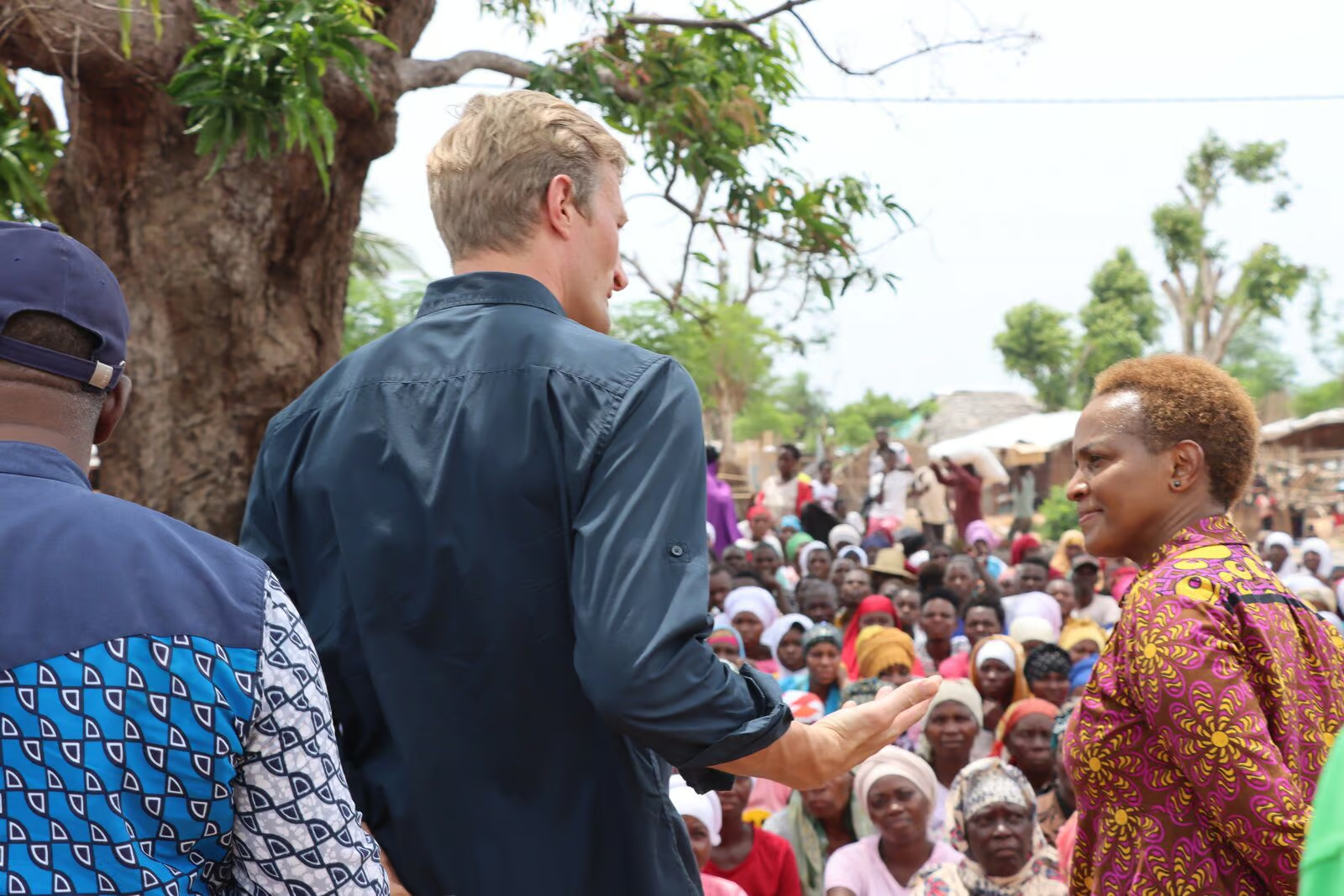
The World Food Programme was able to reach more than 1.8 million people in Mozambique after the storms. People like Maria, Virginia, Wonder and Shayne.

Maria

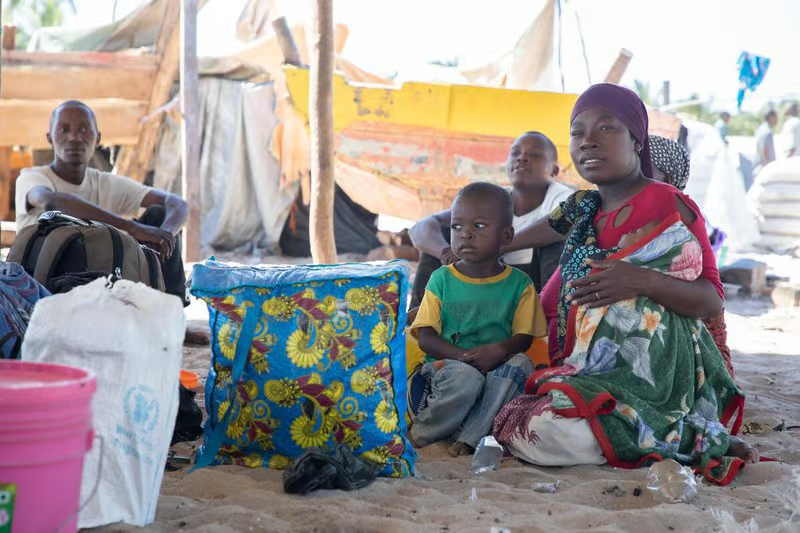
Before the cyclone, Maria Joao and her husband caught and sold fish. In the aftermath, her family got warm meals from WFP at a school shelter.

Virginia

Virginia Jone provided shelter to 12 of her family members. WFP gave them enough rice, beans and cooking oil to last for two weeks.

Wonder & Shane

Two friends, Wonder and Shayne, lost their homes to Idai. After the storm, they both said they want to be WFP pilots when they grow up.

Make a difference in Mozambique

Hunger Stats

Mozambique Facts

New York
Show Places
New York
×
Geocoding Error Occured.

Tried to Geocode:

Error Type:

Please be sure to follow the tutorial on how to setup the Google APIs required for the Advanced Google Map Widget.

Google Map API Key Tutorial
Population: 34 million people.
Background: Mozambique gained independence in 1975. The country experienced a prolonged civil war between 1977 and 1992 that followed independence and severely affected political stability and development. Since the end of the conflict, Mozambique has operated as a multiparty republic, though it continues to face political tensions and periodic insecurity, particularly in recent years.
Geography & Climate: Mozambique is a large country in southeastern Africa, with a long coastline along the Indian Ocean. The country has a predominantly tropical climate, characterized by a hot, rainy season and a cooler, drier season, with conditions varying by region and along the coast.
Economy: Mozambique’s economy is largely agricultural, with farming supporting a significant share of the population. Despite fertile land and natural resources, food production is frequently disrupted by climate shocks, such as cyclones, floods and droughts, as well as conflict‑related displacement and limited access to markets and infrastructure. As a result, many households remain vulnerable to food insecurity and increasingly rely on markets to meet their food needs.

Rebuilding in Mozambique

WFP’s Response in Mozambique

WFP is doing whatever it takes to reach people who are in desperate need of food and other lifesaving assistance.
Image of kid hand holding a snack bar
HEBs
WFP airdropped High-Energy Biscuits (HEBs) to people who were stranded by the floodwaters. The fortified biscuits are often used in emergencies because they are nutritious, easy to transport and do not need cooking.
Learn More
MOZ_Floods_20190320_WFP-Deborah_Nguyen_5eb39756e6ae
Humanitarian Response
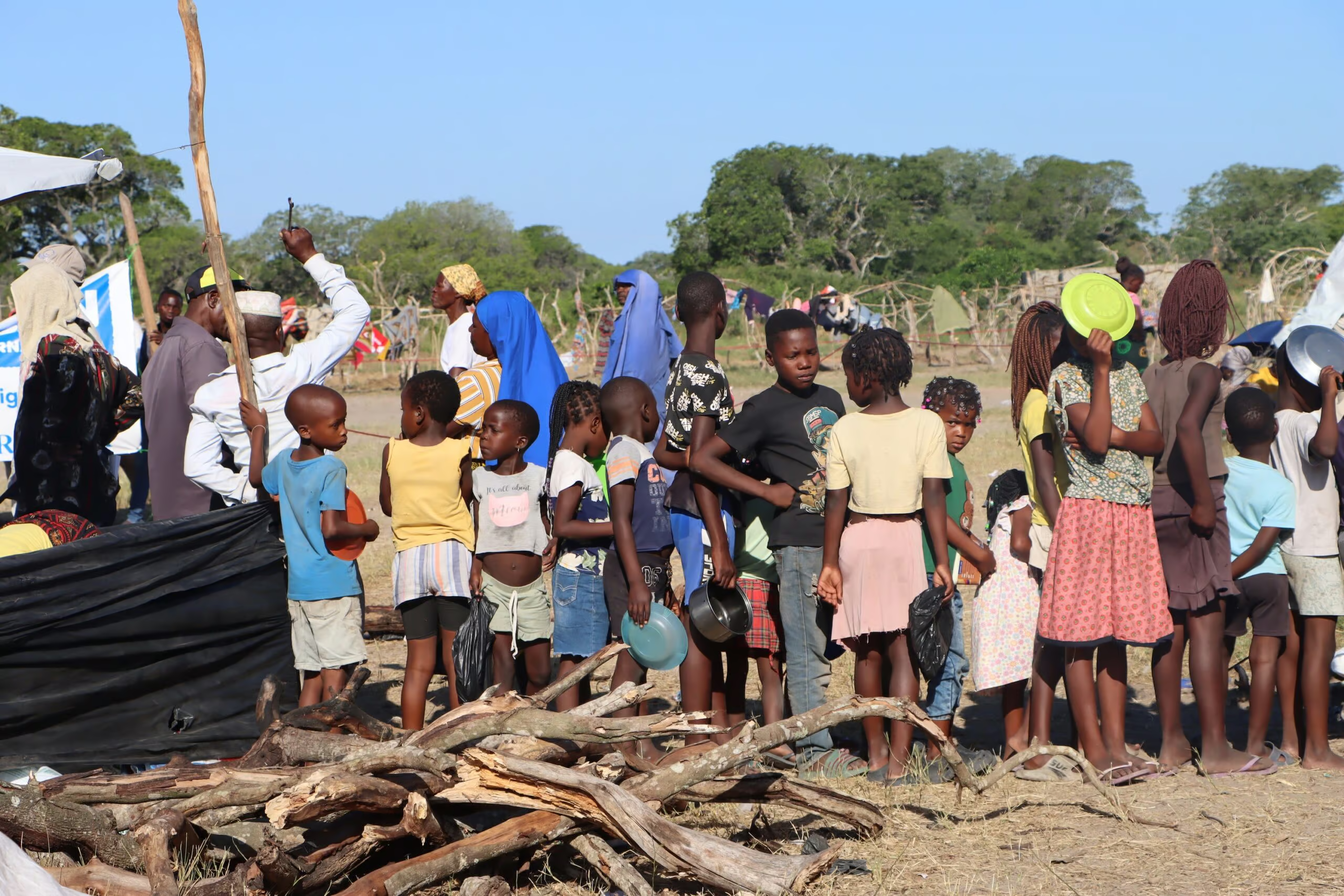
Due to limited resources, WFP is providing food rations every other month to people affected by the conflict in northern Mozambique, through both food and cash-based assistance. In 2025, funding shortfalls forced WFP to further scale down its support from 1 million people in 2024 to 345,000. In addition, WFP assisted 118,000 people affected by cyclones and an additional 250,000 food-insecure people affected by the El Niño-induced drought in central and southern provinces during the 2024–2025 season.
Learn More
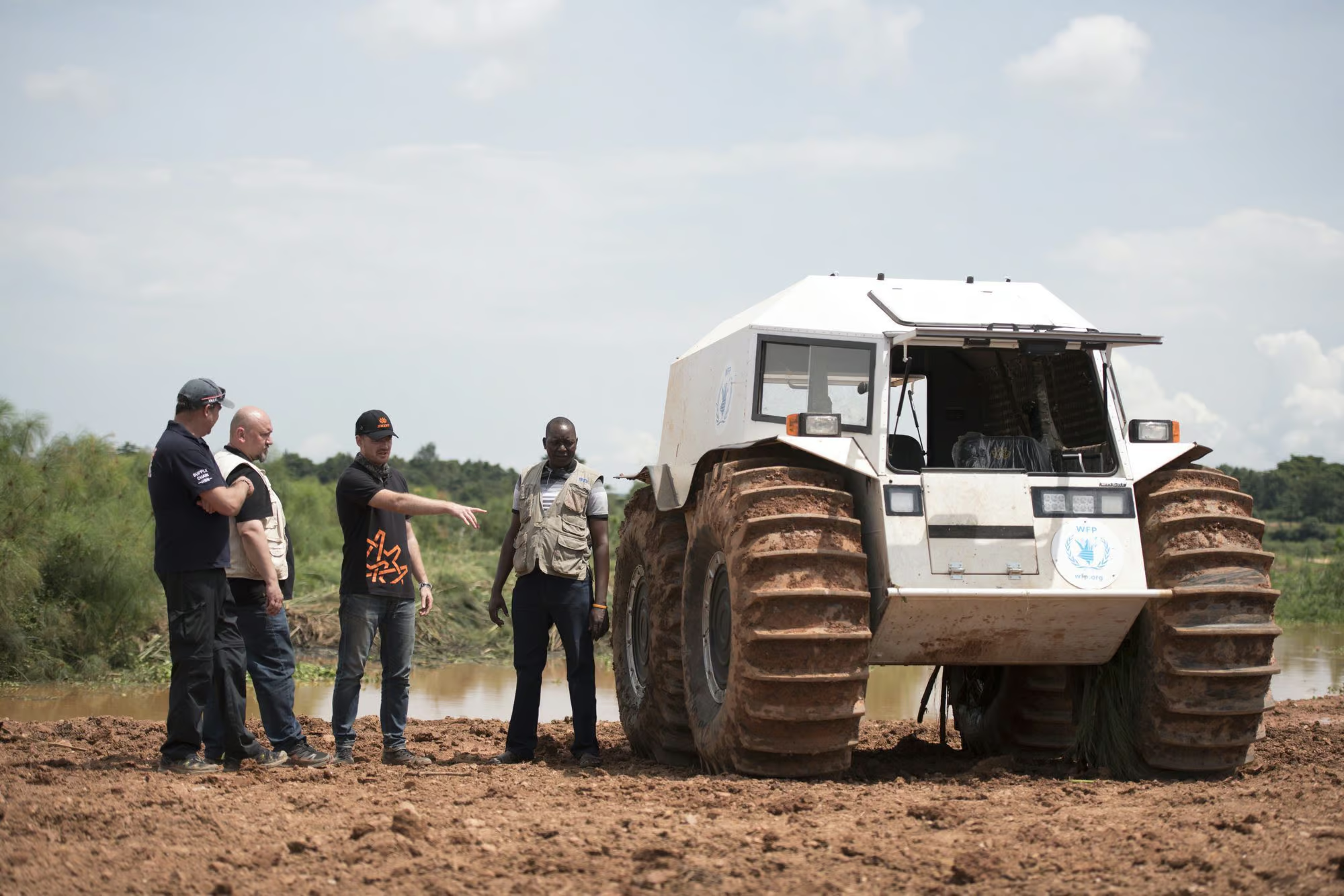
Here in Uganda, SHERPs are used to deliver food despite widespread flooding.
SHERPs
In addition to helicopters, WFP used two amphibious vehicles to deliver food and other essentials to hard-to-reach locations. These all-terrain vehicles can float, climb and navigate through flooded terrain.
Learn More
Forecast-based financing projects can reduce the scale and costs of a humanitarian response. WFP needs $148 million dollars to deliver life-saving interventions for the next three months.
Ã’Tropical Cyclone IDAI has made landfall near the heavily-populated Mozambican port city of Beira, which has compounded destructive flooding that has already occurred as far inland as southern Malawi and eastern Zimbabwe. The World Food Programme has been stepping up preparations to meet large scale assistance needs.  
Over 900,000 people in Malawi, and 600,000 in Mozambique have already been affected by exceptionally severe flooding this week caused by heavy rains associated.

Photo: WFP/Photolibrary
Telecommunications
WFP is the leader of the emergency telecommunications for UN relief efforts. Its experts worked to re-establish vital networks brought down by the storm and accelerate communications.
Learn More

Latest News From Mozambique

WFP Scales up Food Assistance as Record Floods in Mozambique Leave Families Stranded

Scroll to Top