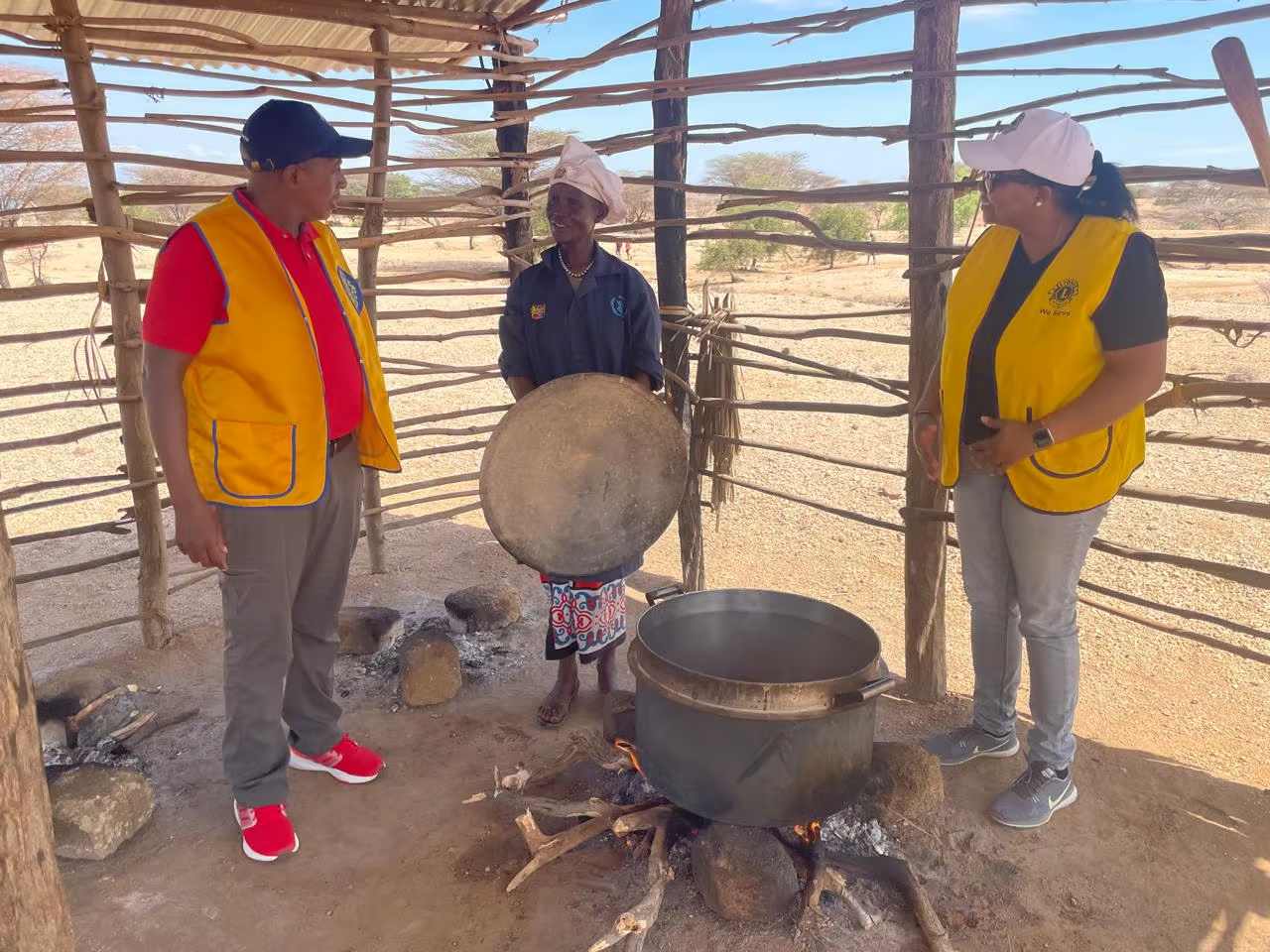
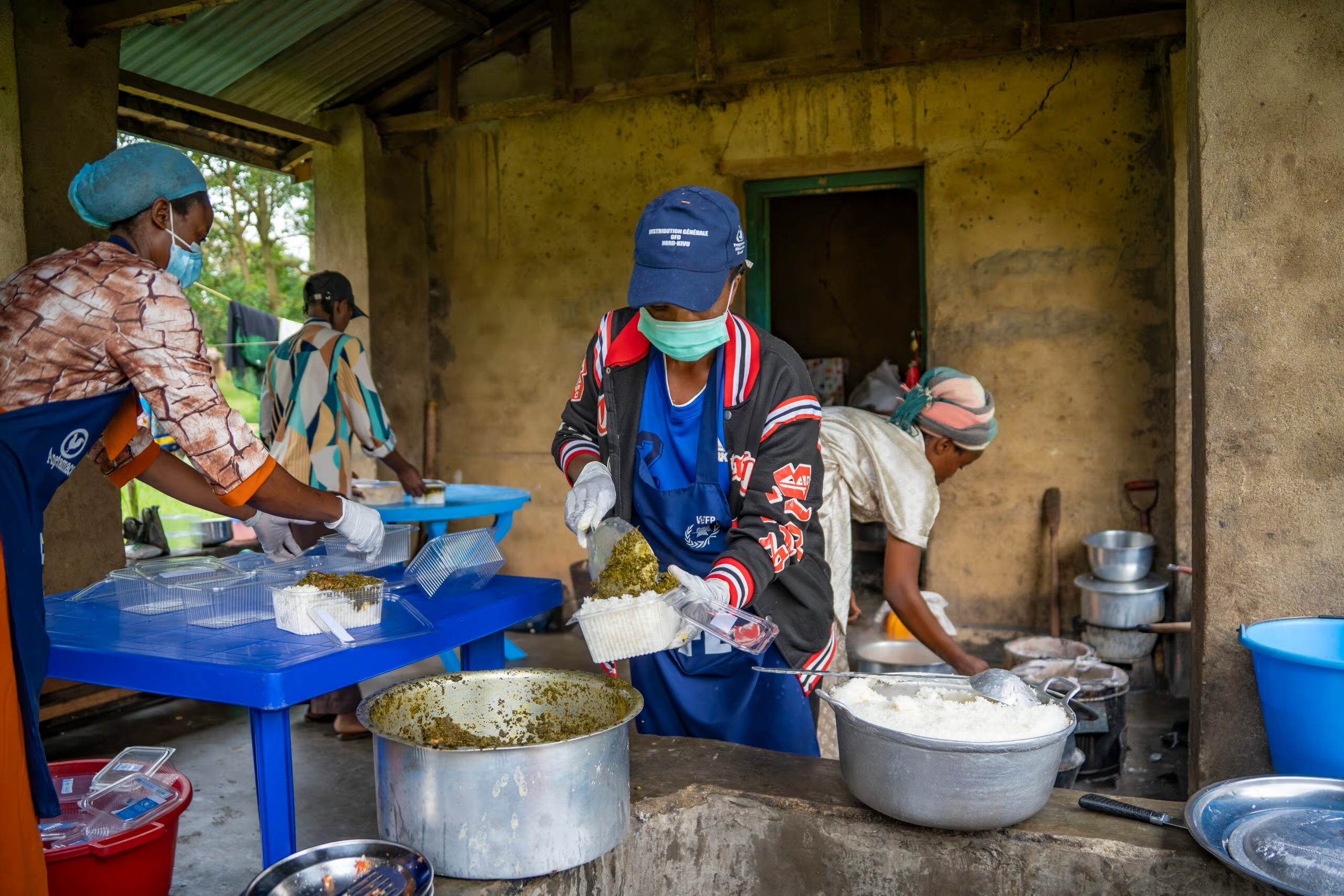
On August 19, the international community marks World Humanitarian Day, a time to honor the people who work on the front lines of crises to deliver lifesaving assistance, support communities with dignity and create lasting change. As aid workers face increasing risks around the world, it’s more important than ever to advocate for the safety and well-being of humanitarians and those affected by emergencies.
Islamic Relief USA (IRUSA) has supported the World Food Programme’s disaster response efforts for several years, reliably stepping forward time and time again with support for communities affected by hunger crises. Last year, IRUSA deepened its support with a $25 million commitment to the World Food Programme (WFP), including $5 million for WFP’s emergency operations in Gaza.
In the following conversation, Islamic Relief USA CEO Ahmed Shehata and World Food Program USA President and CEO Barron Segar reflect on the values that unite their organizations, the importance of World Humanitarian Day and the hope they find in people coming together to serve communities around the world.
This transcript has been condensed and lightly edited.
BARRON SEGAR: World Food Program USA and Islamic Relief USA have formed an amazing partnership. I’m wondering how Islamic Relief USA chose World Food Program USA as a partner and how World Food Program USA fits into your mission?
AHMED SHEHATA: Let me answer that by sharing World Food Program USA’s mission: to end hunger. This aligns with Islamic Relief USA’s mission to provide relief and development. I see Islamic Relief USA and the World Food Program USA working toward the same goal.
Through short-term relief, global food aid saves lives during emergencies and protects people in need everywhere. Through long-term development, addressing hunger helps communities improve health, education, livelihoods and economic opportunities. For example, a community affected by drought may first receive relief through emergency food aid. Later, long-term programs might help farms adopt drought-resistance, improve irrigation and access markets. Together, these efforts move people from dependence on aid toward independence.
I have seen this myself, Barron, when you invited me to Jordan. What I saw was a sophisticated strategy, a long-term strategy, shifting from emergencies to development. The entire sector has been talking about this shift from emergency to development. I saw with World Food Program USA, that you have a clear strategy and that strategy has been implemented. This is what I saw in Jordan, and this is something aligned clearly with our community, our supporters, and the mission of Islamic Relief USA.
BARRON SEGAR: Today we are marking World Humanitarian Day, which is an important time to advocate for the well-being and the dignity of people affected by crisis and for the safety and security of aid workers who risk their lives every single day. This is vitally important as aid workers around the world face increasing risks. I’m curious, Ahmed, what does World Humanitarian Day mean to you and to Islamic Relief USA?
AHMED SHEHATA: I would love if World Humanitarian Day is not one day a year. Hopefully, at a certain point, especially here in America, we’re going to make every single day a humanitarian day. With the new generation, we’re going to encourage them to spend a couple of minutes on a daily basis thinking of those in need globally to provide more service and help. To me, being part of the humanitarian community means standing alongside people during some of the most difficult moments of their lives and recognizing our shared responsibility to act.
On World Humanitarian Day, I am especially mindful that humanitarian workers we engage with all the time are operating in very difficult, dangerous environments. Their courage and commitment are amazing and appreciated by all of us. Being part of this community means more than delivering aid. It means upholding the core principles of humanity and dignity all the time. And it means working in partnership with local communities, government, NGOs and institutions like World Food Program USA to ensure people facing crisis are not forgotten.
BARRON SEGAR: I love the part about dignity, Ahmed. It’s a reminder that everybody deserves dignity regardless of where they live and regardless of the conditions where they were born.
My last question is about where we are today. There are about 318 million people facing extreme hunger. Funding shortfalls have put enormous strain on the humanitarian system. I know that you’ve witnessed the enormous need in your travels, and I know that sometimes it can be overwhelming. When you think about the need, and things that you see and hear, what keeps you hopeful as you look into the future?
AHMED SHEHATA: As you know, the business we are in is very difficult. It is very complicated. And if we don’t have hope, it’s going to be difficult on us. I strongly believe that we should have hope all the time.
But with the difficulties we are facing, we are also seeing a lot of donors coming forward to trusted organizations such as World Food Program USA and Islamic Relief USA. This is the hope. This is our responsibility: to carry the hope to our donors and to make sure that they keep donating.
As a faith-based organization, we have a verse in the Quran, in the holy book, that God Almighty is encouraging all of us that we should keep feeding people no matter their color, their faith, their nationality. This is very, very important.
So, I am looking forward to the impact this partnership will be able to provide — more help and support. As you know, Islamic Relief USA committed $25 million to World of Food Program USA to support your global effort to reduce hunger and to transform lives. The first $5 million is going to our beloved people of Gaza. There is still much more work to be done over the next four years, as this is just year one of our five-year partnership.
As we partner together to serve the global community, we have the opportunity to provide expanded relief and development and to empower individuals in their communities through increased food security. Our partnership not only reflects our shared humanitarian values, but also a shared understanding about the power of global partners.
In addition to that, I strongly believe, being a proud American Muslim and CEO of the largest humanitarian American Muslim organization, that with leaders like yourself and with an institution like World Food Program USA, we can do more by working together and advocating on behalf of people in need globally.
BARRON SEGAR: Ahmed, as you brilliantly said, our responsibility is to feed the hungriest of the hungry. And we always keep that in mind. Thank you for your personal leadership, for your friendship and for all the supporters of Islamic Relief USA that makes all this possible.