New WFP report shows a 20% increase in just four years of the number of children receiving meals in school through domestic programs; national governments are leading the global expansion, prioritizing children’s well-being.
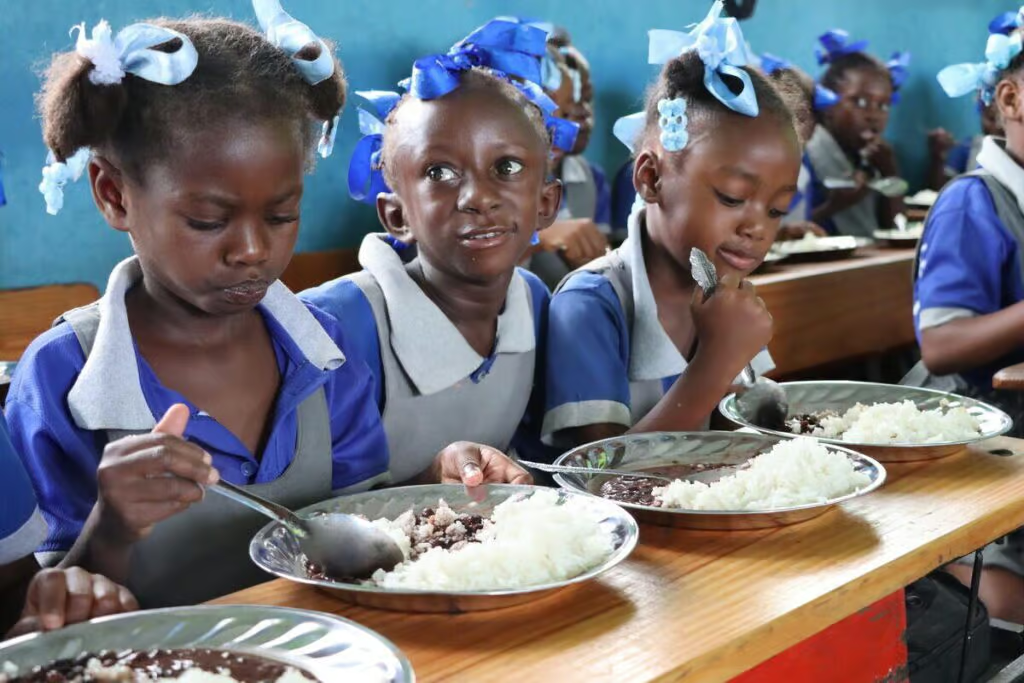
ROME – Nearly 80 million more children are now receiving school meals through government-led programs than in 2020 — a 20% increase that brings the global total to at least 466 million children, according to the latest edition of The State of School Feeding Worldwide, a flagship biennial report released today by the World Food Programme (WFP).
Progress is happening where it is needed most with low-income countries increasing the number of children receiving school meals by 60% in just the past two years. Africa is leading the surge with an additional 20 million African children now fed through national school meals programs – with notable progress in Kenya, Madagascar, Ethiopia, and Rwanda.
This rare success in the development space is being led by governments around the world, driven by strong evidence that domestic school meal programs not only support children’s well-being, but have far-reaching benefits for small-scale farmers and local employment, as well as encouraging planet-friendly diets and reducing carbon emissions.
“School meals are so much more than just a plate of nutritious food – important as that is. For the vulnerable children who receive them, they are a pathway out of poverty and into a new world of learning and opportunity,” said WFP Executive Director Cindy McCain. “Governments around the world, especially in low- and middle-income countries, are showing real leadership by choosing to prioritize school meals programs. They are proven to be one of the smartest, most cost-effective investments any nation can make to improve the long-term health, education and economic prosperity of future generations. WFP is grateful for the transformative partnerships built through the School Meals Coalition and we encourage even more governments to join this global movement.”
Investment Doubles in Four Years
The report finds that global funding for school meals has more than doubled, rising from $43 billion in 2020 to $84 billion in 2024, with 99% of this funding now coming from national budgets. This signals a significant shift with school meals no longer seen as a foreign aid program, but as a powerful public policy that can drive national development. But domestic funding is lower in low-income countries, where resources remain limited and needs are highest.
The growth of school meals programs is fastest in countries that are part of the School Meals Coalition, a global network led by over 100 governments, six regional bodies, hosted by WFP as its secretariat, and supported by over 140 partners across sectors. Two out of every three newly reached children with school meals are in Coalition member countries. The report outlines how the Coalition is being celebrated as a model of modern multilateralism – and through its efforts, the number of countries with national school meals policies has nearly doubled since 2020 from 56 to 107.
“Governments are showing real leadership through the School Meals Coalition, chaired by Brazil, Finland, and France, and hosted by WFP, as they invest in their children and communities,” said Carmen Burbano, WFP’s director of school meals and social protection and director of the WFP-hosted School Meals Coalition Secretariat. “The surge in nationally funded school meal programs is a powerful sign of what’s possible, even in challenging times. But in low-income countries, where needs are greatest, progress remains at risk as global aid shifts and domestic resources fall short.”
The report comes out the week before the second School Meals Coalition Global Summit in Brazil, September 18-19, where leaders will meet to take stock of progress and mobilize further action.
School Meals Can Tackle ‘Learning Crisis’
New emerging evidence, published for the first time in the State of School Feeding Worldwide report, demonstrates how school meals can contribute toward addressing today’s ‘learning crisis’ by boosting learning and cognitive skills, with gains in math and literacy. Up until now, strong evidence has existed on how school meals can boost school enrollment and retention but this emerging field of study now shows that school meals are also a highly cost-effective way to improve the quality of education, often outperforming traditional education interventions like teacher training or tech inputs.
Progress for People and the Planet
Beyond education, the State of School Feeding Worldwide Report also highlights the broad cross-sectoral impact of school meals programs:
- School meals programs are the largest social safety net in the world, helping countries absorb shocks – from climate to pandemics to war – and reach the most vulnerable children.
- School meal programs are cost-effective and a high-impact investment because they deliver returns across different sectors (education, health, social protection and agriculture): For every $1 invested, they generate between $7 and $35 in economic benefits.
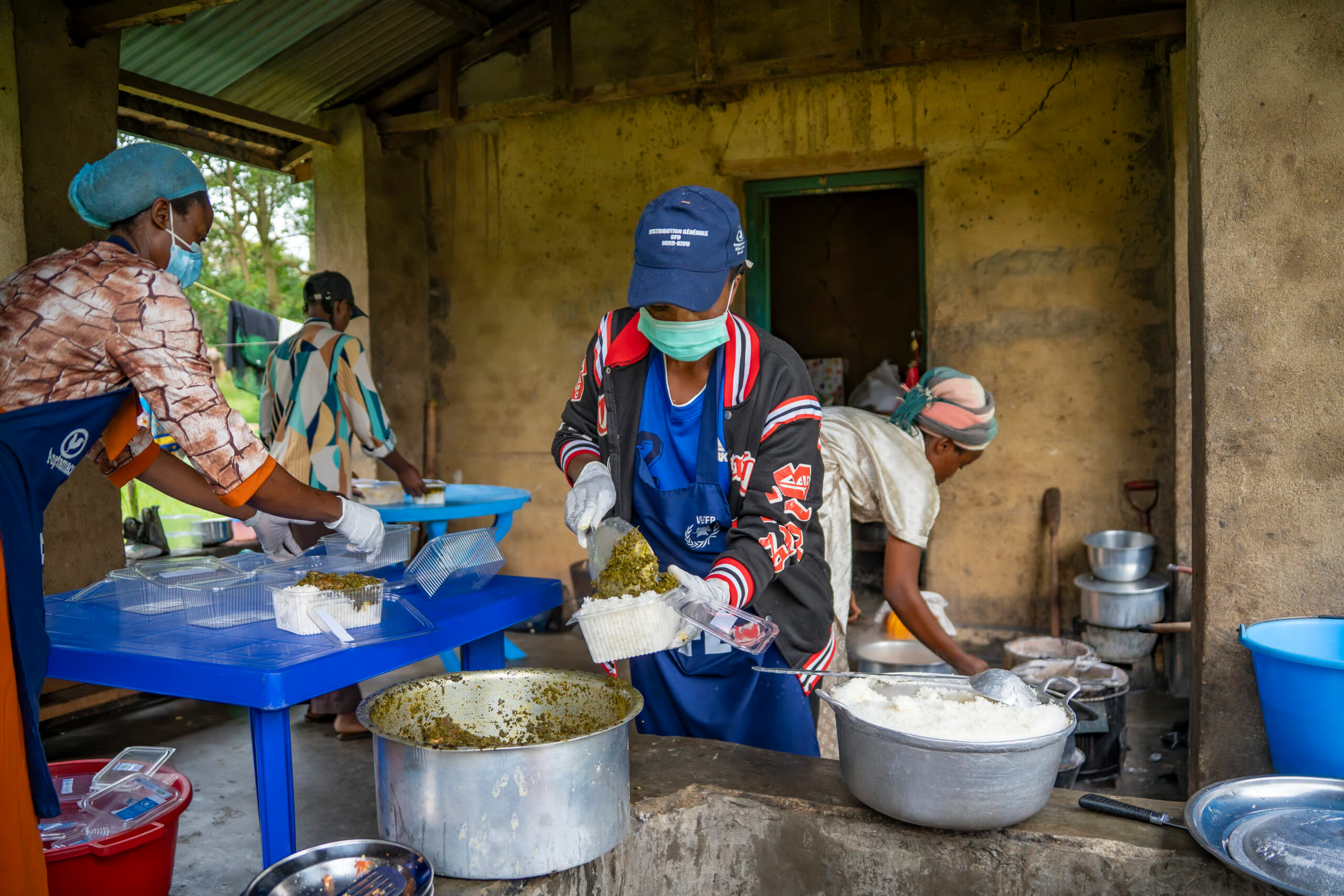
- School meals can also be a powerful engine for local job creation. Delivering school meals to 466 million children generates an estimated 7.4 million cooking jobs globally, with further employment across logistics, farming, and supply chains, driving both direct and indirect job creation.
- Sustainable school meal models, such as homegrown school meals programs, can promote healthier, eco-friendly diets, and serve as catalysts for creating locally rooted food systems that boost local and national economies.
- Girls benefit more than boys from school meals in terms of education and health outcomes, with similar benefits seen for women, as these programs empower women economically by expanding their roles in food supply chains and community-based employment, for example as cooks in schools.
WFP’s Transformative Role
Also detailed in the report is WFP’s leadership in school meals, which exemplifies the food agency’s long-term, transformative solutions that build national capacity and resilience. WFP currently supports governments to reach 139 million children and delivers school meals directly to 21 million children. Beyond that, WFP uses its operational expertise as a frontline emergency responder, such as in Haiti, to support governments to strengthen their national systems. In Armenia, Benin, and Iraq, for example, WFP has supported the transition of school meals program from relying on WFP for program delivery to full national ownership.
Read the full report here.
Note to editors:
High resolution photos & broadcast quality video of school meal programs around the world:
# # #
The World Food Programme is the 2020 Nobel Peace Prize Laureate and the world’s leading humanitarian organization, saving lives in emergencies and using food assistance to build a pathway to peace, stability and prosperity for people recovering from conflict, disasters and the impact of climate extremes.
The School Meals Coalition is a network of over 100 governments, six regional bodies and over 140 partners committed to school meals. It drives actions to urgently improve and scale up school meal programs to ensure that every child can receive a healthy, nutritious meal in school by 2030.
For more information, visit: wfp.org/school-meals and schoolmealscoalition.org
Follow WFP on X: @SchoolMeals_ and @wfp_media
Learn more about recent progress of member countries against their national commitments: https://schoolmealscoalition.org/national-progress-reports