ROME – The World Food Programme (WFP) has started a partial suspension of food assistance operations in areas of Yemen under the control of the Sana’a-based authorities. The decision was taken as a last resort after lengthy negotiations stalled on an agreement to introduce controls to prevent the diversion of food away from some of the most vulnerable people in Yemen.
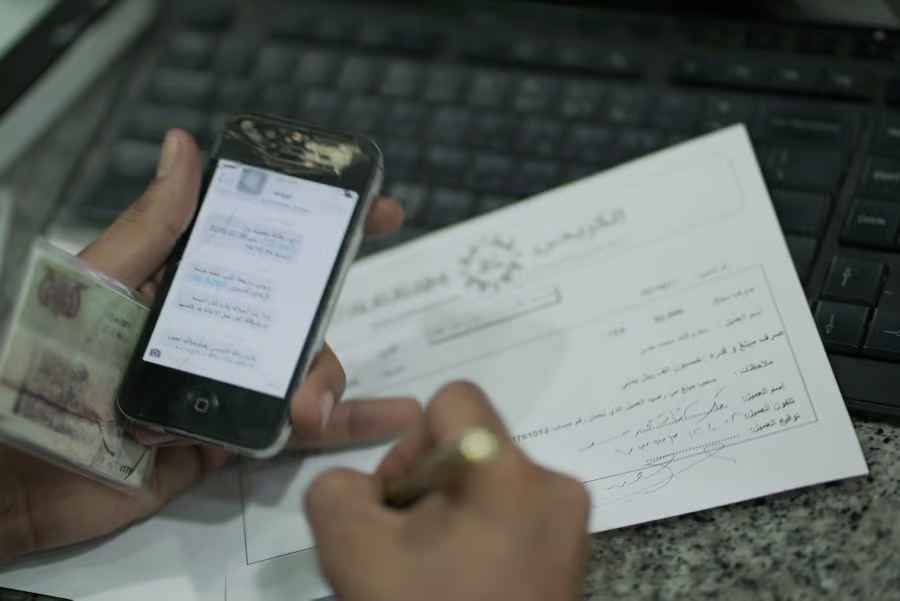
WFP’s priority remains to feed the hungriest children, women and men of Yemen. But as in any conflict zone, some individuals seek to profit by preying on the vulnerable and diverting food away from where it is most needed. WFP has been seeking the support of the Sana’a-based authorities to introduce a biometric registration system that would prevent diversion and protect the Yemeni families it serves, ensuring food reaches those who need it most.
Unfortunately, WFP has yet to reach agreement. The integrity of its operation is under threat and its accountability to those it helps has been undermined. WFP has repeatedly appealed to the Sana’a-based authorities to grant it the space and freedom to operate according to the principles of humanity, impartiality, neutrality and operational independence, which guide its work in 83 countries around the world.
Too many Yemenis have suffered for too long during this ongoing conflict. WFP will continue to seek cooperation from the Sana’a-based authorities and remains optimistic that a way forward can be found. The agency is ready to immediately resume food distributions once agreement is reached on an independent beneficiary identification exercise and the rollout of a biometric registration system.
At this stage, with the support of the entire United Nations system, WFP is suspending operations in Sana’a city only, affecting 850,000 people. The agency will maintain nutrition programs for malnourished children, pregnant and nursing mothers throughout the period of suspension.
The World Food Programme is the 2020 Nobel Peace Prize Laureate and the world’s leading humanitarian organization, saving lives in emergencies and using food assistance to build a pathway to peace, stability and prosperity for people recovering from conflict, disasters and the impact of climate extremes.