If you’re reading this, you likely already know a bit about the work of the World Food Programme (WFP) and what it does around the world. But have you ever wondered what exactly WFP is? Or how it fits under the larger umbrella of the United Nations?
Let’s dive in.
What is the World Food Programme? Where and how did it come about?
You might know that WFP is the world’s leading humanitarian organization. It works in the toughest, hungriest places around the globe to save and change lives by delivering food to people in emergencies — and working with communities to build resilience to future upheaval.
Here’s a quick review of its 60-year history:
In 1961, Director of the United States Food for Peace Program George McGovern proposed creating a food aid program on a three-year experimental basis. By November of that year, the United Nations officially created the World Food Programme.
The organization proved its worth quickly, responding to crises in Iran, Thailand, Algeria and Sudan. In 1965, WFP was enshrined as a full-fledged U.N. program meant to last.
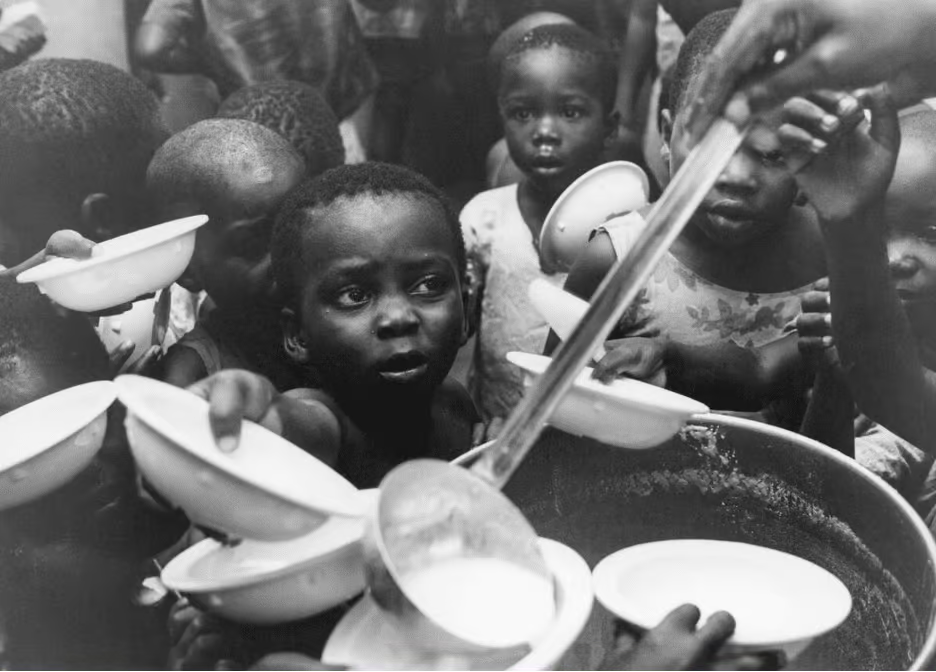
From there, WFP responded to crisis after crisis — from Ethiopia’s 1984 famine to the Rwandan genocide in 1994 — and established emergency distribution hubs that would transform WFP into the logistics backbone of the entire United Nations and other NGOs that it is today.
Since then, WFP has mobilized to feed millions of people in Syria, the Democratic Republic of the Congo, Somalia, Yemen, Burkina Faso, northeast Nigeria, and 75 other countries — saving millions of lives around the world in the face of conflict, COVID-19 and climate change. In 2020, WFP won a Nobel Peace Prize for its work in fighting against the use of hunger as a weapon of war.
History buff? Check out WFP’s story in full detail here.
How does WFP fit into the United Nations today?
The U.N. system is made up of all kinds of funds, programs and specialized agencies — all of which have their own area of work, leadership and budget. Each of these separate entities works together toward common, overarching goals.
Learn more about the U.N.’s humanitarian agencies +
As for WFP? It is one of the U.N. system’s Funds & Programs — and falls under the purview of the U.N. General Assembly (that’s the main deliberative, policymaking and representative organ of the U.N.). It sits alongside organizations like UNICEF, UNDP and UN-Habitat. For a visual layout of the whole system, check out this helpful chart.

It works closely with more than 1,000 NGOs and nonprofits around the world — from small grassroots organizations to large international aid agencies. These partner organizations help with food distribution, logistics and outreach.
What is WFP’s mission and ongoing work?
Here’s what WFP believes: In a world where there’s enough food to feed everyone on the planet, hunger should be a thing of the past. But conflict, climate change, disasters, inequality and — most recently — the COVID-19 pandemic mean one in nine people globally still goes to bed hungry, and famine is stalking millions.
Powered by the passion and dedication of more than 20,000 staff around the world, WFP works in over 100 countries and territories to deliver lifesaving food and help communities build better futures.
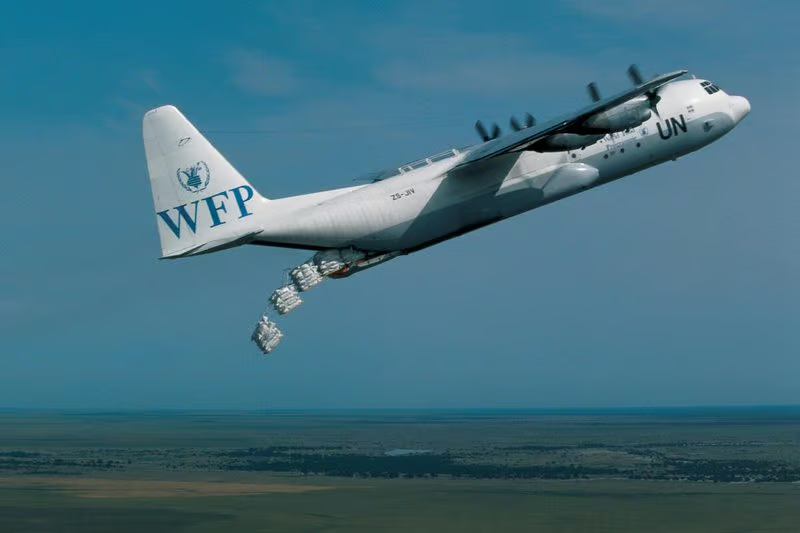
On any given day, WFP has 5,600 trucks, 30 ships and nearly 100 planes on the move, delivering food and other assistance to those who need it most. And every year, WFP distributes more than 15 billion meals to hungry people.
What’s the difference between the World Food Programme and World Food Program USA?
Great question. World Food Program USA is a separate, U.S.-based nonprofit that was created in 1995 to support the work of the World Food Programme. We have a close relationship and have the same mission of ending global hunger.
Here’s what we do:
World Food Program USA works tirelessly with individuals, policymakers, foundations and companies in the U.S. to raise funds and support for the fight against global hunger. Our Washington, D.C.-based team ensures their donations and support get to where it’s most needed — helping WFP deliver food to hungry people.
Finally, we tell the story of WFP across America. We’re committed to spreading the word about the invaluable work it does around the world to keep people fed, safe, healthy — and at peace.
Want more? Check out our Impact page to see why WFP is called the world’s first responder.