FAO, UNICEF, WFP and WHO say hunger, malnutrition, disease and the scale of agricultural destruction remain alarmingly high
Rome/Geneva/New York – The latest Integrated Food Security Phase Classification (IPC) analysis for Gaza confirms that no areas of the Strip are currently classified in famine following the October ceasefire and improved humanitarian and commercial access. This welcome progress remains extremely fragile as the population continues to struggle with massive infrastructure destruction and collapsed livelihoods and local food production, given restrictions on humanitarian operations.
Without sustained, large-scale expansion of food, livelihood, agriculture and health assistance, together with increased commercial inflows, hundreds of thousands of people could rapidly slip back into famine, the Food and Agriculture Organization of the United Nations (FAO), UNICEF, the World Food Programme (WFP) and the World Health Organization (WHO) warned today.
According to the new IPC report, at least 1.6 million people – or 77% of the population – are still facing high levels of acute food insecurity in the Gaza Strip, including over 100,000 children and 37,000 pregnant and breastfeeding women projected to suffer acute malnutrition through April next year. Four governorates (North Gaza, Gaza Governorate, Deir al-Balah, and Khan Younis) are currently classified in Emergency (IPC Phase 4) through April 2026, with Gaza Governorate downgraded from the previous Famine classification. This phase still indicates severe food insecurity marked by large food consumption gaps, high levels of acute malnutrition and an elevated risk of mortality.
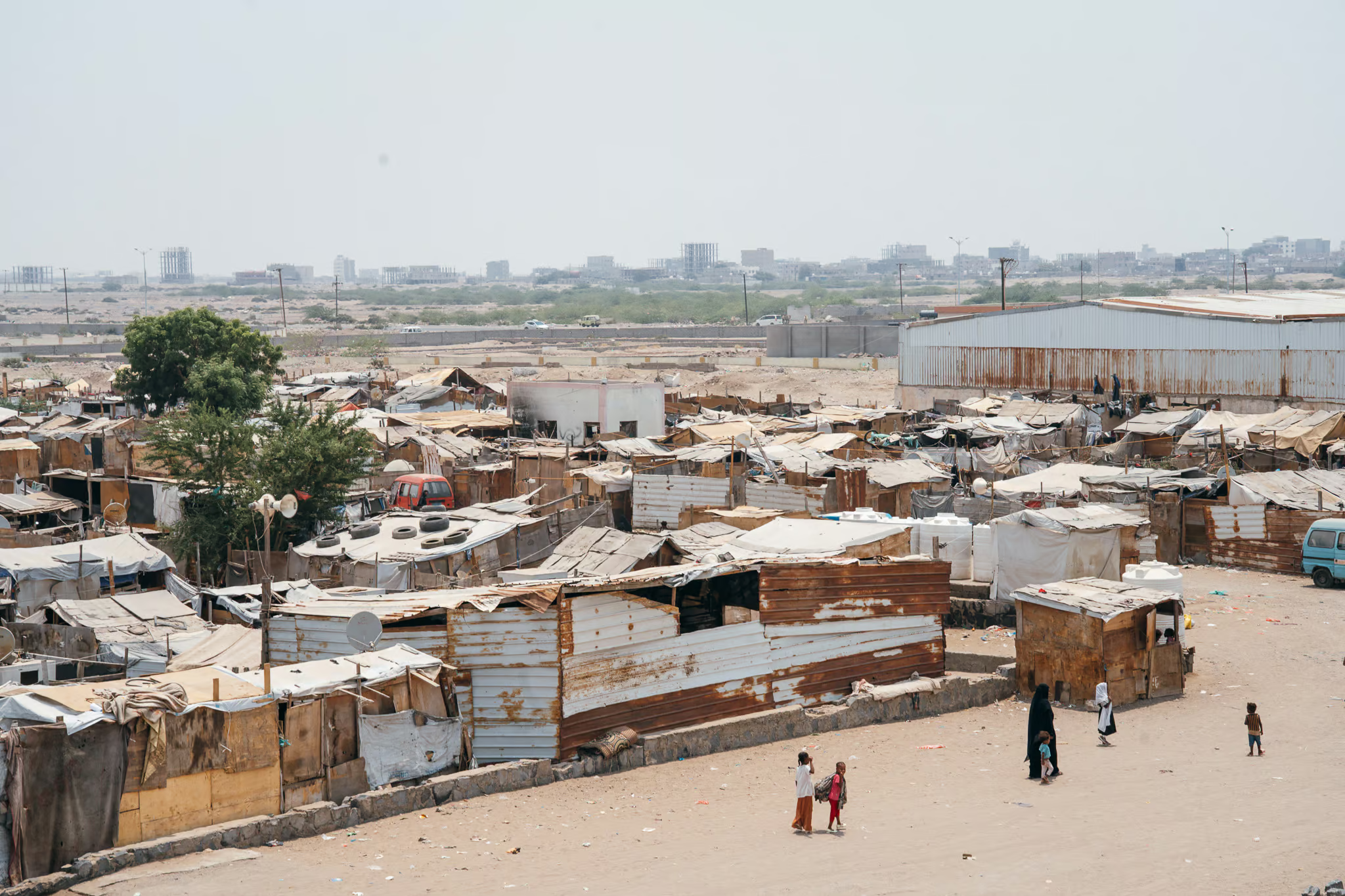
While the ceasefire has improved some deliveries of food, animal feed, basic supplies and essential commercial imports into Gaza, leading to an improvement in access to food for some households, most families are still grappling with severe shortages. Since the ceasefire, more than 730,000 people have been displaced, many living in makeshift shelters and heavily reliant on humanitarian assistance. In addition, limited access to basic water, sanitation, and hygiene (WASH) services, healthcare and the widespread destruction of cropland, livestock, fishing activities, roads and other critical infrastructure pose tremendous challenges for people and for ongoing relief efforts.
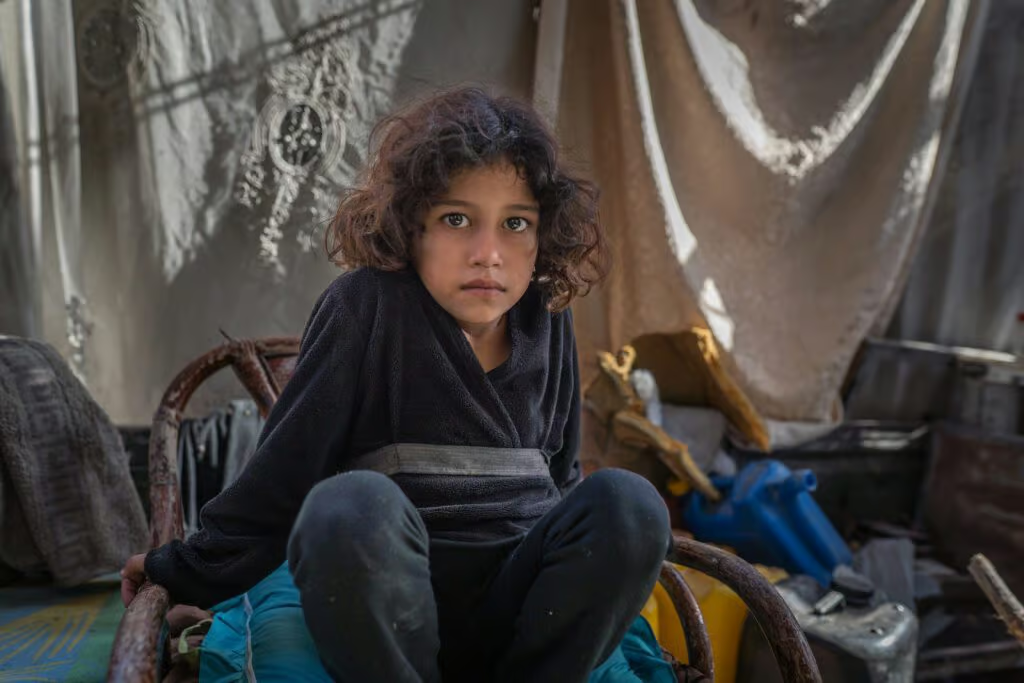
Humanitarian needs remain staggering, with current assistance addressing only the most basic survival requirements. Children under 5, along with pregnant and breastfeeding women, remain among the most vulnerable, facing worryingly high levels of malnutrition despite recent improvements.
Even though markets are now better stocked with nutritious food following the improved flow of humanitarian and commercial deliveries, vulnerable families, especially those with children, cannot afford to buy it. Nutrition-rich foods, particularly proteins, remain scarce and prohibitively expensive, leaving 79% of households unable to buy food or access clean water. No children are reaching minimum dietary diversity, and two-thirds experience severe food poverty, consuming only one to two food groups.
The situation is worsened by overcrowded makeshift shelters, damaged sewage systems, unreliable water supplies and families burning wood or trash to stay warm. Together, these conditions are driving disease outbreaks and accelerating the spread of respiratory infections, diarrhea and skin diseases, especially among children.
FAO, UNICEF, WFP and WHO stand ready to further scale up their responses. However, the strain caused by import restrictions, access constraints and major funding gaps is severely hindering their capacity to operate at the necessary scale, particularly for interventions supporting food security, nutrition, health, water sanitation and hygiene, agriculture and livelihood recovery.
“Gaza’s farmers, herders and fishers are ready to restart food production, but they cannot do so without immediate access to basic supplies and funding,” said Rein Paulsen, director of FAO’s Office of emergencies and resilience. “The ceasefire has opened a narrow window to allow life-sustaining agricultural supplies to reach the hands of vulnerable farmers. Only funding and expanded and sustained access will allow local food production to resume and reduce dependence on external aid.”
“Gaza’s children are no longer facing deadly famine, but they remain in grave danger. After more than two years of unrelenting conflict, children’s bodies and developing brains carry deep, lasting scars,” said Lucia Elmi, UNICEF director of emergency operations. “Food is now in markets, but many families simply cannot afford to buy it. Health facilities are barely functioning, clean water and sanitation services are scarce, and winter is bringing increased suffering to displaced people huddling in makeshift shelters. These fragile gains could vanish overnight if fighting resumes. We need sustained humanitarian access, restored basic services and above all, lasting peace. Gaza’s children have suffered enough. The world cannot turn away now.”
“Once again, we have shown that we can push back on famine when we have the access, security and funding to deliver food and vital support,” said Ross Smith, WFP director of emergency preparedness and response. “Now is the time to double down on these gains and ensure people can reliably access essential services. WFP stands committed to support families in Gaza to move from aid dependency towards self-sufficiency and a future free of hunger and grounded in hope, stability and prosperity.”
“The ceasefire has created space for recovery, but it has not erased the damage of two years of conflict. Only 50% of Gaza’s health facilities are partially functional and many have been damaged during the conflict,“ said Altaf Musani, WHO’s director for humanitarian and disaster management. “Even functioning health facilities face shortages of essential supplies and equipment which are subject to complex entry procedures and restrictions with many classified as potentially dual-use. Malnutrition remains high, especially among children and women. WHO is supporting seven severe acute malnutrition stabilization centers across the Gaza Strip. Much more is needed to address the vast health needs. To scale up lifesaving services and expand access to care, WHO urgently calls for the expedited approval and entry of essential medical supplies, equipment and prefabricated hospital structures.”
Call to Action
FAO, UNICEF, WFP and WHO urge all parties to:
- Guarantee sustained, safe, unimpeded and timely humanitarian and commercial access across Gaza
- Lift restrictions on essential imports, including agricultural inputs, food commodities, nutrition and healthcare supplies
- Rapidly scale up funding for essential services including food, nutrition, health, water and sanitation, agricultural and livelihood support to prevent further deterioration and enable rehabilitation and recovery
- Reactivate local food production and value chains
The agencies warn that without decisive action now, the gains made since the ceasefire could unravel quickly. Only access, supplies and funding at scale can prevent famine from returning and help Gaza move from survival to recovery.
Contacts
FAO contact: Irina Utkina, tel: (+39) 06 570 52542, [email protected]
UNICEF contact: Ricardo Pires, UNICEF Geneva, [email protected]
WFP contacts
Martin Penner, WFP/ Jerusalem, Mob. +39 345 614 2074
Abeer Etefa, WFP/ Cairo, Mob. +20 106 666 34532
Martin Rentsch, WFP Berlin, Mob +49 160 99 26 17 30
Shaza Moghraby, WFP/New York, Mob. + 1 929 289 9867
Rene McGuffin, WFP Washington Mob. +1 771 245 4268
WHO contact: WHO Media Team, [email protected]