These Girls Started out Orphans or in Urban Slums. Now They’re Becoming Community Leaders.
See how two projects in Tanzania and Uganda are changing the lives of hundreds of young girls who wouldn’t have been able to go to school without them.

See how two projects in Tanzania and Uganda are changing the lives of hundreds of young girls who wouldn’t have been able to go to school without them.
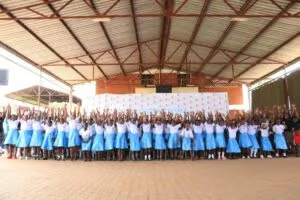
Women and girls make up a majority of the world’s hungry people, largely as a result of unequal access to education. These two initiatives are changing that tradition.

Women, especially in rural areas, are instrumental in the fight against hunger and malnutrition and in making food systems more productive and sustainable.

What is “home grown” school feeding? It’s not only transforming the lives of students, but entire communities.

Standing in a doorway to the alley, Shrity brushes her teeth before sitting on the bed she shares with three other people. Here, she finishes her homework and eats a quick meal of rice and lentils before walking the littered streets to school.
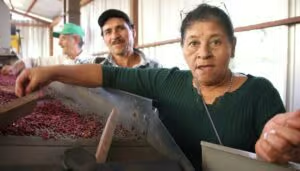
Nicaraguan women explain how they overcame old ways of doing things, where men controlled the family’s money and material goods. Now women are farming land, making joint decisions and managing household income.

On this episode of Hacking Hunger, we speak with WFP’s Annabel Symington in Yemen. The stories she tells us of Yemen’s women are either heartbreaking or heartwarming…sometimes both.

Patience Mauhura has a message for women: Don’t wait for your husbands. Think outside the box. Use your hands and your brains. It’s time to work hard.
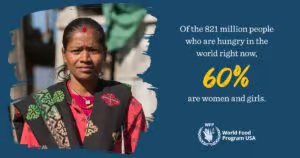
It’s International Day for the Eradication of Poverty, and despite earning less, studies show that when women earn an income, they reinvest 90% of it back into their families and communities.
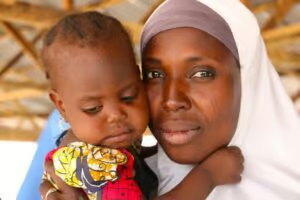
With their homes destroyed and their husbands killed, the women and children who fled Boko Haram in Nigeria, Chad and Cameroon have nowhere to turn.