Closing the Gender Gap: How a Rural Women’s Initiative Is Planting Seeds of Change in Rwanda
In Rwanda, a a rural women’s initiative is fostering pathways for female farmers to be leaders, decisionmakers and agents of change in their communities.

In Rwanda, a a rural women’s initiative is fostering pathways for female farmers to be leaders, decisionmakers and agents of change in their communities.
Over the last five years, a new report found that an estimated 378,000 people have made the arduous trek from their homes in Central America across the border into the United States.
If you didn’t know us before, here are a few facts about the World Food Programme that might surprise you.
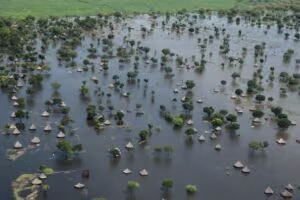
The United Nations World Food Programme (WFP) is providing South Sudanese farmers with “climate-smart training” to make the most of their land and yield stronger harvests.
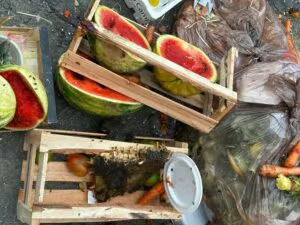
Humans – and our food systems – waste a staggering amount of food. It’s a global mess, and one we need to face head on if we’re going to win the fight against hunger.
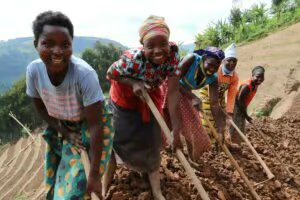
What are food systems and how do they relate to WFP’s work? As the UN Food Systems pre-summit begins in Rome, we’re taking a look at the basics of our food systems.
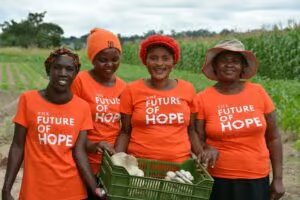
This fall, the United Nations World Food Programme (WFP) Innovation Accelerator hosted its 38th Innovation Bootcamp to build bold ideas for making food systems more resilient, safe, nutritious and inclusive for all.
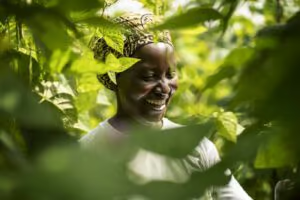
There was a time when Immaculée Mukarusanga relied on farming just to feed her two teenage daughters. Now, thanks to the Farm to Market Alliance, she grows enough beans, corn and potatoes to sell at her local markets and could afford a cow.
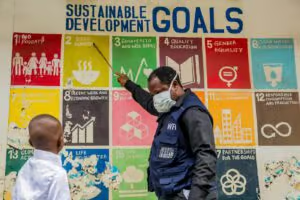
For 60 years, the U.N. World Food Programme has worked on the front lines of the world’s worst crises, doing whatever it takes to deliver lifesaving food.

WFP is empowering farmers in Zambia to increase and strengthen their crop yields. With organic fertilizer and new soil techniques, farmers like Mainner are able to grow a variety of drought-tolerant crops.