Liberia

Hunger in Liberia is a serious concern, driven by poverty and high food prices. WFP is responding through school meals and support to smallholder farmers.
Make a difference in Liberia

Hunger Stats

Liberia Facts

New York
Show Places
New York
×
Geocoding Error Occured.

Tried to Geocode:

Error Type:

Please be sure to follow the tutorial on how to setup the Google APIs required for the Advanced Google Map Widget.

Google Map API Key Tutorial
Population: 5.5 million people.
Background: Libya became independent in 1951. The country is a republic and has experienced prolonged political instability since 2011.
Geography & Climate: Libya is a large, mostly desert country in North Africa, with a long Mediterranean coastline. The country has a hot, arid climate.
Economy: Libya’s economy depends overwhelmingly on oil and gas revenues, which provide the vast majority of export earnings and government income. Agriculture plays only a limited role: Just about 1% of Libya’s land is cultivated, and domestic food production is constrained by arid conditions, water scarcity and conflict-related disruptions. As a result, Libya relies heavily on imports to meet its food needs, with cereals and other staples largely purchased from abroad and paid for using foreign currency earned from oil exports.

Causes of Hunger in Liberia

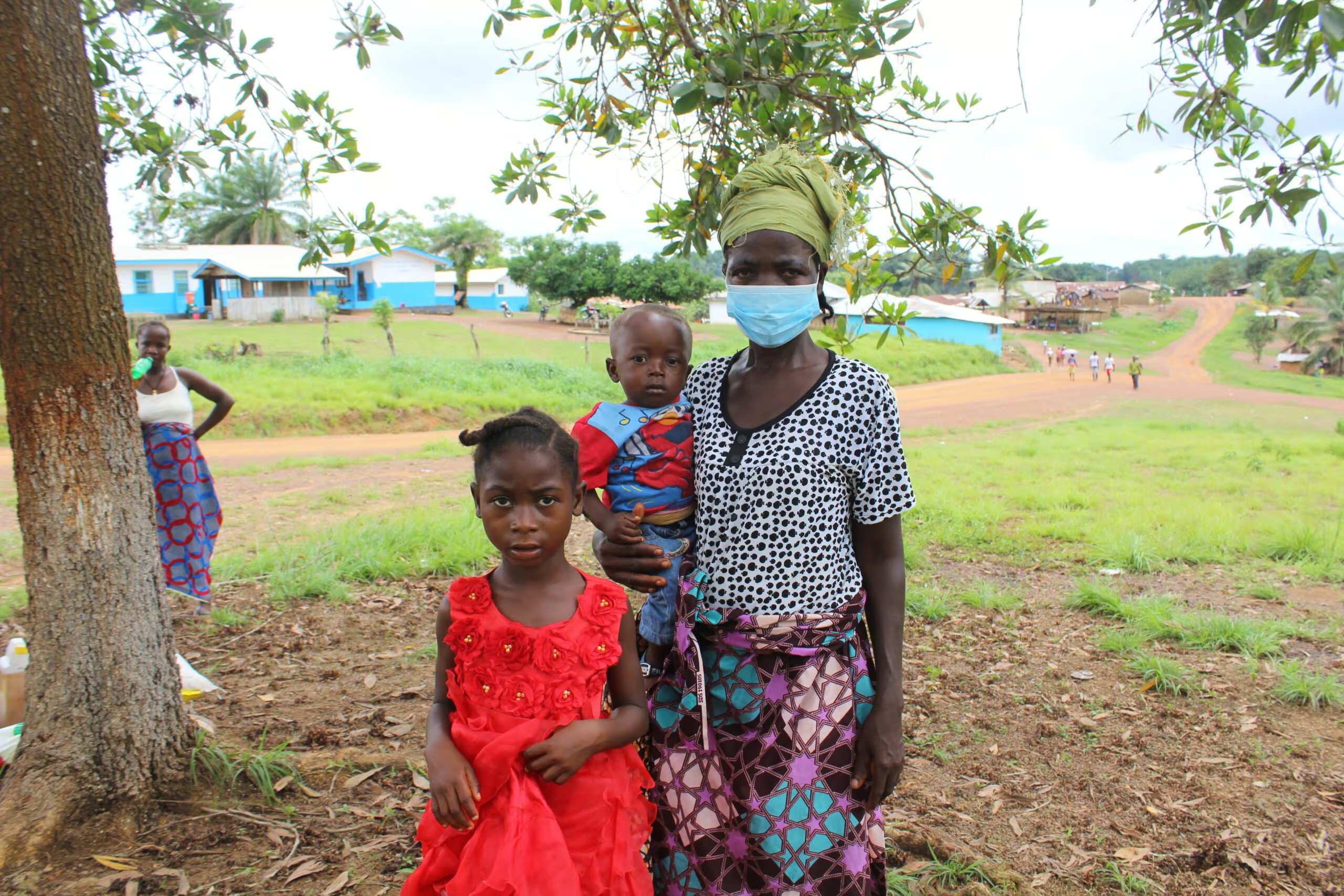
Mary's life was impacted dramatically by the COVID-19 pandemic when restrictions were placed on movement, which hindered her ability to communicate with her children who had been assisting her through subsistence farming. Now there are no children to help with the work and she has been ill, with no money to buy medication. COVID-19 Household Food Support Programme emergency food parcels were distributed to the most vulnerable members of the population in Juah Town, Grand Bassa County.  She is grateful for the food provided by WFP and the Government of Liberia, but projects that it will not last very long.

Poverty

Many Liberians struggle to earn enough income to buy adequate food, especially where jobs are scarce and households depend on low-productivity agriculture. When food prices rise or supply chains are disrupted, families have less purchasing power and may reduce meal size, skip meals or shift to cheaper, less nutritious foods.
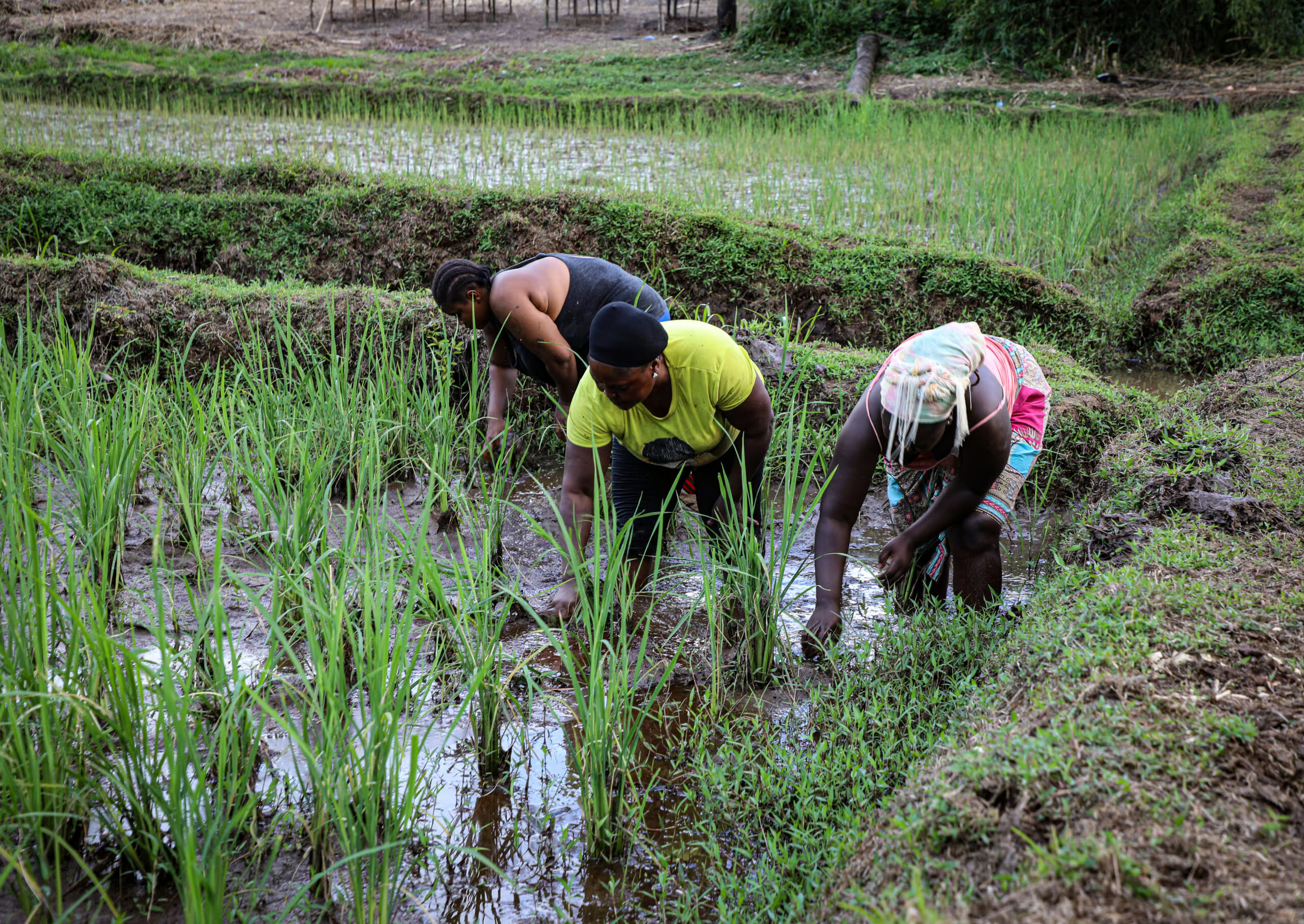
Vivian Giddings and two other women, who are also members of the Latter-Day Saints Church (LDS), work to prickle rice in the swamp field created as part of the Integrated Food Security (IFS) project.

The Integrated Food Security (IFS) project funded by the Latter-Day Saints Church (LDS) aims to provide livelihood support to vulnerable people in the targeted counties (Bong, Lofa, Nimba, Grand Bassa and Grand Cape Mount) to help them improve their household food security, change their lives and build resilience to seasonal shocks. 
The project is reaching its targeted number (750) of project participants in the above-mentioned counties. All 750 smallholder farmers are registered under the SCOPE platform, WFP’s corporate tool to receive conditional food assistance for the work on asset creation/ agriculture activities including soil-water management, flood control measures, dykes, irrigation canals, land preparation, nursery, planting, reforestation, water management, etc. based on work norms to increase production. The first-year assistance transfers will happen in three distribution cycles (15days per month) when they receive an electronic food voucher on an amount of US$45/month. 
Additionally, during the training period, each month each beneficiary is receiving an electronic food voucher amounting US$25/month to offset the transportation cost & income from work. The electronic vouchers will also be transferred via their SCOPE card to allow them to buy prescribed food items from WFP contracted retailers. The trainings will cover best agriculture practices on crop farming, climate smart agriculture and pre and post-harvest techniques and technologies (irrigation techniques, plot layout, technology for soil testing to determine its fertility), processing, packaging, preserving, food quality, reduction of post-harvest loss, linking to home grown school feeding/market, also skill training on income generating activities (like poultry, goat rearing, small trade, etc.

Agricultural Challenges

Liberia’s food security is vulnerable to weak agricultural production, pests, natural shocks and broader economic crises, which can reduce harvests and household food stocks.

History of Hunger in Liberia

WFP’s Work In Liberia

WFP has been present in Liberia since 1968. They aim to provide safety nets to strengthen food and nutrition security through activities including:
School children eating nutritious hot meals in Koundara

School Feeding
School Meals
WFP provides school meals to primary schoolchildren and take-home rations to schoolgirls from highly vulnerable poor households in the most food-insecure counties.
Learn More
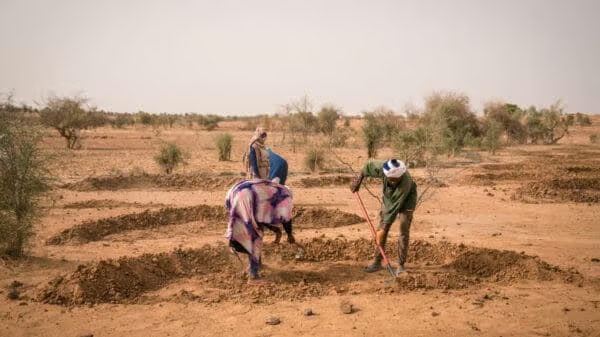
WFP resilience project in Mauritania
Building Resilience
WFP helps create community assets – including roads and bridges to improve access to markets. WFP also woks to establish community grain reserves and link farmers’ organizations to markets.
Learn More
WF1128917_20201231_LBR_Vannette-Tolbert_0006-877x768
Refugees
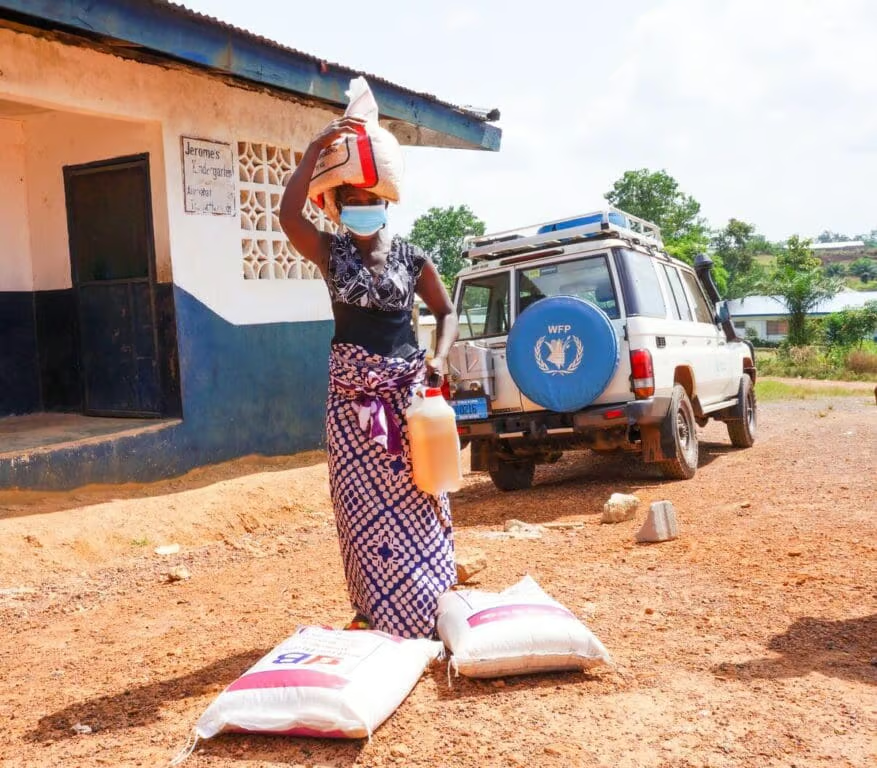
Refugees have limited access to means of earning a living, rendering them heavily dependent on food and material assistance. WFP provides monthly food support to some 30,000 refugees residing in Liberia’s three official refugee camps.
Learn More

Latest News From Liberia

Scroll to Top