Over the last two years, the conflict in Gaza has escalated and created a catastrophic hunger crisis. Families have been repeatedly displaced and cut off from food, water and medical aid. Health systems, markets and sanitation infrastructure have collapsed. People are struggling to survive.
During this critical ceasefire, the World Food Programme (WFP) is scaling up to deliver as much food as possible into Gaza. More than half a million Gazans are still starving – here’s why.
Help Get Food Into Gaza
As the ceasefire holds, WFP needs to get as much food into Gaza as possible. Help them scale up and save lives.
GIVE NOWWhat’s the Difference Between Hunger and Famine in Gaza?
The entire population of Gaza is suffering from extreme levels of hunger. Everyone is hungry. Children under 5, along with pregnant and breastfeeding women, are at especially high risk of malnutrition. On August 22, famine was confirmed in parts of Gaza. The report found 641,000 people were experiencing famine in Gaza Governorate, which includes Gaza City.
A famine is confirmed only when all three of these conditions are met:
- At least 2 people per 10,000 (or 4 per 10,000 children) die daily of starvation, disease and malnutrition
- At least 20% of households face extreme food shortages
- At least 30% of children suffer from acute malnutrition
This was the first time famine was officially confirmed in Gaza and the wider Middle East region. Today, the famine persists, and conditions could spread to more areas of the Gaza Strip without immediate, long-term access to food.
Why Is Hunger So Severe in Gaza?
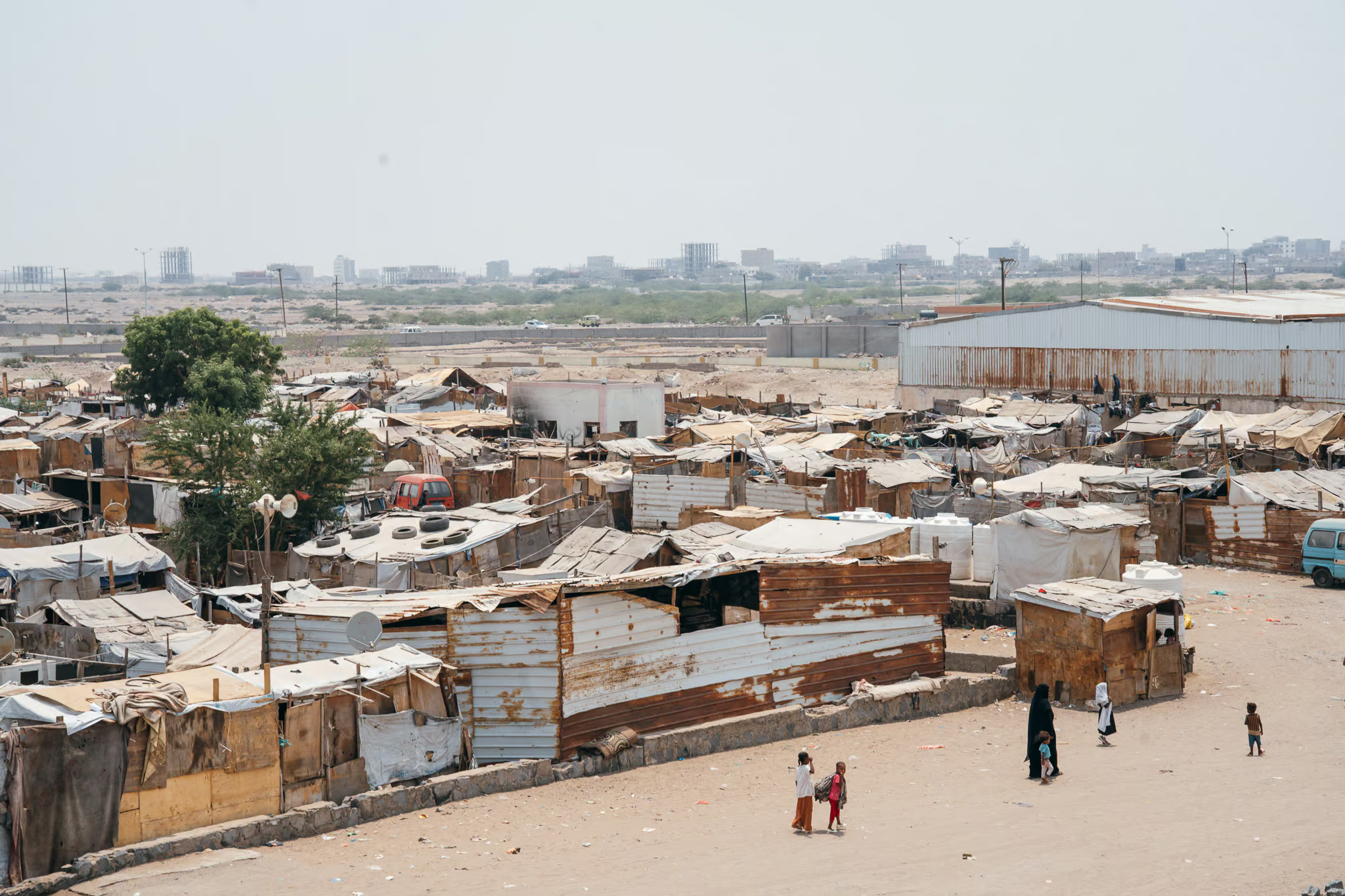
Since the violence escalated two years ago, nowhere in Gaza has been safe. More than 90% of all residential buildings in Gaza – around 436,000 homes – have been damaged or destroyed. Approximately 98% of Gaza’s farmland is damaged or inaccessible. More than half of all roads in Gaza have been destroyed or rendered useless. Huge swathes of the Strip are piles of rubble.
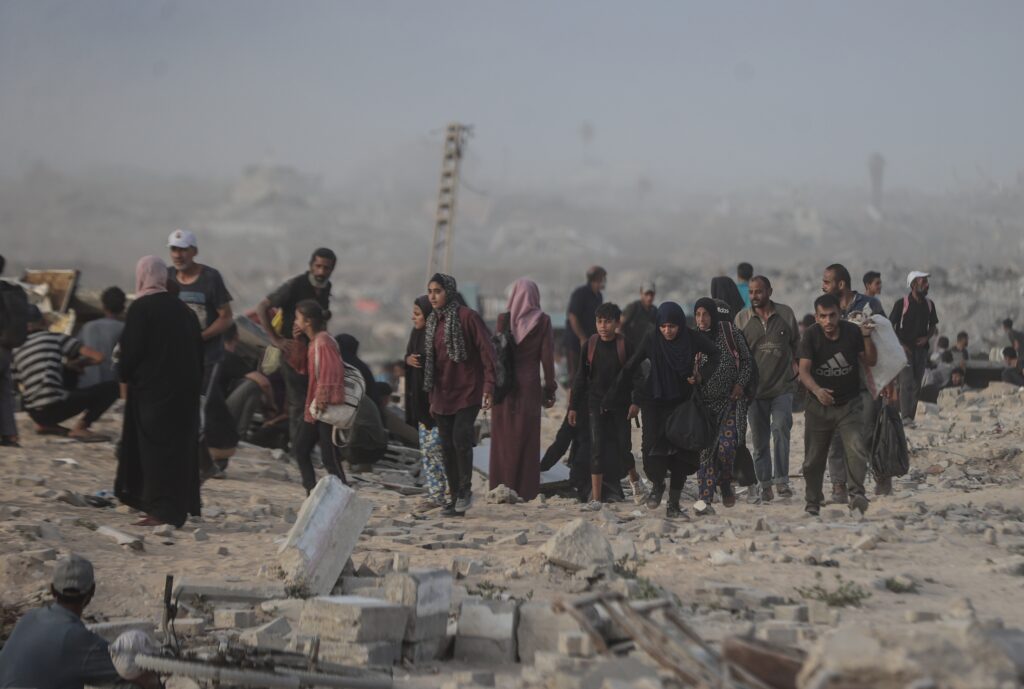
“The levels of death and destruction in Gaza are without parallel in recent times,” said United Nations Secretary-General António Guterres.
Families have only had short reprieves from bombardments and evacuation orders. Nine in every 10 people have been serially displaced from their homes, making it nearly impossible to cook or store food.
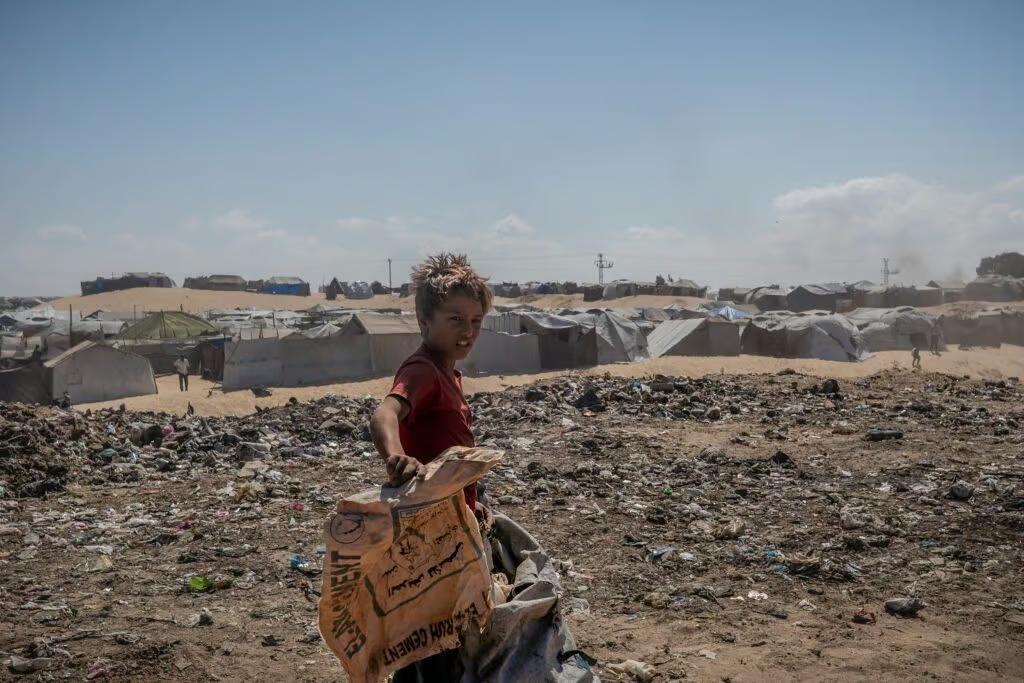
The conflict has led to a complete collapse of Gaza’s food production, job market, economy and infrastructure. More than 80% of Gaza’s farms, bakeries and food storage facilities have been destroyed. Virtually all marketplaces, grocery stores and restaurants are closed or destroyed. Fisheries and farms were once major sources of employment, but those jobs are gone – and with cash critically scarce and food prices sky high, people cannot afford what little food might be available.
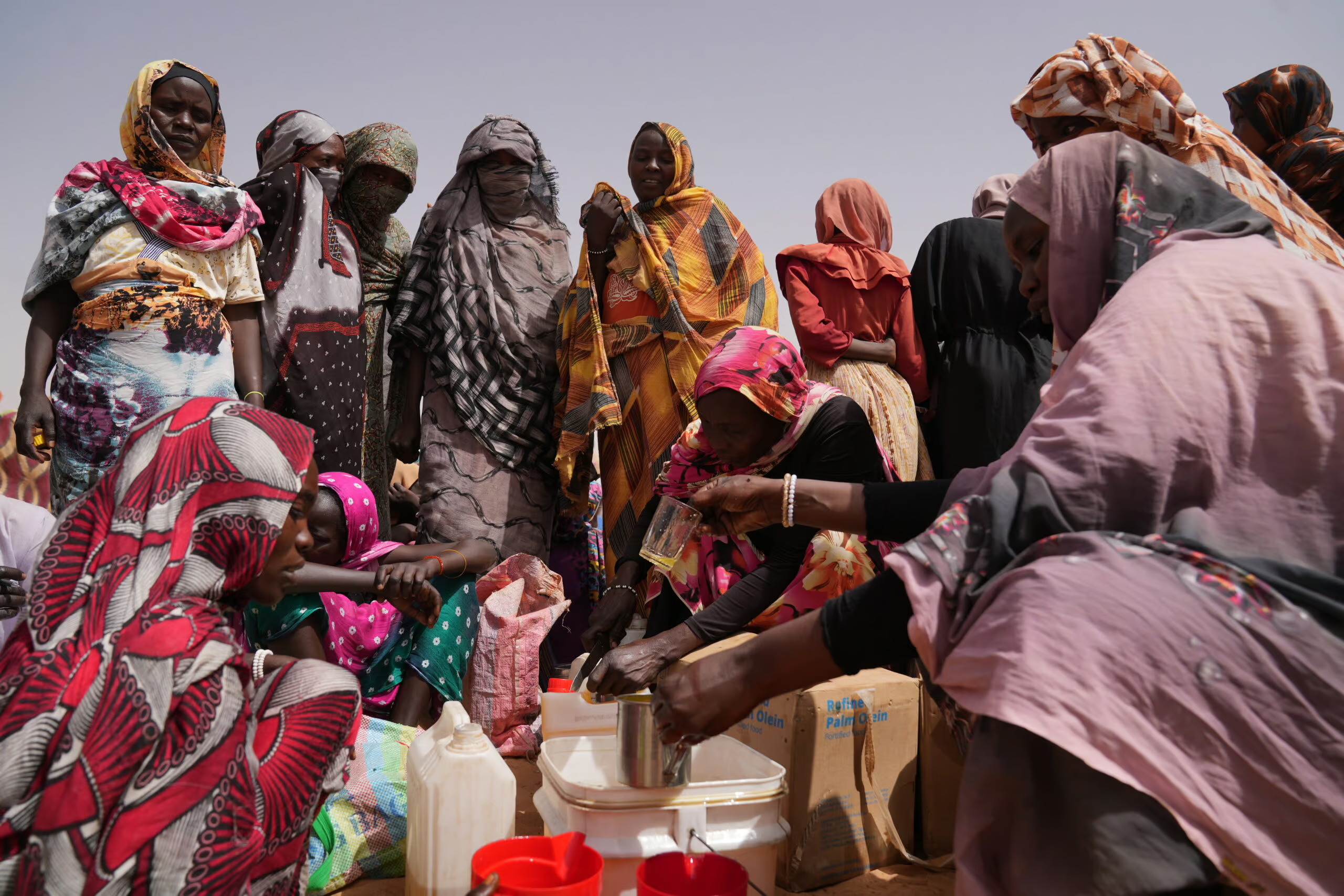
These catastrophic conditions have left Gazans dependent on humanitarian aid that is often severely limited or restricted entirely.
Why Is it so Hard to Deliver Food Aid Into Gaza?
For over 60 years, WFP has worked on the frontlines of the world’s most challenging, complex emergencies. They are the logistics leader for the entire humanitarian community in times of crisis, and they know how to adapt they’re operations in hard-to-reach areas. They have the experience and proven systems to respond at scale. So, why has delivering food into Gaza been so difficult?
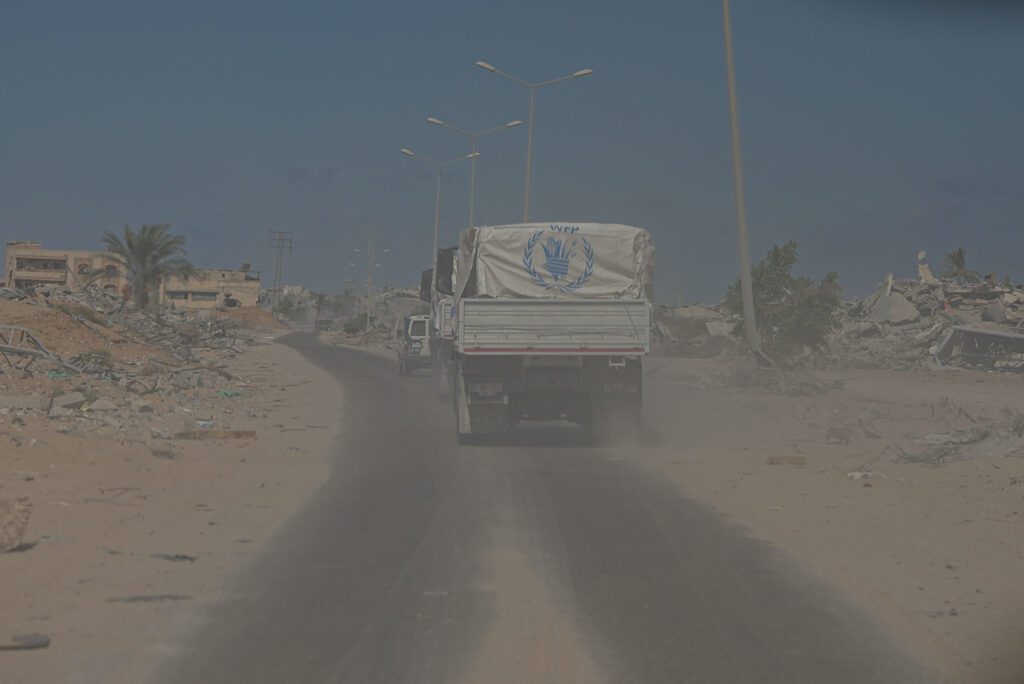
Lengthy Approvals and Wait Times
First, each shipment of humanitarian aid must go through lengthy and unpredictable approval processes. These can take days or even weeks, delaying the arrival of urgently needed food.
Once approval is granted, convoys often face extremely long wait times at border checkpoints. Trucks are routinely held for inspection, sometimes for hours or days, due to complex security protocols and frequent changes in regulations. This drastically delays their deliveries. Despite having approvals, only a fraction of the needed aid trucks have been allowed in at any given time. In many instances, weeks have passed without any deliveries being permitted, leaving hundreds of thousands of families without lifesaving supplies.
Route Changes and Closures
Once aid trucks are on their way, they rely on known and established routes to make it to their destination quickly and safely. However, last-minute route changes by authorities are common, and these abrupt alterations take convoys to unfamiliar, hazardous roads. Rerouting can add hours or days to delivery schedules, with drivers sometimes forced to travel through areas with active hostilities.
Humanitarian corridors and distribution points are supposed to be reliable places for people to safely receive aid. However, they too are frequently closed without warning, and many are now inaccessible or destroyed.
Violence Against Aid Workers and Civilians
Lastly, attacks on aid convoys and on those seeking aid have forced many organizations to suspend or drastically reduce their operations. Crowds of people trying to find food have come under fire from tanks and snipers. WFP vehicles have been shot at and struck by bullets. This violence slows, or even halts, food distributions.
Due to these challenges, more than a third of Gazans are still going days at a time without eating, and adults are regularly skipping meals to feed their children. When humanitarian aid is infrequent, unpredictable and unreliable, hunger worsens.
What’s Needed to Keep Gazans From Starving?
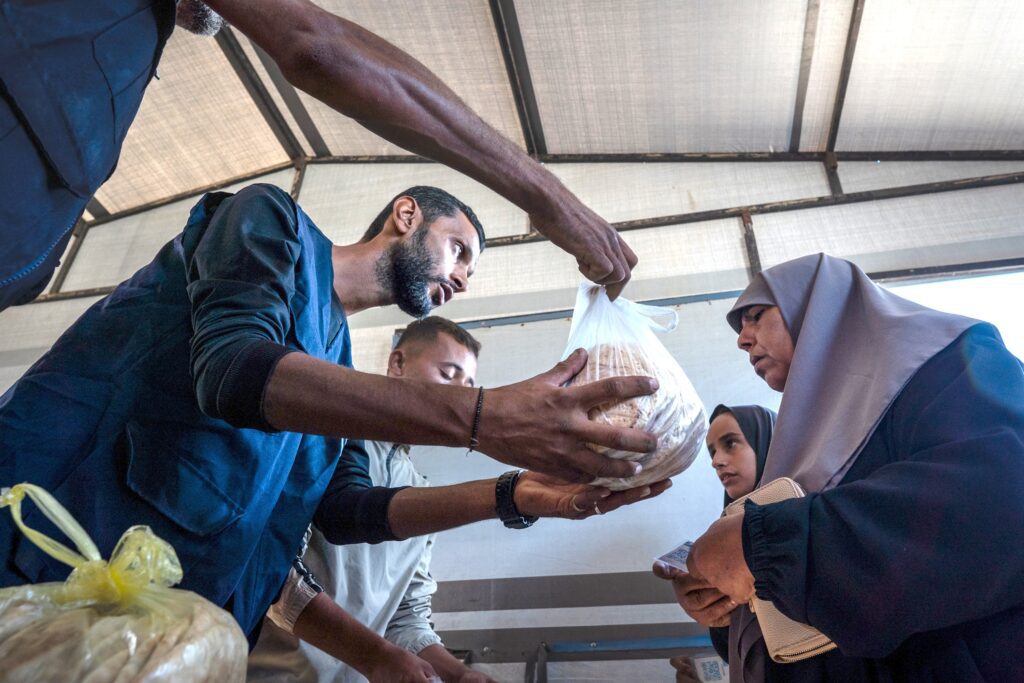
The ceasefire opens a critical window for WFP to scale up and deliver lifesaving food, but it will take months to reverse famine and pull people back from starvation. Hundreds of thousands of families remain displaced. Most are returning to find their homes completely destroyed, damaged or unsafe. Severely malnourished women and children need specialized, weeks-long treatment to recover.
To keep Gazans from starving, the ceasefire needs to hold and be fully implemented. The conflict needs to end to allow an unimpeded, large-scale humanitarian response. Secure access is needed to reach people wherever they are, especially the most vulnerable communities facing famine conditions. Food, clean water, medical supplies and fuel must enter Gaza at scale and without delay. Aid distributions must be continuous and predictable. Humanitarians and civilians must be protected.