This was originally posted on wfp.org
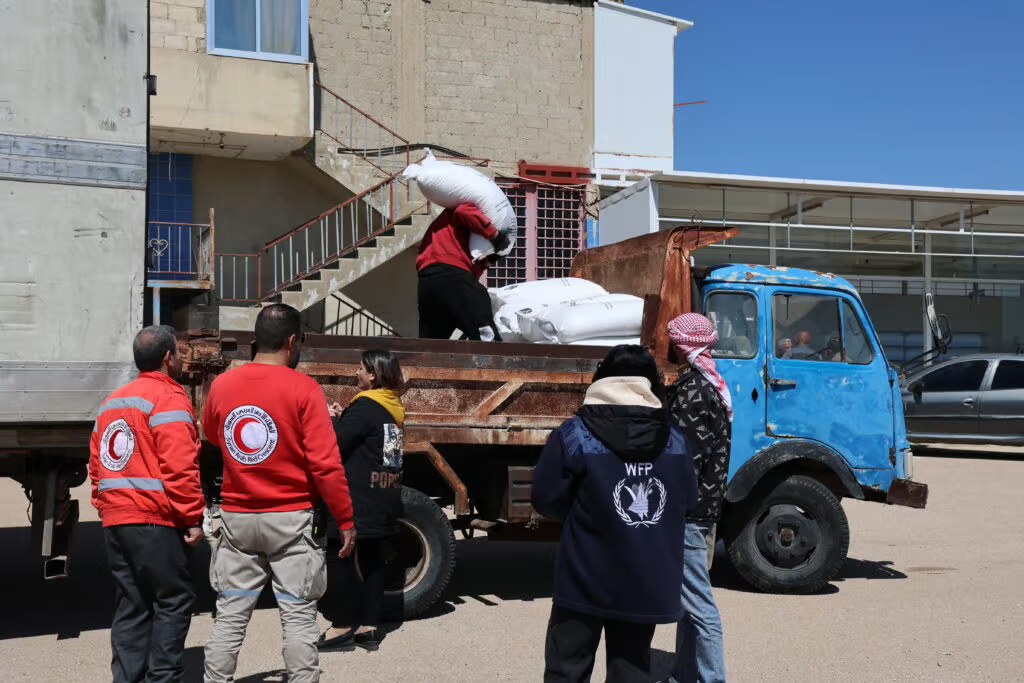
DAMASCUS/ROME/CAIRO – Critical funding shortfalls are forcing the United Nations World Food Programme (WFP) to significantly scale back its operations in Syria. WFP has reduced its emergency food assistance by 50 percent, from 1.3 million people to 650,000 in May, and halted a nationwide bread subsidy programme that has supported millions daily.
While there have been signs of stabilisation in parts of the country, 7.2 million people in Syria remain acutely food insecure, including 1.6 million facing severe conditions. Many households are already unable to meet their daily food needs, resorting to reduced food portions, less nutritious meals, or skipping meals altogether. Prolonged deprivation increases the risk of malnutrition—particularly among children. In this context, affordable staple foods like bread remain a critical buffer against deepening hunger. Households already struggling to meet daily food needs are also contending with continued economic pressure, disrupted livelihoods, and displacement dynamics, including returning families and communities with limited capacity to absorb them.
The bread subsidy programme has been a vital lifeline, keeping this staple food affordable. Through this initiative, WFP supported more than 300 bakeries with fortified wheat flour, enabling subsidised bread to reach up to four million people each day in highly vulnerable areas. As one of the last remaining safety nets, any disruption risks accelerating hunger, forcing more families into negative coping strategies, and weakening a critical opportunity to support recovery and stability.
In 2025, WFP reached 5.8 million people across all 14 governorates through a combination of emergency food assistance, bread subsidies, nutrition support, livelihoods programmes, and social protection. Even though these programmes address the most urgent needs, ongoing funding constraints are now forcing a further reduction in coverage from fourteen to just seven governorates.
“The reduction in WFP’s assistance is driven solely by funding constraints, not by a decrease in needs,” said Marianne Ward, WFP Country Director in Syria. “This is a critical moment for Syria. Recovery remains fragile, needs are still severe, and we are being forced to withdraw a vital safety net at a time when people need it most with serious implications for food security, social cohesion, and stability, leaving the most vulnerable of families with even fewer options to cope.”
Funding shortfalls are also affecting Syrian refugees in neighbouring countries, where rising costs, continued instability, and limited income opportunities are compounding vulnerability. In Lebanon, many refugee households remain heavily reliant on assistance. In Jordan, WFP has been forced to halt cash-based food assistance for 135,000 Syrian refugees living in host communities while continuing reduced support for around 85,000 refugees in camps. In Egypt, 20,000 Syrians are facing reduced support.
“Across the region, vulnerable families are facing the cumulative effects of prolonged crises, rising costs, and shrinking assistance,” said Samer Abdeljaber, WFP Regional Director for the Middle East, North Africa, and Eastern Europe. “Without urgent and sustained funding, we risk reversing years of progress and pushing millions deeper into food insecurity, both inside Syria and in neighbouring countries hosting refugees, risking broader prospects for stability and recovery”
WFP requires USD 189 million over the next six months (June–November 2026) to sustain and restore life-saving assistance inside Syria. Timely funding will allow WFP to reach 1.6 million of the most vulnerable people, maintain critical nutrition support, safeguard access to affordable bread for millions more and help prevent further deterioration at a moment that remains pivotal for Syria’s recovery.
Despite constraints, WFP continues to prioritize emergency food assistance, targeted nutrition programmes, and support to livelihoods and national systems, while working with partners to mobilize additional funding and scale up operations as resources allow.
# # #
The United Nations World Food Programme is the world’s largest humanitarian organization saving lives in emergencies and using food assistance to build a pathway to peace, stability and prosperity for people recovering from conflict, disasters and the impact of climate change.
Follow WFP on X, formerly Twitter, via @wfp_media and @wfp_mena