Over the past month, the conflict in Gaza has intensified further. People are risking their lives in a desperate effort to find food, and World Food Programme (WFP) convoys have come under fire.
“The situation is the worst I’ve ever seen,” said WFP Deputy Executive Director Carl Skau. “It’s hard to find words to describe the level of desperation I have witnessed. People are dying just trying to get food.”
Despite the dangerous conditions, WFP remains one of the few organizations on the ground delivering food into the Gaza Strip. That means your support sends food directly to people in Gaza who urgently need it.
What’s Going on in Gaza Right Now?
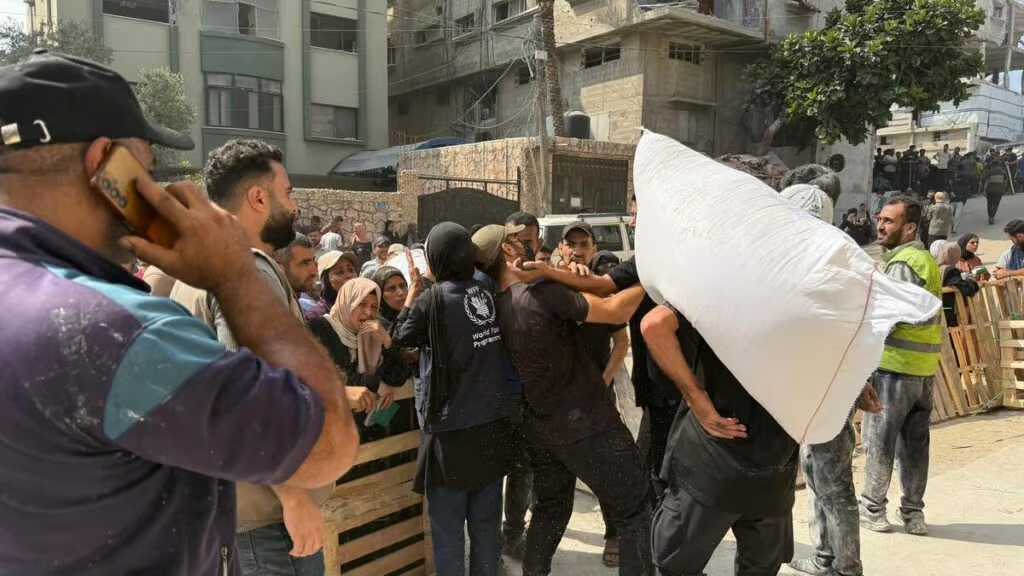
Military operations across Gaza have intensified, notably in the central area of Deir Al Balah. Acute malnutrition is rising at an unprecedented rate, nearly a quarter of the population are enduring famine-like conditions, and there are reports of people dying from starvation. It’s the deadliest conflict on record for aid workers. WFP convoys face escalating risks from shooting, looting and crowd surges.
On July 27, WFP welcomed the news that Israel is prepared to implement humanitarian pauses and that designated humanitarian corridors will be created so U.N. convoys can safely deliver emergency aid to people in Gaza.
Here’s the Basic Background
For decades, Gaza has faced a protracted and complex humanitarian crisis. Today, the situation has reached catastrophic levels.
Food aid is the only real way for most people inside Gaza to eat. Today, one-third of the population is not eating for days. As of July 2025, over 320,000 children, the entire population under 5 in the Gaza Strip, are at risk of acute malnutrition, with thousands suffering from severe acute malnutrition, the deadliest form of undernutrition. More than 500,000 people are enduring famine-like conditions, meaning they face death from starvation. If they do survive, the consequences of life-threatening hunger can be irreversible – especially for young children.

WFP’s Response
The escalation of conflict in October 2023 destroyed infrastructure and entire neighborhoods in Gaza. In the immediate aftermath of the first air raids, WFP began distributing fresh bread, canned foods and ready-to-eat meals to around 100,000 people who sought refuge in UNRWA shelters. Since then, WFP has been able to deliver enough food to feed 1.3 million people – more than half the population. But the situation on the ground is volatile, so WFP’s response has evolved alongside the changes.
Read: Gaza Conflict: A Timeline of Aid in a Humanitarian Crisis
How Is the Conflict Affecting Civilians?
The war has left more than 2 million people fully dependent on food assistance, homeless and without any income. Many people have been repeatedly displaced – up to 10 times. Everyone in Gaza is hungry, including humanitarian workers. The threat of famine hangs across the Strip as the violence continues, and food is dangerously scarce. Hunger and malnutrition surged drastically after all aid was blocked from entering the Gaza Strip on March 2 this year.

What’s Being Done Now to Help People in Gaza?
Since border crossings reopened on May 21, WFP has delivered 48.5 million pounds of food aid. While this food is critical to saving lives, it’s a drop in the ocean of what is needed. Triple that number – more than 135 million pounds of food – is needed every month to assist the entire population of Gaza that now faces extreme hunger because of the conflict.
WFP has three months’ worth of food in or on its way to the region. But, a ceasefire is necessary to reach communities in a consistent, predictable, orderly and safe manner.
Are WFP Trucks Getting into Gaza?
Yes – WFP trucks are getting into Gaza. In the last week, WFP teams delivered 350 truckloads of food aid. However, this represents just over half the number of convoys WFP requested permission to send in. Once permission is received and food aid is loaded onto the trucks, convoys also navigate:
- Bottlenecks: Only two border crossing points are cleared for use. This severely limits the number of trucks that can enter Gaza.
- Delays: Trucks wait up to 46 hours before receiving final permissions to travel along these few approved routes.
- Crowds: During these delays, crowds of people often anticipate the arrival of WFP’s trucks and gather along expected transport routes, which are too few.
- Long Journeys: Once trucks are on the move, it can take them up to 12 hours to complete their missions due to checkpoints and badly damaged roads.

What Risks do Humanitarians Face?
Deadly incidents near humanitarian convoys continue. When aid trucks are held up at checkpoints or re-routed multiple times, WFP teams and desperate civilians are exposed to significant risk: active hostilities, drone surveillance, sniper fire and bombardments. On July 20, a convoy departing from the Zikim (West Erez) crossing came under fire while surrounded by civilians seeking aid. Civilians were killed and injured, and a WFP armored vehicle was hit by a bullet in the rear glass.
Israel’s Role
Israeli authorities have provided assurances that more trucks will be able to carry food aid into Gaza using more routes and border crossing points with faster clearances, dependable communications, and without armed forces nearby. Since July 23, WFP has seen faster food convoy approvals and movements but requires a sustained commitment to avert the ongoing humanitarian crisis.
To scale up and deliver assistance to vulnerable families in need, WFP reiterates its calls for:
- At least 100 aid trucks per day to be allowed through northern, central and southern border points in a sustained, safe and predictable manner.
- Faster loading and dispatching of trucks from crossing points into Gaza.
- No armed presence nor shooting near convoy routes or civilian aid distribution points.
- Uninterrupted connectivity to allow humanitarian organizations to coordinate effectively.
- A sustained ceasefire that creates the necessary conditions for safe, scaled and impactful humanitarian aid.
How You Can Help
Your support powers WFP’s emergency response in Gaza. WFP has experienced teams on the ground. They have the expertise and proven systems to respond to this catastrophic situation at scale. And they have the food. Despite the constantly changing conditions and dangers, WFP is staying the course to assist the people of Gaza.
Your donation – whatever you can give – helps send lifesaving food to Gazans who may not survive without it.