DAKAR, Senegal – The World Food Programme (WFP) today launched a regional innovation hub in Dakar to accelerate the development of sustainable, locally led solutions in addressing hunger and malnutrition in West and Central Africa.
The innovation hub – the third launched globally by WFP – will drive progress towards achieving the U.N. goal of Zero Hunger. Working in partnership with governments, private sector leaders, entrepreneurs, researchers, civil society and communities, WFP will be a catalyst for innovations that can make a transformative impact on hunger.
The hub will develop bespoke, innovative solutions that align with national and regional priorities by focusing on strengthening humanitarian preparedness and response, national homegrown school meals, and resilient food systems. Leveraging WFP’s broad operational footprint, the hub will complement existing programs while harnessing proven and emerging technologies to enhance efficiency and effectiveness.
“Innovation is essential to bring change at scale and overcome food insecurity and operational challenges we experience in this region,” said Margot van der Velden, WFP’s regional director for West and Central Africa. “It enables us to not only maximize resources, but also increase agility and bring transformative change. Partnership is key to the success of this initiative. We collaborate with public, private, and philanthropic actors and explore creative financing models for long-term sustainability and scale.”

West and Central Africa are rich in potential, but persistent conflict and extreme weather have displaced millions of people and disrupted countless livelihoods. Today, more than 11 million people are forcibly displaced in the region – including 3.1 million refugees and asylum-seekers and 8.2 million internally displaced persons. This complex situation is driving hunger up, with nearly 12% of the population exposed to acute food insecurity over the last five years.
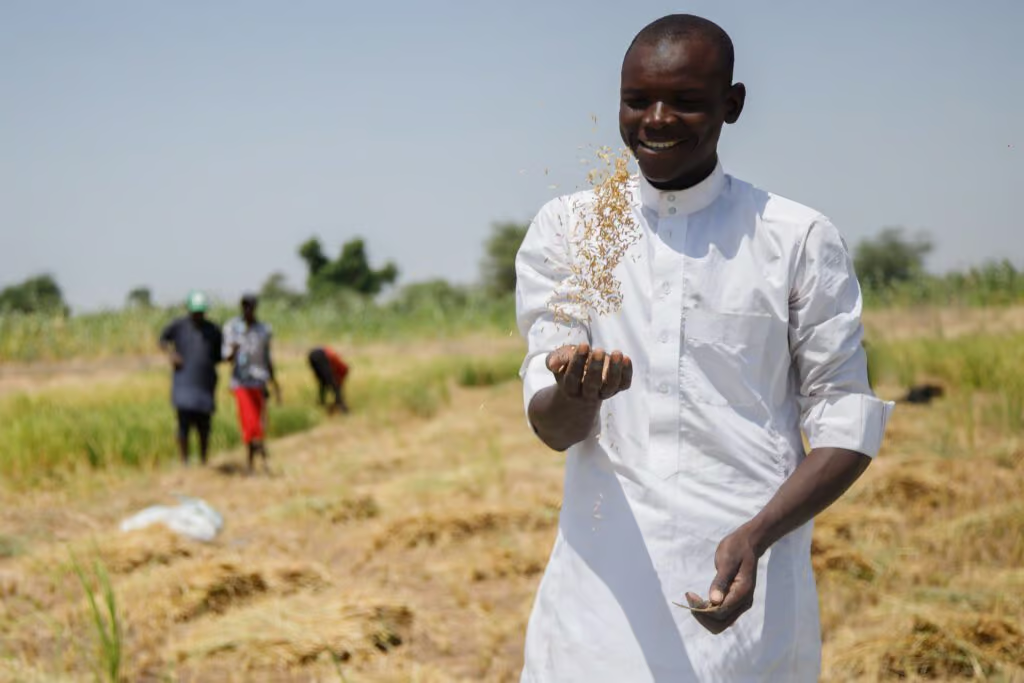
In response to the challenges and humanitarian needs, WFP has been working with national governments to scale innovations that improve local food production, strengthen resilience and reduce reliance on humanitarian aid. Some of these innovations include:
- School Connect: Deployed in 15 of the 19 country offices in the region, this digital tool is transforming school meals monitoring by enabling real-time tracking of food deliveries, supplies, attendance, and meal consumption.
- Ignitia: Serving 2.7 million small-scale farmers in Mali and Ghana with affordable, actionable weather forecasts, Ignitia has increased crop yields by 10% and aims to reach 100,000 farmers in Ghana by the end of 2025.
- Farm2Go: Implemented in Guinea, this digital solution boosts small-scale farmers’ productivity and income by improving market access and promoting sustainable agriculture.
- SCOUT: An innovative platform that halves crisis response times, this solution has helped save $5 million within a year in West Africa by optimizing sourcing and logistics for sorghum. At scale, SCOUT is estimated to have saved up to $25 million annually in the region.
The innovation hub will build on successful initiatives, bringing together communities, governments, the private sector, innovators, and civil society to scale these proven, locally led solutions, build resilient food systems, and accelerate measurable progress toward Zero Hunger across West and Central Africa.
WFP requires an initial investment of $4.5 million over three years to establish the innovation hub and help develop up to 15 transformative, ready-to-scale innovations with the potential to impact the lives of millions of people in the region.
# # #
The World Food Programme is the 2020 Nobel Peace Prize Laureate and the world’s leading humanitarian organization, saving lives in emergencies and using food assistance to build a pathway to peace, stability and prosperity for people recovering from conflict, disasters and the impact of climate extremes.
Follow WFP on Twitter @wfp_media and @wfp_wafrica