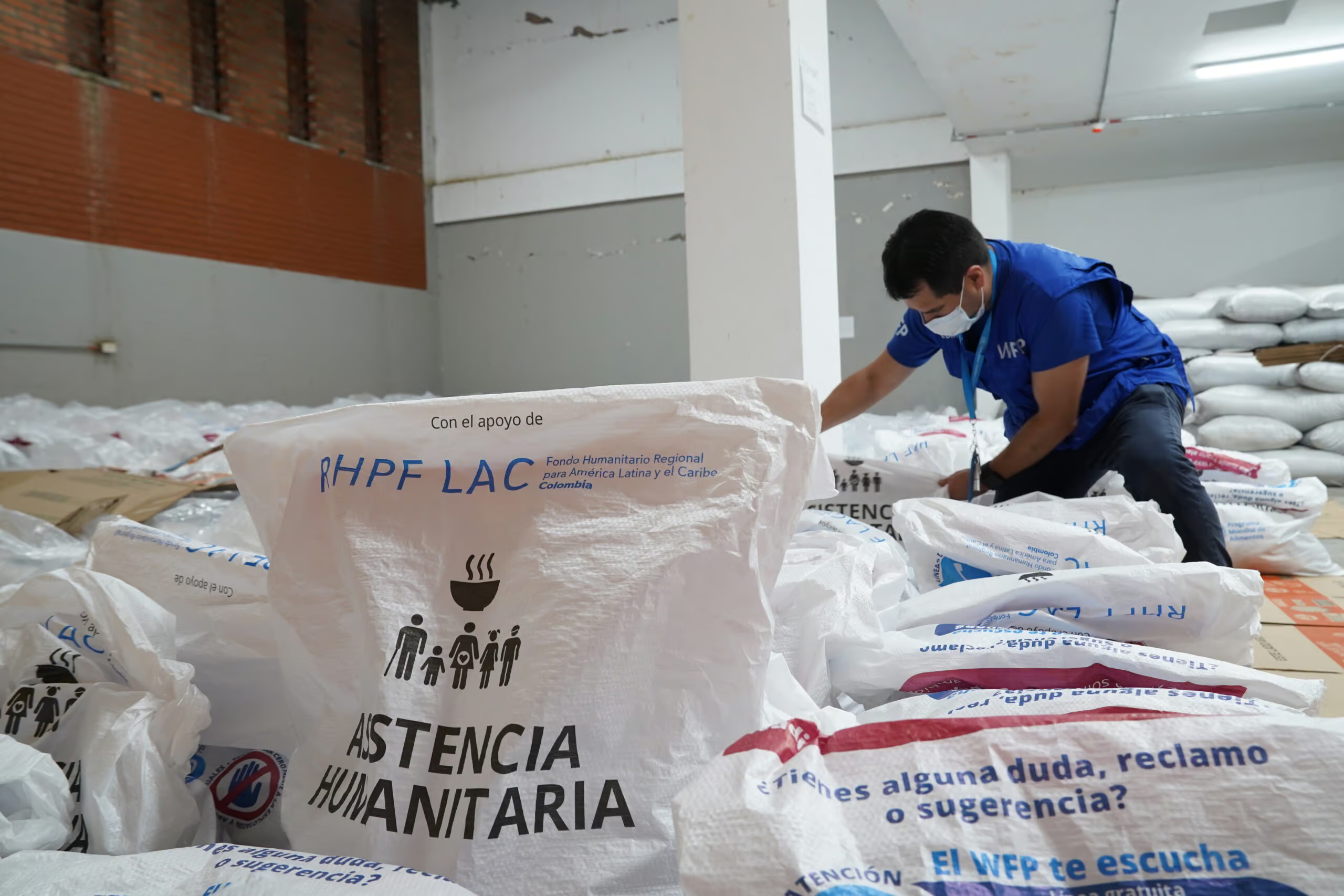
ADDIS ABABA – Since late 2023, the World Food Programme (WFP) has activated more robust delivery mechanisms for its operations in Ethiopia, a significant step in assuring the delivery of critical food assistance to the hungriest populations affected by drought, flooding and conflict. WFP is now working at pace to deliver food assistance to up to 3 million people in Ethiopia in the coming weeks.
“The U.N. World Food Programme is extremely concerned about the deteriorating food security in northern Ethiopia – where many are already facing severe hunger. Our teams are working at pace to deliver food to them urgently,” said Chris Nikoi, WFP Ethiopia’s country director (ad interim). “The U.N. World Food Programme, with our partners, are working tirelessly to reach millions of Ethiopians at risk of hunger in the first quarter of the year to help keep a major humanitarian catastrophe at bay.”
- Since resuming food distributions in early December, WFP has delivered food to 1.2 million people in the Tigray, Afar, Amhara and Somali Regions. WFP is now scaling up to provide lifesaving food assistance to 3 million Ethiopians in the coming weeks, of which almost 2 million are in Tigray.
- WFP has so far digitally registered almost 6.2 million of the most vulnerable people in the Afar, Amhara, Tigray and Somali Regions.
- Since resuming food assistance to refugees in October 2023, WFP has provided monthly food assistance to more than 750,000 refugees across seven regions. Due to limited funding, assistance was 60% of the standard monthly entitlement. WFP’s refugee operations are critical, as the conflict in Sudan continues to drive flows of refugees. An additional 200,000 Sudanese refugees are expected to arrive in Ethiopia, putting strain on WFP’s refugee assistance if no additional funding is received.
- The government of Ethiopia’s most recent assessment of food security needs projected that 15.8 million people will face hunger and need food assistance in 2024. This includes more than 4 million people who are internally displaced and 7.2 million who have high levels of acute food insecurity and need emergency assistance.
- WFP aims to provide food assistance to 40% of the 7.2 million, if resources are available, while the government and other partners will support the rest.
- More than half of those who need food assistance are in the Amhara and Tigray Regions (51%). The government’s assessment indicates that 2.3 million people in the Amhara Region and 2.1 million in Tigray require emergency food assistance. The need for food assistance remains high as climate change, conflict and economic shocks all continue to slow the recovery of livelihoods.
- Families who are moderately and severely food insecure based on food security assessments have been identified to receive food assistance. The most vulnerable have been targeted and selected through WFP’s recently rolled out community-driven vulnerability-based targeting (VBT).
- WFP’s treatment of moderately malnourished children and women in Ethiopia continued throughout 2023, providing specialized nutritious foods to 2.6 million pregnant and breastfeeding women and children. In 2024, WFP aims to reach 2.1 million women and children.
- A key element of WFP’s response is transitioning from humanitarian relief to resilience programs. WFP aims to reach 1.4 million people in 2024 with activities that strengthen livelihoods and food systems in Ethiopia, including schemes to harvest water, irrigate land, and improve access to markets, as well as providing training on agricultural best practices and post-harvest loss technologies.
- WFP has limited food stocks in the country and urgently needs $142 million to keep reaching and delivering assistance to the most vulnerable people in Ethiopia until June 2024 and respond to the drought at scale. If WFP doesn’t receive additional funding, it will have to cease food distributions to refugees in April 2024.
Note to Editors
Broadcast-quality footage available here.
High-resolution photos available here.
# # #
The World Food Programme is the 2020 Nobel Peace Prize Laureate and the world’s leading humanitarian organization, saving lives in emergencies and using food assistance to build a pathway to peace, stability and prosperity for people recovering from conflict, disasters and the impact of climate extremes.
Follow us on X, formerly Twitter, via @WFPUSA, and WFP @wfp_media and @wfp_ethiopia