“The squalor of the refugee camps around Cox’s Bazar is hard to imagine, the nervous energy, the pressing masses of people, the mud and the grit and the smell.” “Surely every form of human tragedy can be found here.”
This is how Silke Buhr, a communications officer with the World Food Programme (WFP), describes what she has recently seen in Bangladesh, where more than half a million people — mostly Rohingya — have fled to escape what the U.N.’s top human rights official calls “ethnic cleansing” in Myanmar’s northern Rakhine State.
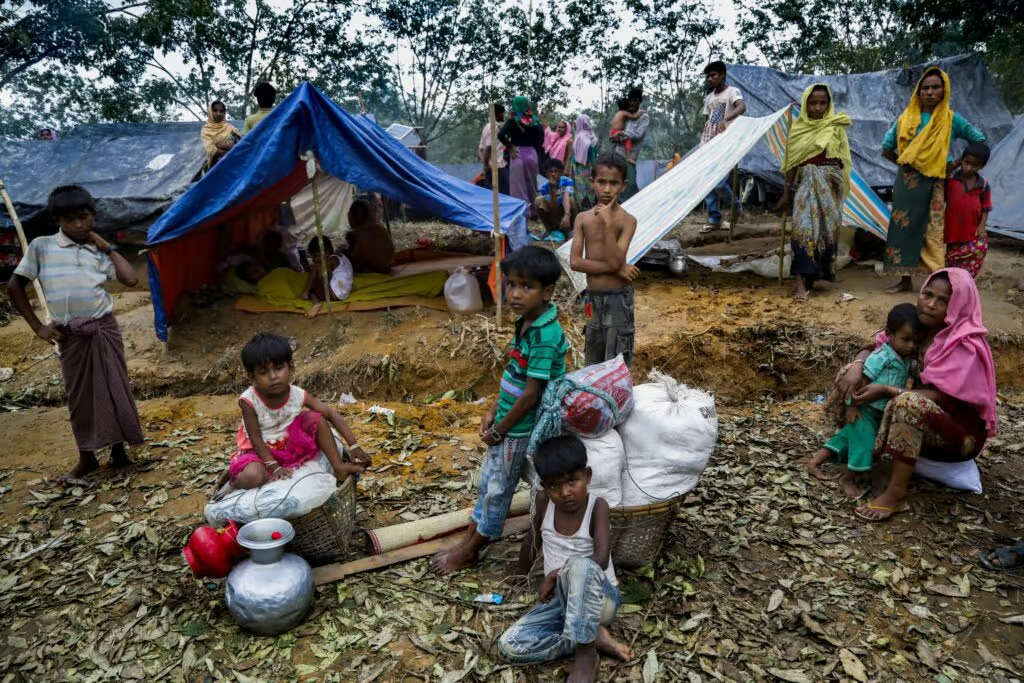
In the fishing port of Cox’s Bazar in Bangladesh, what was once a green, coastal landscape is now filled with makeshift homes and roofs, providing some semblance of shelter and safety.
WFP has provided food to the majority of people who have fled into Bangladesh over the last few weeks.
By The Numbers

WFP/Saikat Mojumder
Rohingya refugees at the Burmapara makeshift settlement in Cox’s Bazar, Bangladesh.
According to the latest figures from the field:
- More than 580,000 people have been registered to receive 55 pounds of rice per household every two weeks for the next six months. WFP is now in the late third round of rice distributions.
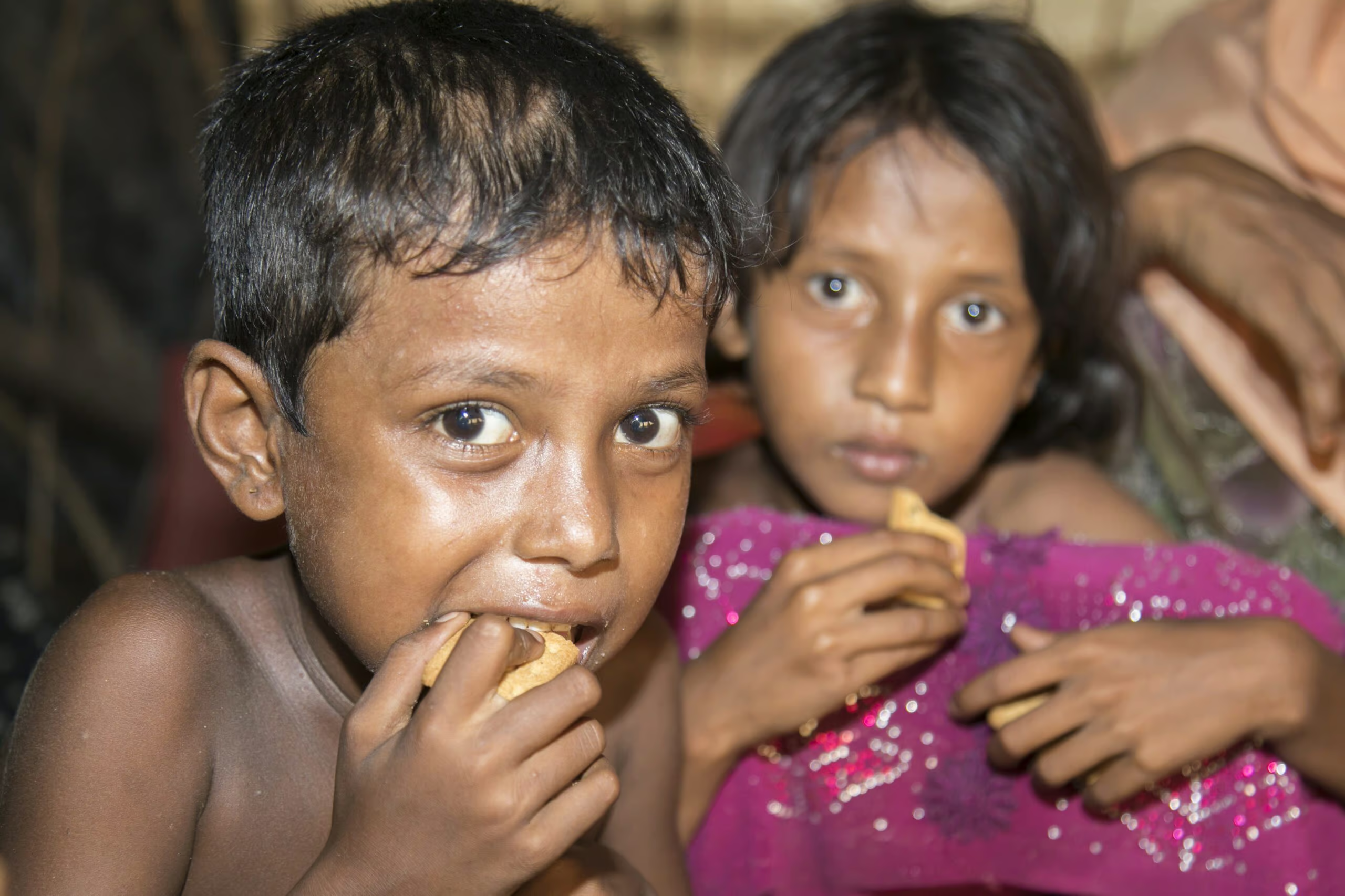
- Packages of nutrient-rich, High-Energy Biscuits have been provided to more than 260,000 people as an emergency measure. These biscuits are crucial for those who don’t have access to cooking facilities. An additional 661,000 pounds of biscuits are being provided to learning centers and child-friendly spaces managed by UNICEF, BRAC, the U.N. Population Fund and the U.N. High Commissioner for Refugees.
- WFP has provided 63,000 children and mothers with SuperCereal Plus. This fortified wheat-soya blend is used to make a nutritious porridge for those who have arrived across the border hungry and malnourished.
- The agency continues to provide rice in community kitchens managed by partner Action Against Hunger (ACF), which feeds an average of 50,000 people every day.
As the leader of the U.N. Logistics Cluster, WFP is also supporting the telecommunications and transportation needs of the humanitarian community. Right now, the agency is working to set up a logistics hub for all partners that will include storage for food, sanitation kits and medical supplies. Eight mobile storage units have been built so far.
WFP is working closely with four local partners, ACF, the International Federation of Red Cross and Red Crescent Societies and the Bangladeshi government.
Unfortunately, there is still no humanitarian access for U.N. agencies in northern Rakhine State, where Rohingya families have been impacted by violence. In the meantime, however, WFP has successfully resumed assistance to displacement camps in central Rakhine State and hopes to reach all 110,000 people here with food aid.
The People
Buhr explains that everyone here has lost family members to the violence, from fires to bullets to knives.
“Thousands of soldiers came. They came into our houses. They killed the men and the children,” says Mahmuda, who fled with her 8-year-old son and mother. “Then they set our houses on fire. They threw children into the fire. They killed my husband.”
Many have traveled days without food to find safety.
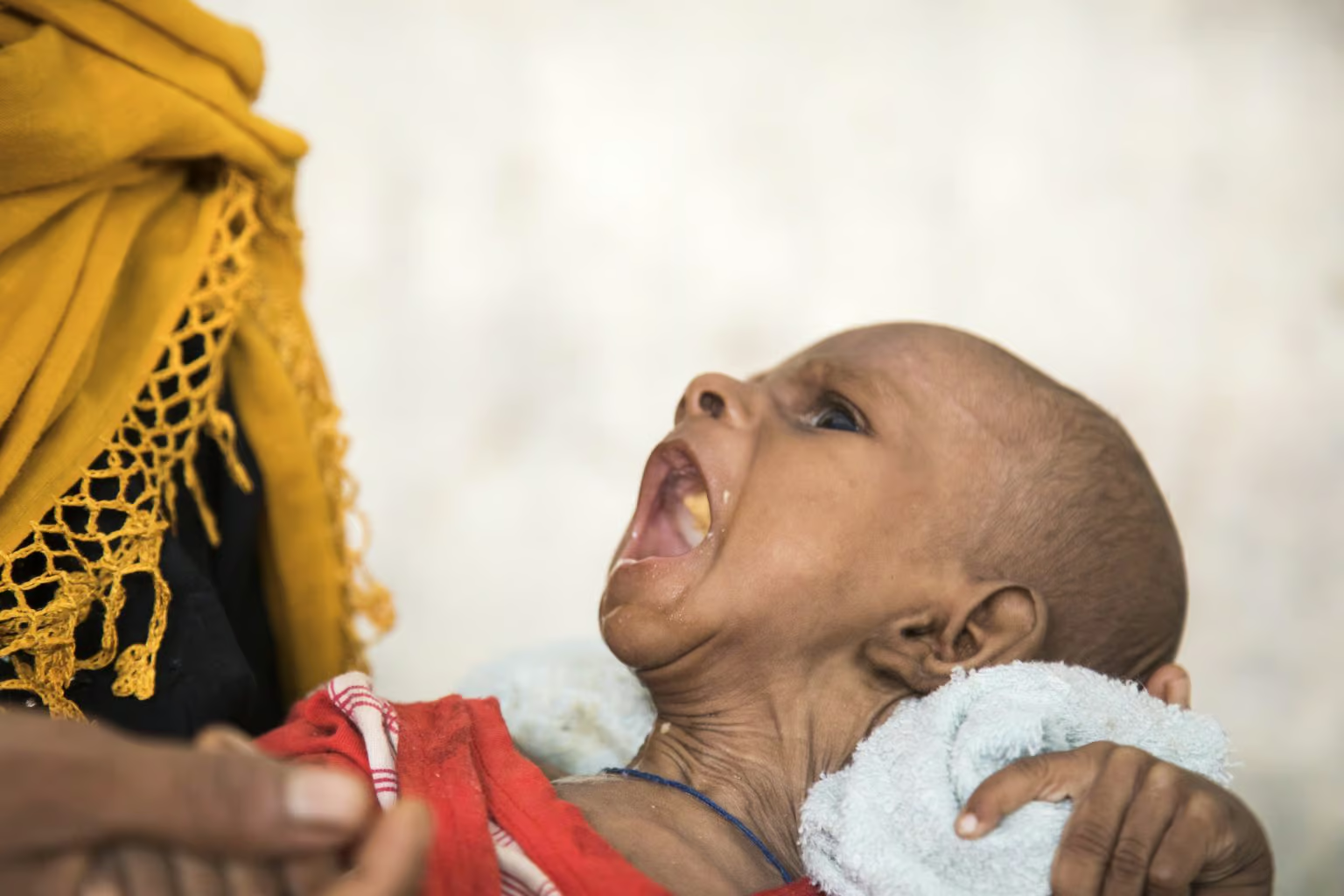
WFP/Saikat Mojumder
This 5-month-old boy is suffering from severe malnutrition in Kutupalong camp in Cox’s Bazar, Bangladesh. His mother, 25-year-old Arafa Begum, has five children and says she walked for 12 days to get here.
“All I can see is the children. Women hurry past, half my age or less, every other one seems to have an infant on her hip,” Buhr describes. “I can’t breathe for the injustice of it — that could be me. That could be my little girl.”
No one — especially no child — deserves to live life with such uncertainty and horror. The comfort of home and food is all they can ask for.
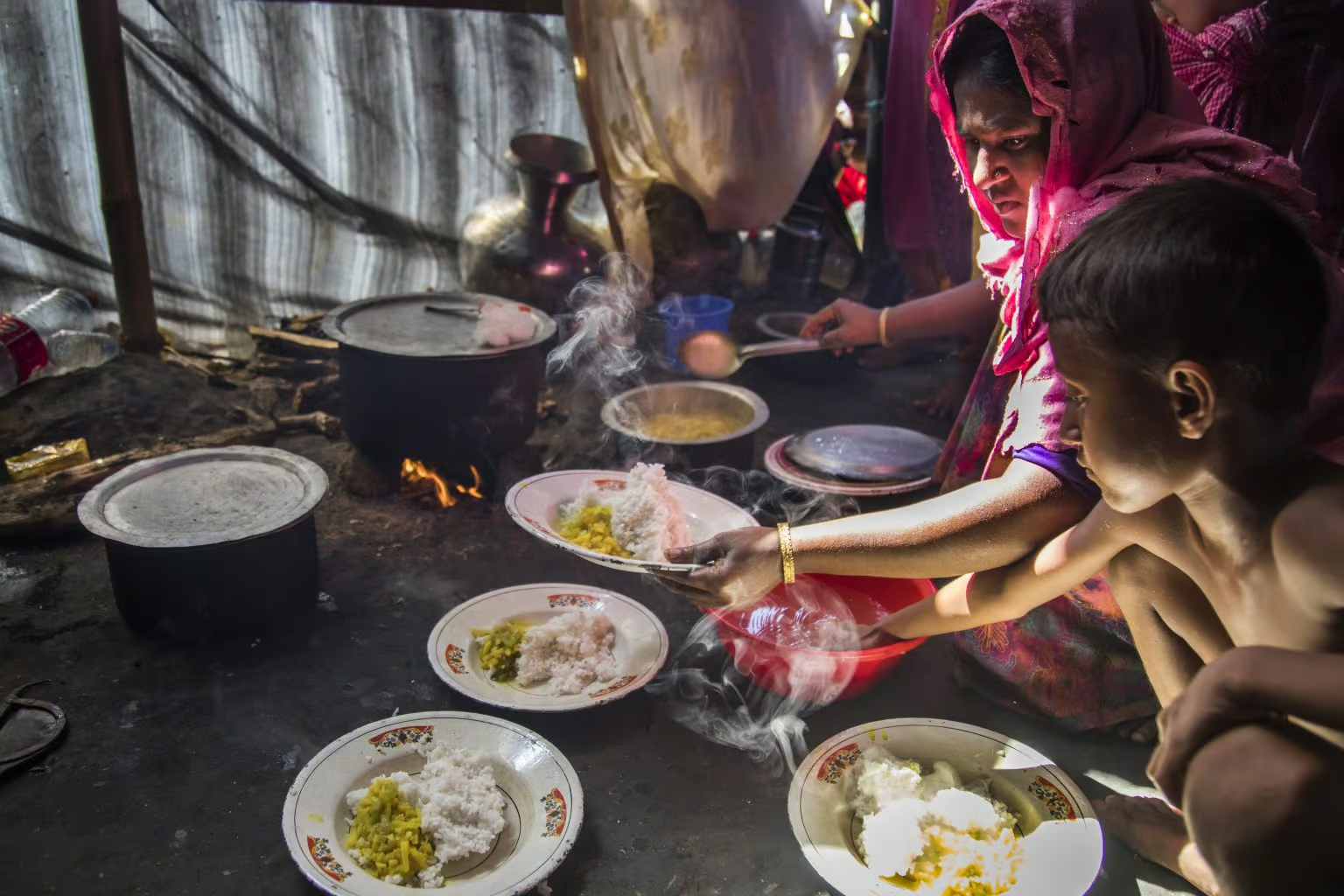
WFP/Saikat Mojumder
Hanufa prepares lunch for her family at the Balukhali settlement in Cox’s Bazar, Bangladesh.
“Where do they draw their strength from?” Silke asks. “Right now, I’m drawing my strength from them.”