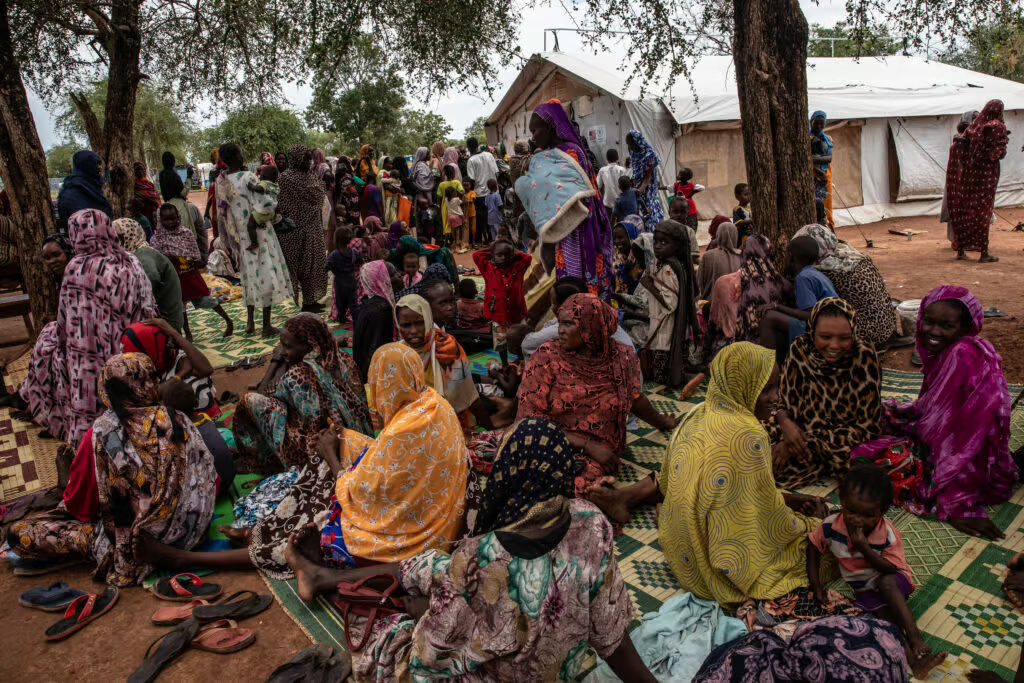
JUBA, South Sudan – More than 650,000 refugees and asylum seekers in South Sudan risk losing further access to lifesaving food, nutrition and other assistance due to critical funding shortfalls, leaving families who fled war and hunger with nowhere else to turn, UNHCR, the UN Refugee Agency, and the United Nations World Food Programme (WFP) warned today.
Without immediate and urgent funding, the final food and nutrition assistance for the most vulnerable 240,000 refugees across the country will be provided in September, cutting off a lifeline for hundreds of thousands of people already living on the edge. These are the last remaining refugee families of the 650,000 who had been receiving food support across the country.
For hundreds of thousands of refugee families, the consequences of an interruption in critical aid would be immediate and long-lasting, including with heightened risks of malnutrition, and exploitation and abuse of women and children. Of particular concern to UNHCR is the risk of yet more cross-border movement as people search for food and assistance.
The warning comes as conflict across the region continues to force people to flee across borders into neighbouring countries in search of food, shelter and safety. In South Sudan, up to 3,000 refugees and returnees continue to arrive from Sudan each week, placing further pressure on already overstretched humanitarian resources.
“We are seeing the devastating impact of conflicts that force people from their homes collide with a severe shortage of resources that is now making the crisis worse,” said Adham Effendi, Deputy Country Director for WFP in South Sudan. “For refugees and host communities, food assistance is often the difference between coping and crisis. Urgent support to save lives and livelihoods is vital – to meet essential needs and reduce long-term dependence on humanitarian assistance.”
WFP faces an immediate USD 37 million funding gap for its refugee response and an overall funding shortfall of USD 258 million for the remainder of 2026 – threatening lifesaving support for 4.2 million food-insecure people across the country. Meanwhile, UNHCR has secured only 28 percent of the USD 286 million needed this year to sustain core protection and assistance for nearly four million refugees, internally displaced persons, returnees, and vulnerable host communities.
This funding crisis is unfolding against the backdrop of one of the world’s deepest hunger emergencies. More than 7.8 million people across South Sudan – more than half the population – are facing high levels of acute food insecurity, while 2.2 million children are acutely malnourished. WFP has already been forced to prioritize assistance for only the most vulnerable refugee families, who are receiving just 50 percent of a full food ration.
The anticipated cut in critical support comes at the height of the rainy season when food becomes scarcer, market prices rise and flooded or degraded roads make humanitarian access increasingly difficult. Many refugee families are already eating fewer and smaller meals, borrowing money to buy food, selling what little they own, and cutting spending on health, education and shelter.
“Every week, thousands more refugees and returnees continue to arrive from Sudan with almost nothing, many exhausted, hungry and in urgent need of protection and assistance,” said Mesfin Degefu, UNHCR Deputy Representative in South Sudan. “At the same time, we see refugees who have been in South Sudan for many years, working to rebuild their lives and move towards greater self-reliance. Cutting assistance now undermines hard-won progress in education, livelihoods and resilience and may force refugee families to make desperate choices, including moving onward along dangerous routes to survive.”
South Sudan has continued to uphold its open-door policy for refugees despite facing significant humanitarian and development challenges of its own. More than 1.4 million refugees and returnees have crossed into South Sudan since war erupted in Sudan in 2023.
UNHCR and WFP jointly appeal to the international community for immediate, flexible funding to prevent a suspension of lifesaving assistance and protect families on the frontlines of this regional crisis.
# # #
Note to Editors
Broadcast quality video footage can be downloaded here
High resolution photographs can be downloaded here
About UNHCR
UNHCR, the UN Refugee Agency, is a global organization dedicated to saving lives, protecting rights and building a better future for people forced to flee their homes because of conflict and persecution. We lead international action to protect refugees, forcibly displaced communities and stateless people.
About WFP
The United Nations World Food Programme is the world’s largest humanitarian organization saving lives in emergencies and using food assistance to build a pathway to peace, stability and prosperity for people recovering from conflict, disasters and the impact of climate change.