Hassan Ali Jare still remembers the crippling drought more than two decades ago that swept through his home village of Kinna in central Kenya’s Isiolo County. He remembers the despair of his father as he watched his herd of 70 cattle slowly die of thirst. At the end, only five survived. “The cows that I thought would pull us out of poverty were gone,” says Jare.
Extreme weather events in Kenya and elsewhere have only grown more frequent and intense since Jare’s childhood. The 2020-23 drought in Kenya killed roughly 2.6 million livestock and left millions of people in need of humanitarian assistance. “This area was full of animal carcasses,” Jare recalls.

The ever-harsher climate, including sometimes intense rains and floods, has been a wake-up call for Kenya’s new generation of pastoralists. Today, many are finding new and different ways to earn an income by enrolling in livestock insurance and tapping social media to market their products with support from the World Food Programme (WFP) and the Zoetis Foundation.
“If livestock production in Isiolo County goes wrong, for example, due to drought, it can wipe out the sustenance whole communities depend on,” says Charles Songok, head of WFP’s Isiolo field office. “That’s why we try to work with young people to be self-starters and diversify their livelihoods – so they can break away from pastoralist traditions.”
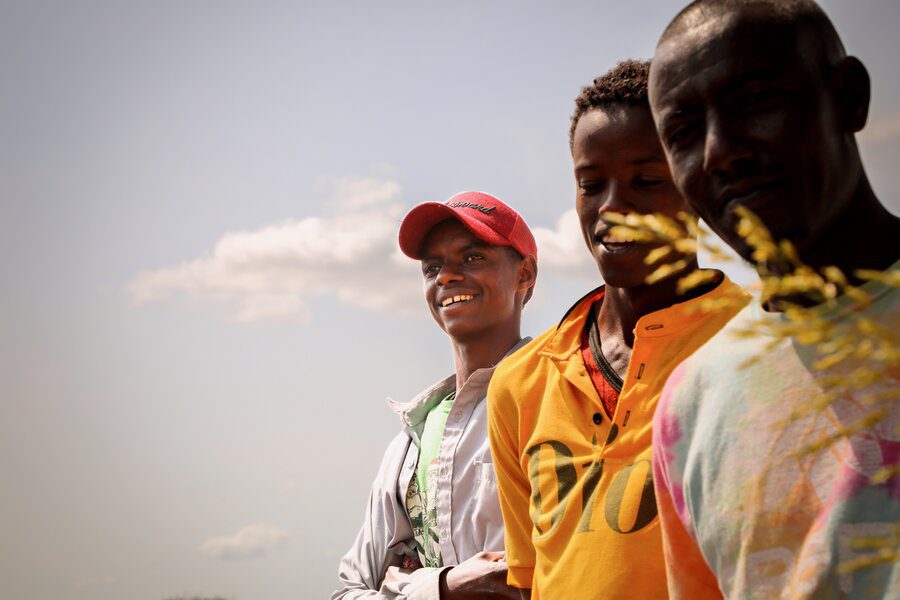
The new face of pastoralism can be seen in Jare’s hometown of Kinna, where he mentors five young entrepreneurs who have turned back to the land for lack of other job opportunities. Known as the Rapsu Youth Group, these farmer-herders have stayed put and launched a fodder production business to supplement their income.
“Us Gen Z’s, we finished school and there was no work. So, we decided to join this group,” says Halima Mohamed, a university graduate in human resources.
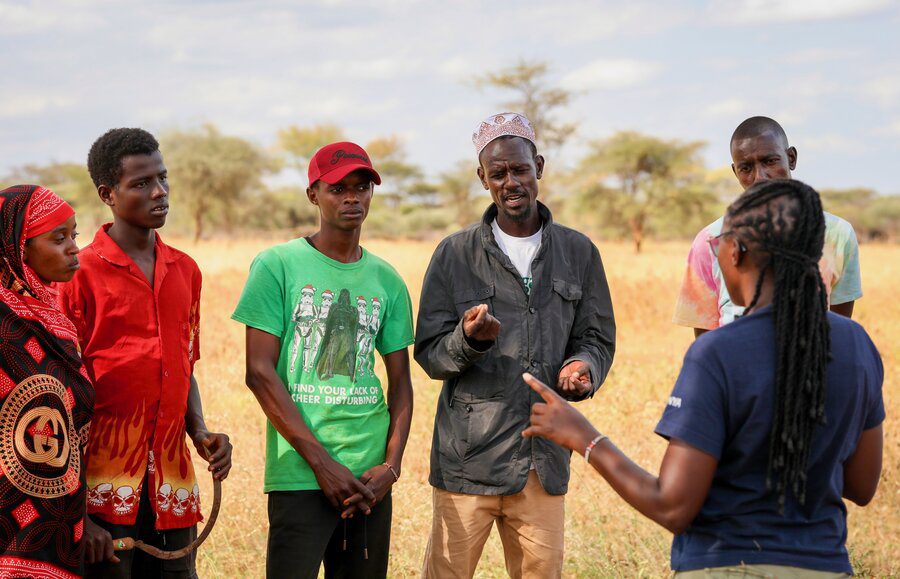
On a vast swathe of land, dotted with a few acacia trees, the Rapsu group grows hay for sale, ensuring herders have access to quality feed for their animals after natural grasses dry up. WFP supplied them with seeds and machines to produce the fodder. The group has also enrolled in livestock insurance for their goats – a push by Kenya’s government in partnership with WFP and the Zoetis Foundation that has gotten over 67,000 Kenyan herders on board since 2023. Still a rarity in Kenyan pastoralism, the insurance gives livestock owners access to payouts in case of drought and other climate-related disasters.
“I am urging lots of herders to take up insurance,” says Jare, who both mentors and chairs the Rapsu group. Of Kenya’s last, deadly drought that wiped out many pastoralist livelihoods, he adds, “if only they had had insurance, it would not have been so bad.”
Rapsu’s young members are bucking tradition in other ways, including how they secure nomadic clients to sell their hay. To reach the pastoralists, they are using a tool their generation grew up with: social media. “TikTok, Instagram,” Mohamed says, ticking off some of the options. “We are planning to do some videos, some pictures, when we’re harvesting, packing, taking the hay to the market.” Jare is now helping the group to develop a business plan, with support from WFP, and start their next project: an apiary and later, raising poultry.
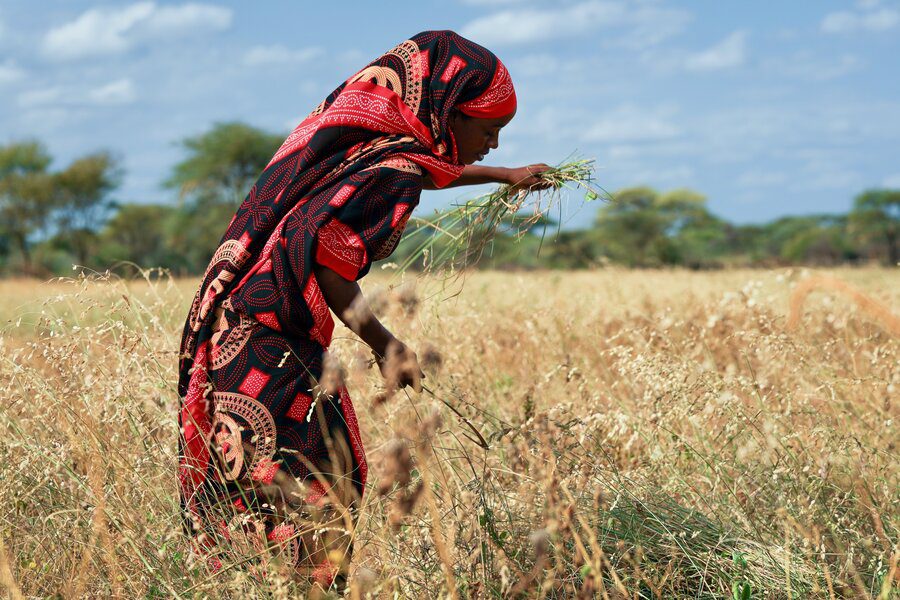
But with the harvest approaching, there are more immediate priorities, including marketing their hay. As the group walks through the grass, inspecting its growth, Halima Mohamed grabs a fistful of weeds and slices them off at the stem with the curved blade of her knife. “In a few weeks, when we harvest and pack,” she promises, “you will see the video on social media.”
# # #
WFP’s work to build resilience and protect livelihoods in Kenya is supported donors including Denmark, Germany, the Mastercard Foundation, the Republic of Korea, Novo Nordisk Foundation, Slovenia, the Zoetis Foundation and ZEP-RE (PTA Reinsurance Company).
This blog originally appeared on WFP’s Stories on August 4, 2025. It was written by Kevin Hombe, Patrick Mwangi and Charlotte Bonnet.