KINSHASA, Democratic Republic of the Congo – The United Nations World Food Programme (WFP) is urgently scaling up food assistance, logistics, telecommunications and air services in eastern Democratic Republic of the Congo (DRC), where Ebola has evolved from a localized health emergency into the fastest-spreading outbreak on record.
Ebola is not only a health crisis; it is a threat multiplier for communities already facing conflict, displacement and hunger. Without urgent, flexible support, families may be forced to choose between complying with public health measures and finding food, undermining containment and deepening an already severe humanitarian crisis.
“Ebola feeds on delay, fear and hunger,” said Carl Skau, WFP’s acting Executive Director. “Stopping this outbreak requires all hands on deck and communities at the center. Food assistance is frontline Ebola containment. It helps families stay home, supports safe isolation, builds trust with communities and keeps health teams moving. We know what works; what we need now is the speed and resources to scale it before this outbreak outruns the response.”
Here are the latest updates on food security and WFP operations in eastern DRC:
Health and Food Security Situation in Eastern DRC
- The outbreak is unfolding in a complex humanitarian environment marked by conflict, displacement, limited access to basic services, and an ongoing health workers strike.
- The Ebola outbreak is now affecting 48 health zones across five provinces in eastern DRC: Ituri, North Kivu, South Kivu, Tshopo and Haut-Uele.
- Ituri accounts for about 90 percent of confirmed cases, while the spread to Tshopo, including Kisangani, and Haut-Uele raises the risk of wider transmission through major transport routes.
- In eastern DRC, nearly 10 million people are already facing crisis or emergency levels of hunger. Ituri remains one of the country’s most severe hunger hotspots, with 1.9 million people facing crisis levels of food insecurity or worse.
- More than 2.65 million people in the 48 Ebola-affected health zones face acute food insecurity (IPC Phase 3+), including more than 628,000 people in emergency conditions (IPC Phase 4).
WFP’s Operational Food Response
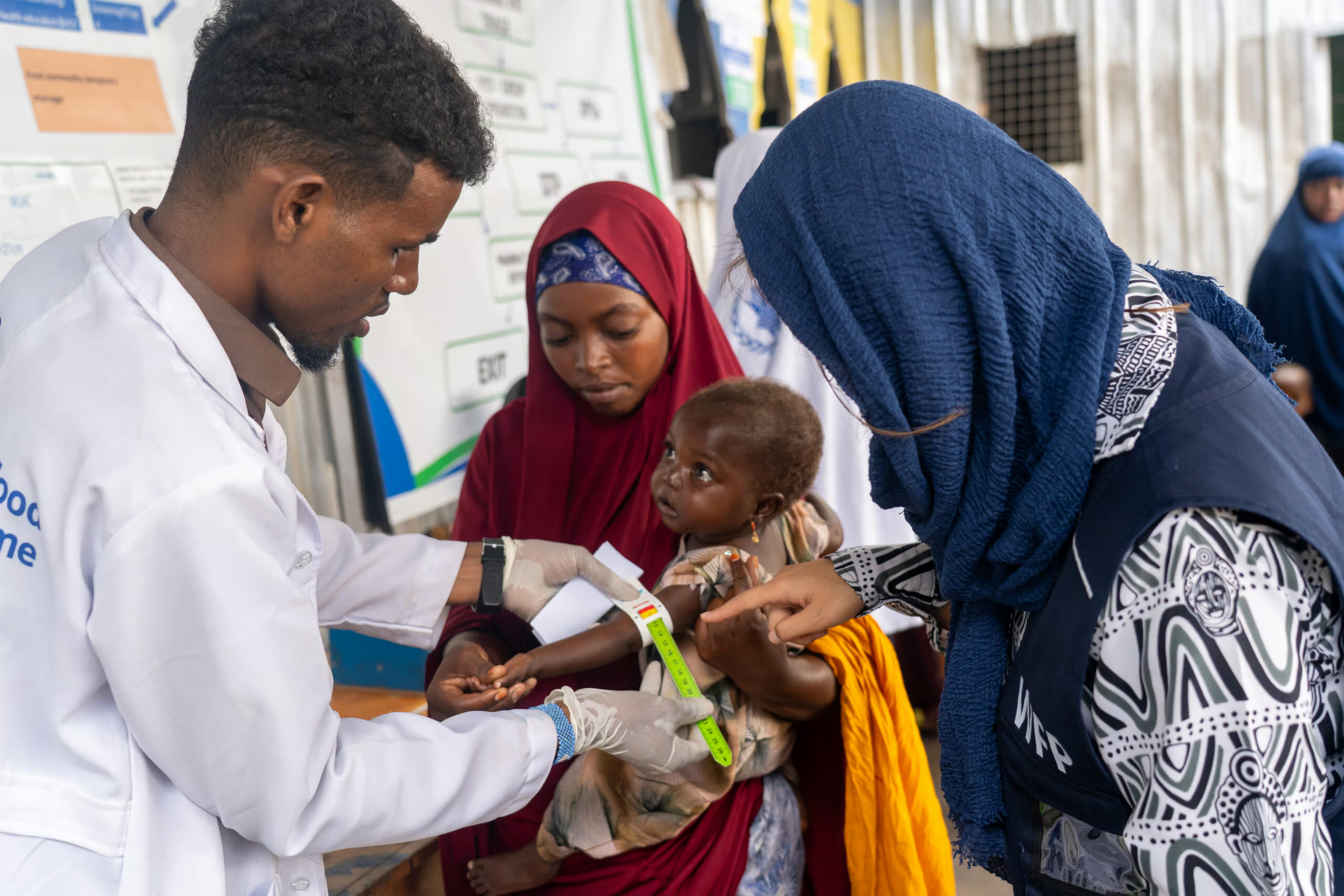
- WFP is providing food assistance to Ebola patients, close contacts of those infected, frontline responders and affected households – helping people comply with containment measures while reducing pressure on families already struggling to meet basic food needs.
- In DRC, WFP has delivered more than 160,000 hot meals to patients, contacts and frontline workers in 17 treatment and isolation centres.
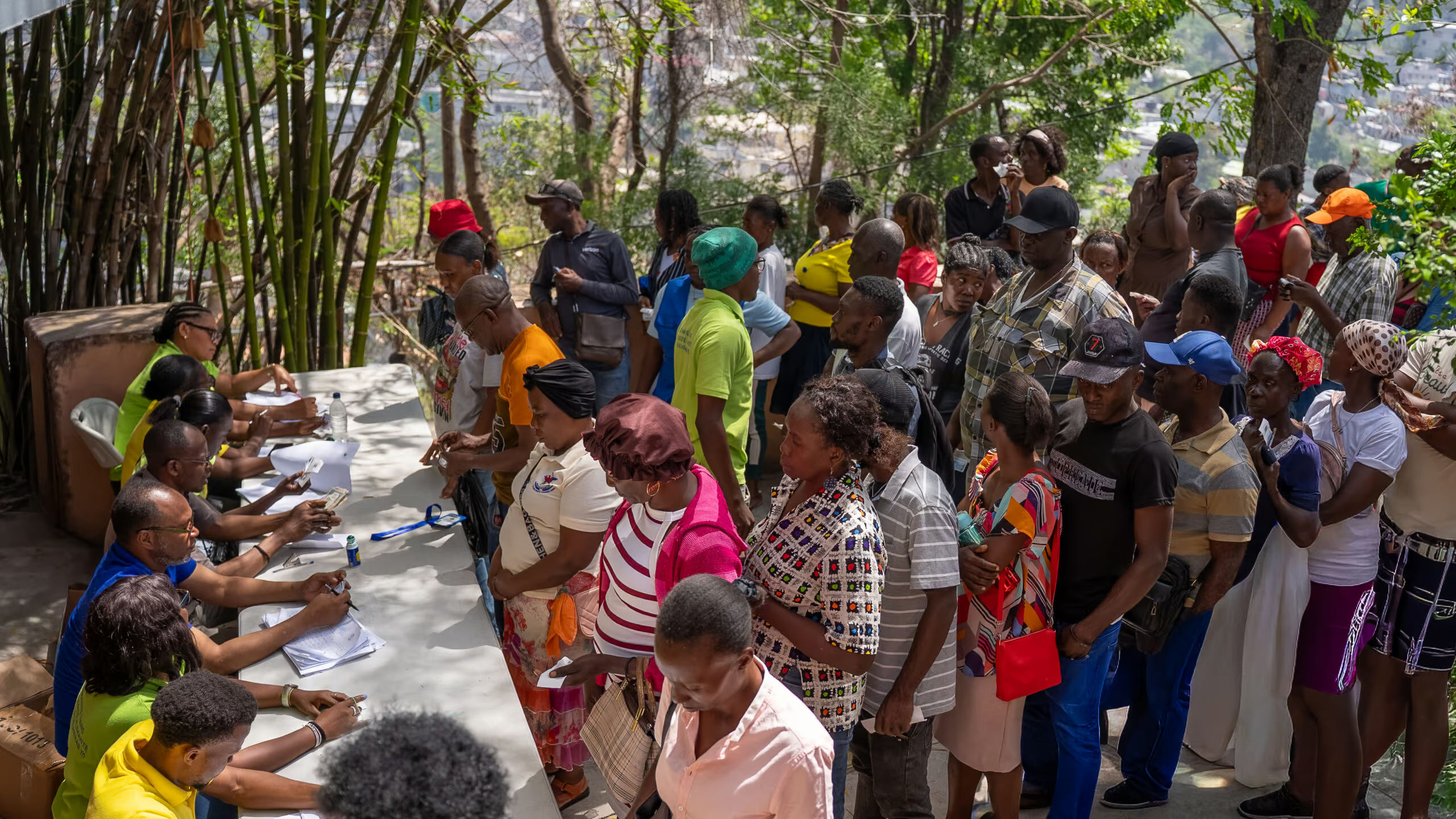
- WFP has also provided dry food rations to 23,000 people in North Kivu, South Kivu and Ituri, including 14,000 people under quarantine with monthly food assistance. An additional 36,000 people in Ebola-affected zones have been reached with general food assistance.
- Food assistance is critical to containment: it helps reduce movement of people in search of food, supports safe isolation, lowers the risk of harmful coping strategies and creates the social conditions for health actors to operate safely and effectively.
WFP Logistics and Supply Chain Operations
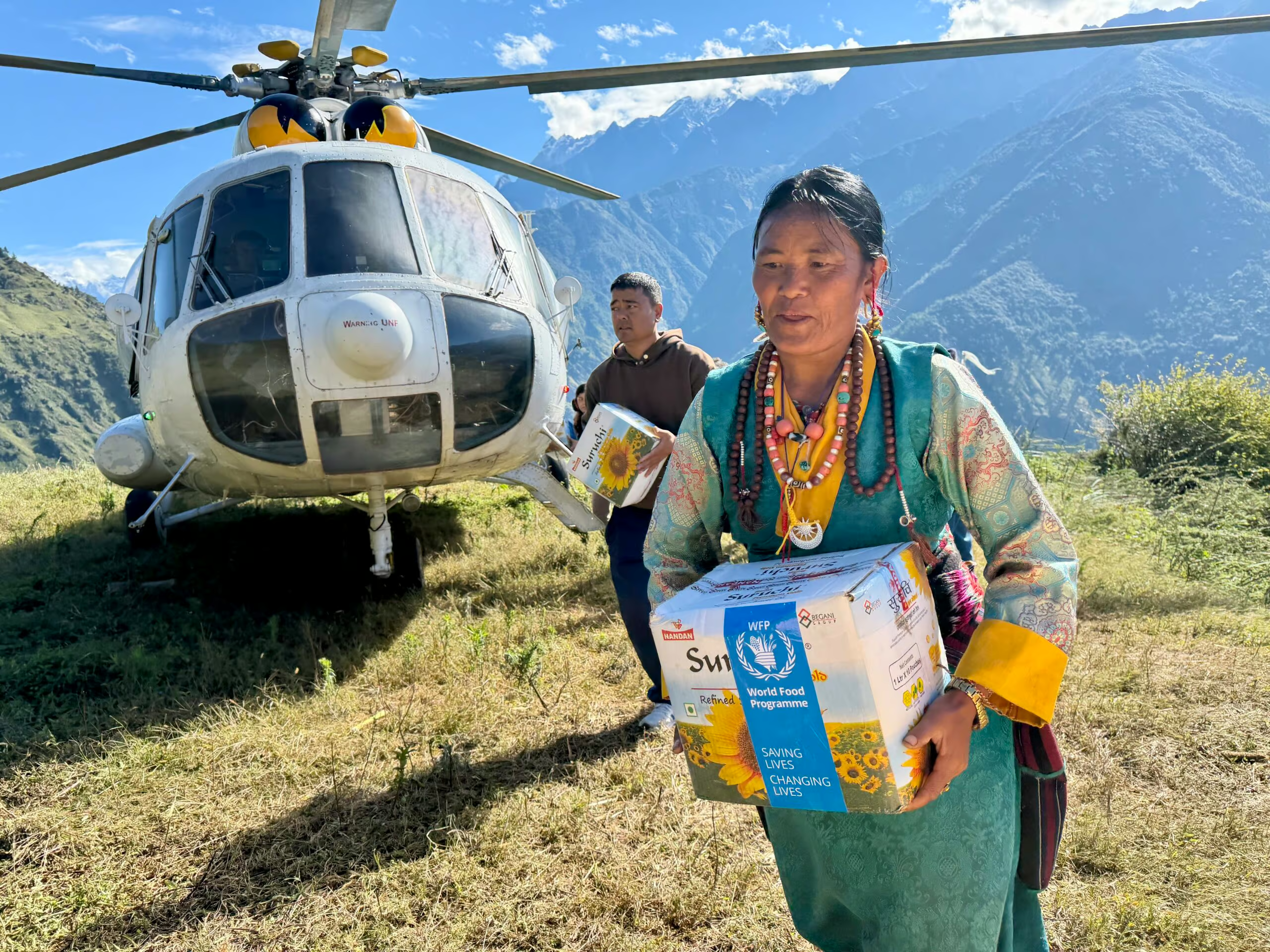
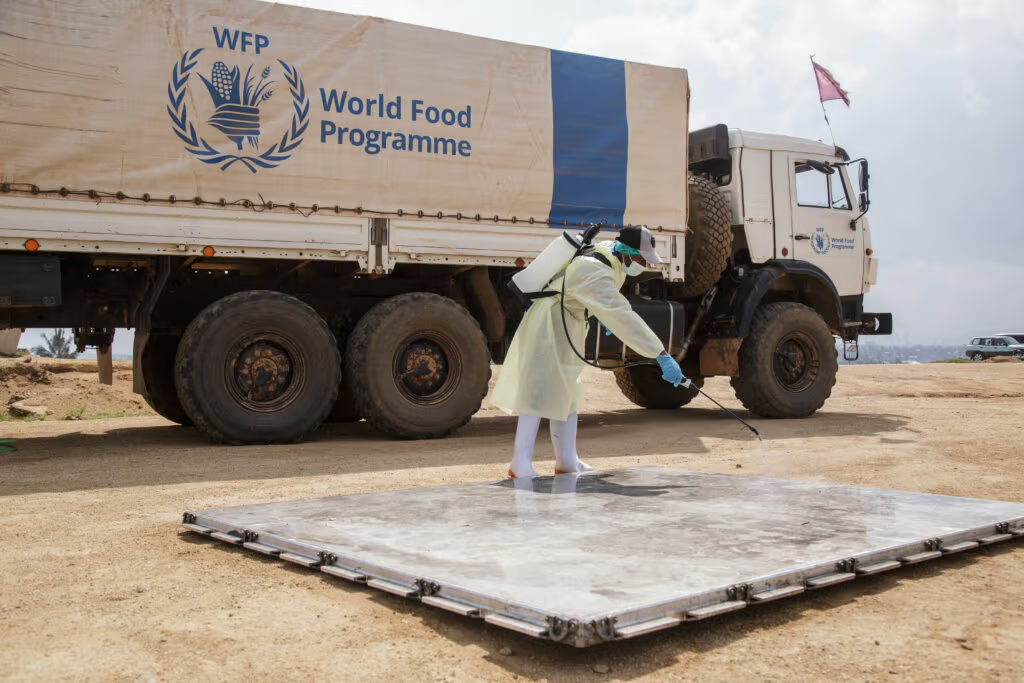
- WFP is supporting efforts as the logistics backbone of the Ebola response – helping to move responders, medical supplies, telecommunications equipment and essential cargo into hard-to-reach areas.
- Since the onset of the outbreak, UNHAS has operated 495 flights, transported 3,395 humanitarian responders and delivered 56 metric tons of essential cargo to frontline locations, including newly affected provinces such as Haut-Uele and Tshopo.
- Within DRC, the WFP-led Logistics and Telecommunications Cluster is providing storage and last-mile delivery to more than 200 locations across Bunia, as well as 36 other affected health zones.
- WFP is supporting WHO and the Ministry of Health to set up six logistics hubs across Ebola hotspots to increase storage capacity.
- With the virus spread into Tshopo and Haut-Uele, the Logistics and Telecommunications Cluster has rapidly mobilized road and air deliveries on behalf of partners.
- Three EpiShuttle isolation units are deployed in Bunia to support safe medical evacuation from frontline locations, while UNHAS has strengthened passenger and staff protection measures.
- WFP has restored the UN security communications channel in Bunia and is establishing a dedicated communications channel for NGO partners to coordinate field movement.
Challenges and Funding Requirements
- Speed and resources are the main challenges. Every delay gives Ebola more room to spread, while gaps in logistics, food assistance and community support risk weakening containment efforts.
- Insecurity, access constraints, community unrest and limited operational capacity in newly affected areas continue to complicate surveillance, supply movements and response scale-up.
- WFP requires USD 101 million for the next six months for the Ebola response in the region. Of this, USD 76 million is needed for DRC alone.
- Food and nutrition assistance remains the largest urgent gap, with USD 50 million needed to sustain hot meals, support quarantine, and expand assistance in newly affected areas.
- WFP requires USD 293.6 million over the next six months to sustain all operations in DRC, including emergency logistics and food assistance in Ituri and other affected areas.
# # #
Notes to editor:
Download broadcast quality video and shotlist here
The World Food Programme is the 2020 Nobel Peace Prize Laureate and the world’s leading humanitarian organization, saving lives in emergencies and using food assistance to build a pathway to peace, stability and prosperity for people recovering from conflict, disasters and the impact of climate extremes.
Follow WFP on X, formerly Twitter, via @wfp, @wfp_Africa and and @wfp_DRC