What’s Happening With the Current Ebola Outbreak in Africa?
There’s currently an outbreak of the Ebola virus in parts of the Democratic Republic of the Congo (DRC) and Uganda. The first cases were confirmed in May 2026, and the World Health Organization declared it a Public Health Emergency of International Concern on May 17.
This Ebola outbreak is especially dangerous because it’s happening in communities that are already affected by conflict, displacement, weak health systems and extreme hunger. Without a fast response, this outbreak could make an already critical humanitarian crisis even worse.
What Is Ebola?
Ebola is a severe, often fatal, viral disease which scientists believe originates in animals – most likely fruit bats. The specific Ebola strain affecting the DRC right now is the Bundibugyo virus, a very rare form. It can spread to human populations when people have close contact with infected animals; This transmission is called a “spillover event.” From there, the virus spreads from human to human through direct contact with bodily fluids of someone who is infected with the disease or has died from it. This can include blood, vomit, diarrhea, sweat, saliva or breast milk. Ebola does not spread through the air or by being in close proximity with someone. The spread can be difficult to contain because it is most commonly transmitted to people who are caring for the infected or deceased – this includes family members, health workers and those preparing the burial.
Another difficulty is recognition. Once a person is infected, initial symptoms look like many other common illnesses: fever, fatigue, headache, muscle pain and a sore throat. As the disease progresses, people experience vomiting, diarrhea, rash, impaired kidney or liver function and, in some severe cases, internal or external bleeding. People often die from Ebola as a result of dehydration, bleeding or organ failure. Depending on the strain, the average fatality rate is about 50%.
In communities with little food and water, multi-generation households, displacement and weak health systems, Ebola can be truly devastating.
How Ebola Affects Hunger
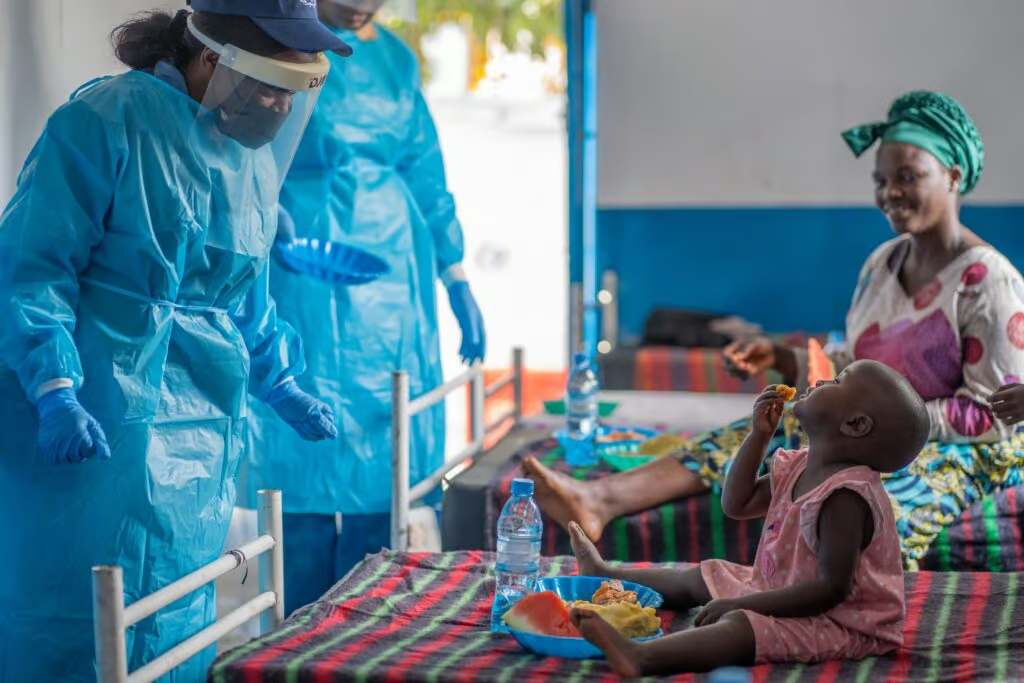
People in eastern DRC are already suffering from a hunger crisis that leaves millions vulnerable to this growing outbreak. Malnutrition severely weakens the body’s immune defences, leaving people far less able to fight Ebola and increasing the risk of severe illness and death. The most vulnerable groups – including children, pregnant women and the elderly – are especially at risk.
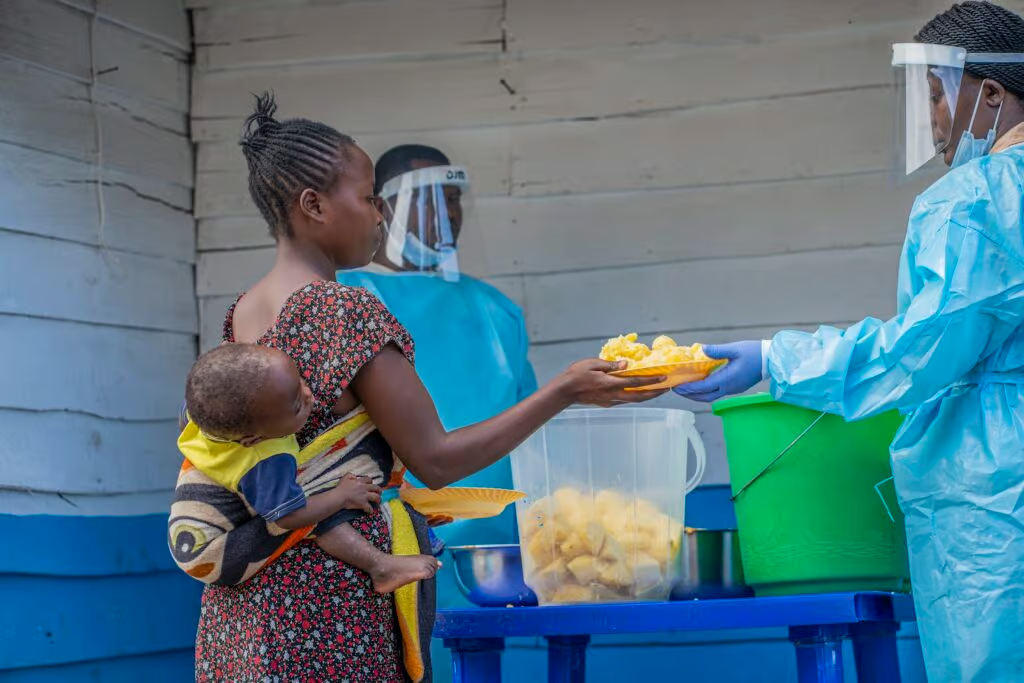
And, just as hunger can worsen the spread of Ebola, the spread of Ebola could worsen hunger in the region. When people are this sick, they’re too weak to work, and relatives often must stay home to care for them. For families barely making it day to day, any disruption in income can lead to further food insecurity. Quarantines can also disrupt local food systems. Fear, stigma and restrictions are already cutting people off from markets, healthcare services and jobs. When families don’t have enough food, they are more likely to delay treatment, move in search of income or break isolation measures to survive – placing themselves and others at risk of infection.
This is the dangerous cycle of disease and hunger that communities in eastern DRC are entering, and the impacts could last for generations. Food assistance from the World Food Programme (WFP) helps relieve this pressure by making it easier for families to follow public health guidance.
Learn How Disease Makes Hunger Worse >
History of Disease and Hunger in the DRC
The DRC has experienced repeated Ebola outbreaks since the virus was first identified there in 1976. Major outbreaks were recorded in 1995, 2007, 2008, 2012, 2017 and 2018-2020. On one hand, this means health authorities and humanitarian agencies have decades of experience combatting the disease. On the other, this history also shows how quickly Ebola can reemerge and spread in areas where health systems are under strain and communities are already facing multiple stressors.
The DRC is home to the world’s largest hunger crisis in absolute numbers, driven by a combination of armed conflict, mass displacement, poverty, disease outbreaks and limited access to basic services. More than 26 million people countrywide are already facing extreme levels of hunger. Conditions are especially severe in the east, where conflict has disrupted farming, trade, health services and humanitarian access. Armed conflict has forced millions of people from their homes, ruined infrastructure and endangered aid workers. In this context, Ebola is not just a health shock but a “threat multiplier” – a factor that could rapidly deepen hunger without immediate intervention.
How Is Ebola Affecting People in Other Parts of Africa?
The rare and lethal Bundibugyo variant has already caused dozens of deaths and hundreds of suspected and confirmed cases in the DRC and neighboring Uganda.
This health crisis comes at a particularly dangerous moment in eastern DRC: Almost 10 million people are facing extreme hunger in the four eastern provinces of Ituri, North Kivu, South Kivu and Tanganyika. Ituri Province – the epicenter of the outbreak – is one of the DRC’s most severely food insecure regions, with more than a third of its population facing crisis levels of hunger or worse. In this region – fraught with conflict, displacement and fragile health systems – Ebola could quickly transform from a health emergency into a broader humanitarian catastrophe.
Currently, the Bundibugyo strand of Ebola has not been detected in countries outside of the DRC and Uganda. But, health experts have warned that the current outbreak may be much bigger than official numbers show, so neighboring countries are working to uncover cases and mount a response. Regional discussions led by the UN point to growing concerns, including underreported cases and potential challenges in delivering aid (like limits on using Goma airport and other key transport hubs). With people frequently moving across borders and many health systems stretched thin, the risk of spread is high. Fear and stigma could also prevent people from seeking care, which would make treatment and containment harder.
Across the region, governments and partners are moving quickly to prepare. The countries on highest alert – South Sudan, Rwanda and Burundi – are ramping up response efforts while other neighboring countries are stepping up precautions (Angola, Tanzania, Zambia, Kenya and Ethiopia). Rwanda has temporarily closed key border crossings and is positioning supplies, transportation and mobile kitchens to support potential quarantine centers. South Sudan has intensified screening at major entry points and has isolation centers and emergency medical services on standby.
How Is WFP Responding to the Ebola Outbreak in the DRC?
WFP immediately mobilized in response to this crisis, leveraging its logistics expertise and long-standing presence in eastern DRC. WFP’s response focuses on transportation and emergency food assistance, while protecting the health of its staff and local partners.

The WFP-managed UN Humanitarian Air Service (UNHAS) is delivering staff, cargo and aid to remote areas affected by Ebola, including Ituri. The agency has already helped transport hundreds of first responders and over 10 metric tons of critical medical cargo to frontline areas. WFP is ramping up additional operations and assistance to outbreak zones including:
- Deploying more aircraft to reach remote and restricted areas
- Launching new flights between the capital, Kinshasa, and Bunia, the central logistics hub for the humanitarian response
- Sending extra trucks and storage units to handle the rising volume of critical aid
- Increasing medical surveillance for aid workers to detect and prevent the spread
WFP is also scaling up emergency food and nutrition assistance for more than 146,000 people in Ituri and other communities affected by Ebola. This includes patients, people who experienced isolated contact and other affected households.
WFP has extensive experience from previous Ebola responses in the DRC. That includes the 2017 outbreak in northern Bas-Uélé province, where WFP played a central role in providing critical logistics support while providing food assistance to affected families so they could safely isolate and break chains of transmission. The lesson from 2017 is clear: Early, coordinated action – combining health, logistics and food assistance – is essential to contain Ebola and prevent wider humanitarian impacts.
How You Can Help People During the Ebola Outbreak
People affected by the Ebola virus outbreak were already facing a humanitarian crisis caused by conflict and hunger. This disease makes their situation even worse. WFP is saving lives by delivering food aid to the region and transporting medical cargo and health workers. You can help people in the DRC and other crisis zones by donating today.