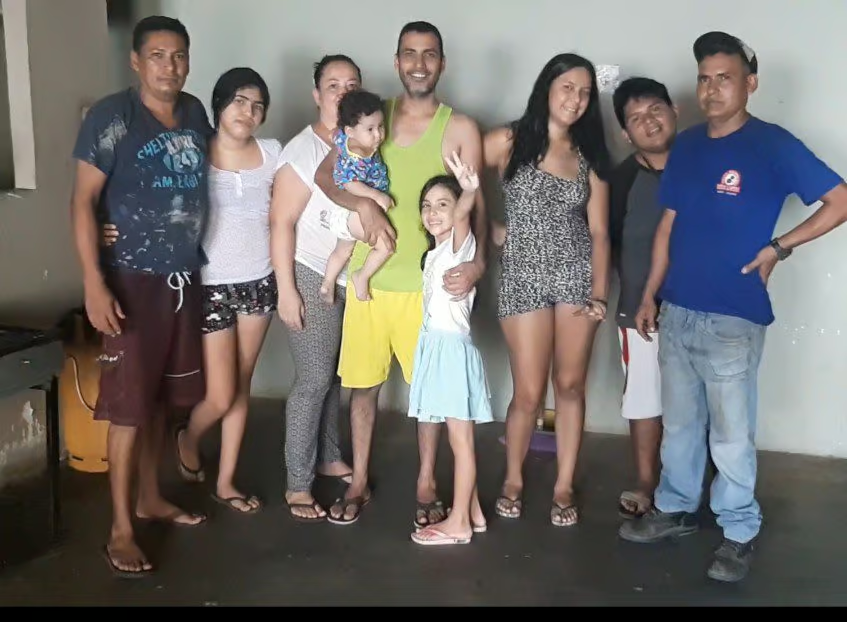
Anyinett Chacón is a World Food Programme (WFP) beneficiary in Guayaquil, Ecuador. Guayaquil is one of the country’s most populous cities. It’s also the city that’s been hit hardest by COVID-19.
As Ecuador enforces curfews and stay-at-home orders to combat the outbreak, families like Anyinett’s are struggling to adapt and keep food on the table.
Anyinett lives with his wife and two girls in a three-bedroom house that they share with two other families. In total, there are nine people at home.
His family lives day to day, typically going out to sell various products to earn income. However, the pandemic has forced them to stay home and take turns going to the supermarket with their neighbors.
WFP is doing everything it can to make sure the families it serves are healthy and have enough food. So, a local WFP staff member called Anyinett to ask if they had the food and resources they needed to stay healthy, and how they were adapting to life under COVID-19.
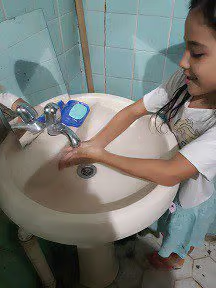
Anyinett says that hygiene is important at home. That is why they use a single pair of shoes to go outside and leave clothes outside the house when they return from shopping. He even sets aside a separate pair of socks to go shopping, and his family washes their hands repeatedly throughout the day using soap and then alcohol gel.
As for food, they all share it to save money, but even so, they only have enough to buy lunch and dinner.
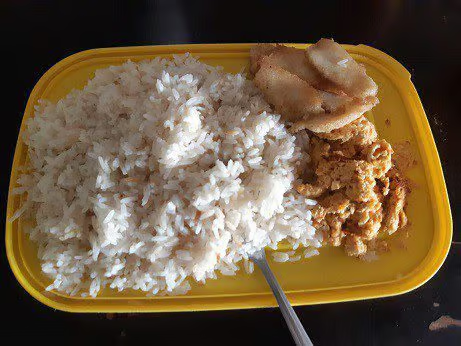
“We try to have a balanced diet with rice, chicken stews, meat, canned goods, tuna, sardines, eggs, flour and cheese,” Anyinett said, “making do with what we have day by day.”
Anyinett’s family is just one of millions who could be pushed deeper into hunger by COVID-19. In fact, recent reports demonstrate that the number of severely hungry people across the globe could double by the end of 2020. Learn more about how COVID-19 is affecting food security, and what WFP is doing to help.
This story was written by WFP Español and originally appeared on WFP Historias.