Imagine being forced to flee your home at a moment’s notice to escape war, persecution or an environmental disaster. Imagine leaving behind everything you know and trust, taking only what you can carry.
Nearly 118 million people on earth understand exactly what that moment feels like. Many of them are refugees who left their country to find safety, food and jobs. The rest have fled their homes but haven’t made it past their country’s borders. They’re known as internally displaced persons (IDPs).
Refugees and IDPs face some of the toughest challenges imaginable in their search for stability. One of the worst is hunger.
Below are nine of the biggest and most devastating displacement crises right now and how the World Food Programme (WFP) is responding.
Help Refugees in Crisis
You can help send food to families fleeing conflict and disasters around the world.
DONATE1. Sudan: 13.5 Million People Displaced
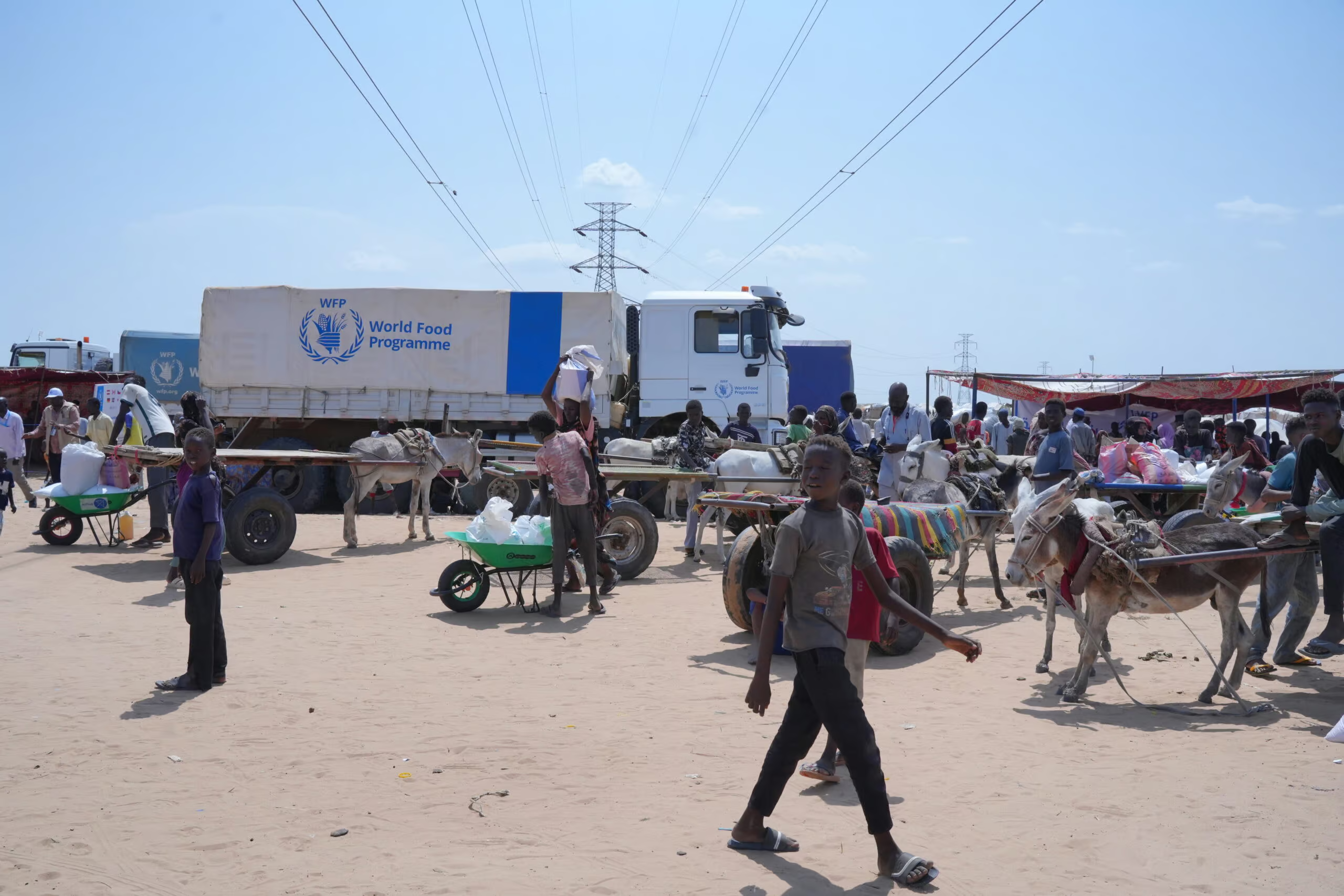
Civil war erupted in Sudan in April 2023, turning the country into one of the world’s largest humanitarian crises. Since the most recent conflict began, 9 million people have been displaced inside Sudan, and 4.5 million refugees have fled to neighboring countries. In Sudan, many families remain trapped in active conflict zones or have sought refuge in remote areas with little or no access to humanitarian assistance. In its fourth year, the conflict shows little sign of abating.

More than 19 million people are experiencing extreme hunger, and there is a famine risk across 14 hotspots in Darfur, South Darfur and South Kordofan.
WFP is delivering emergency food, cash and nutrition assistance. However, funding shortfalls threaten their capacity to adequately meet needs.
2. Syria: 9.9 Million People Displaced
The conflict in Syria reaches back to 2011 when the Arab Spring uprisings in Tunisia and Egypt inspired many Syrians to protest against their own country’s corruption and high unemployment rate. Staunch government opposition created further unrest and violence, giving way to a brutal war that has evolved into a long-term, complex civil conflict. The result is an economic crisis, rampant poverty and widespread displacement – all of which are driving millions of people into hunger.
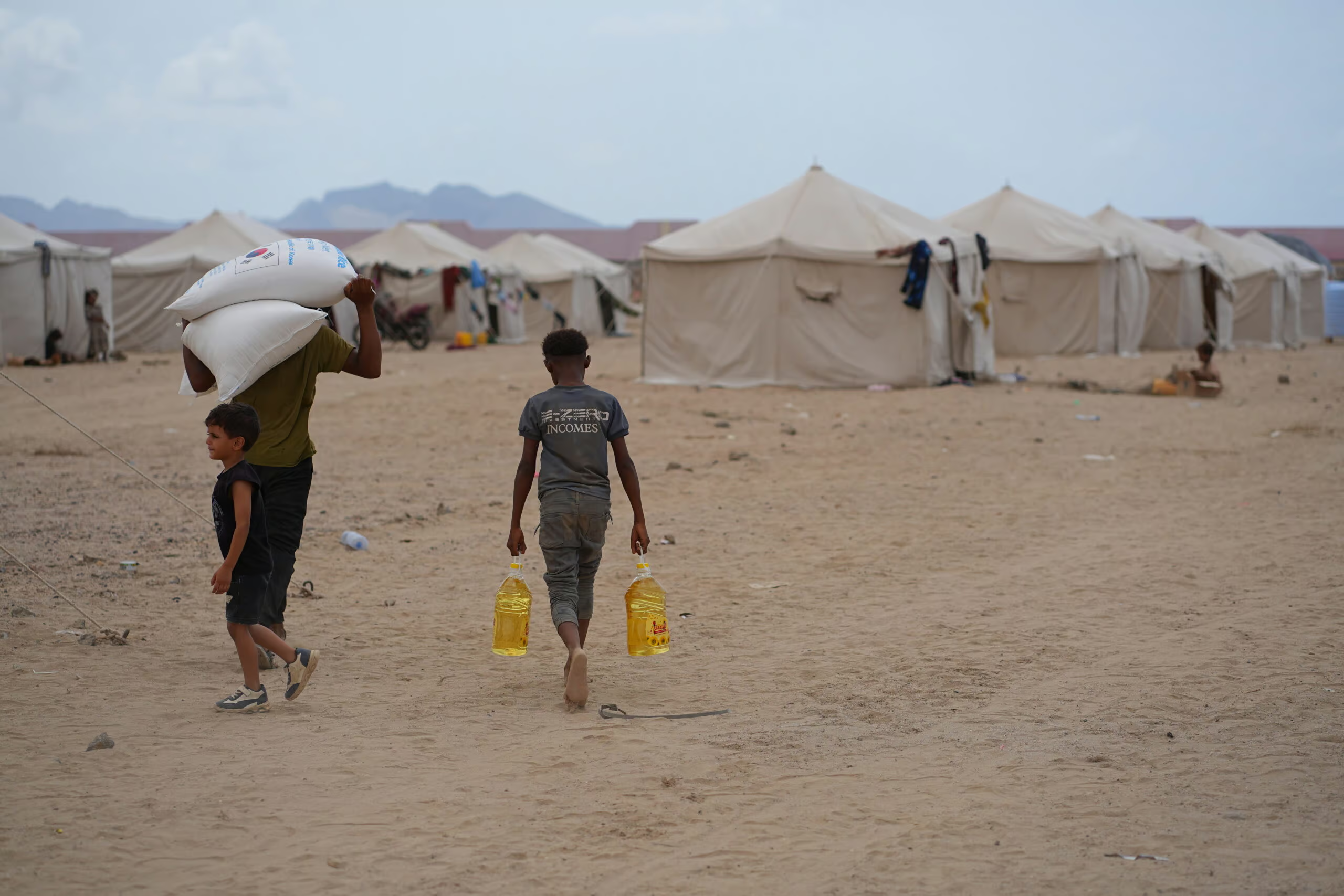
5.5 million Syrians are internally displaced, and 4.4 million have been forced to seek safety as refugees in Lebanon, Türkiye, Jordan and beyond.
Most Syrians who live in neighboring countries have few to no financial resources. In Lebanon for example, nine out of ten Syrian refugees need humanitarian assistance to survive. Many share small, makeshift homes with other refugee families in overcrowded conditions. Within Syria, 7.2 million people are food insecure.
WFP is in Syria doing whatever it takes to reach people with lifesaving foods like rice, beans, oil and wheat. In 2025, WFP reached 5.8 million people and remained the largest humanitarian agency in the country. WFP is also active in nearby countries like Jordan, where almost 90% of Syrian refugees are either already severely hungry or teetering on the edge. They’ve responded by meeting the basic food needs of around 85,000 of them in camps with food assistance every month.
3. Afghanistan: 9 Million People Displaced
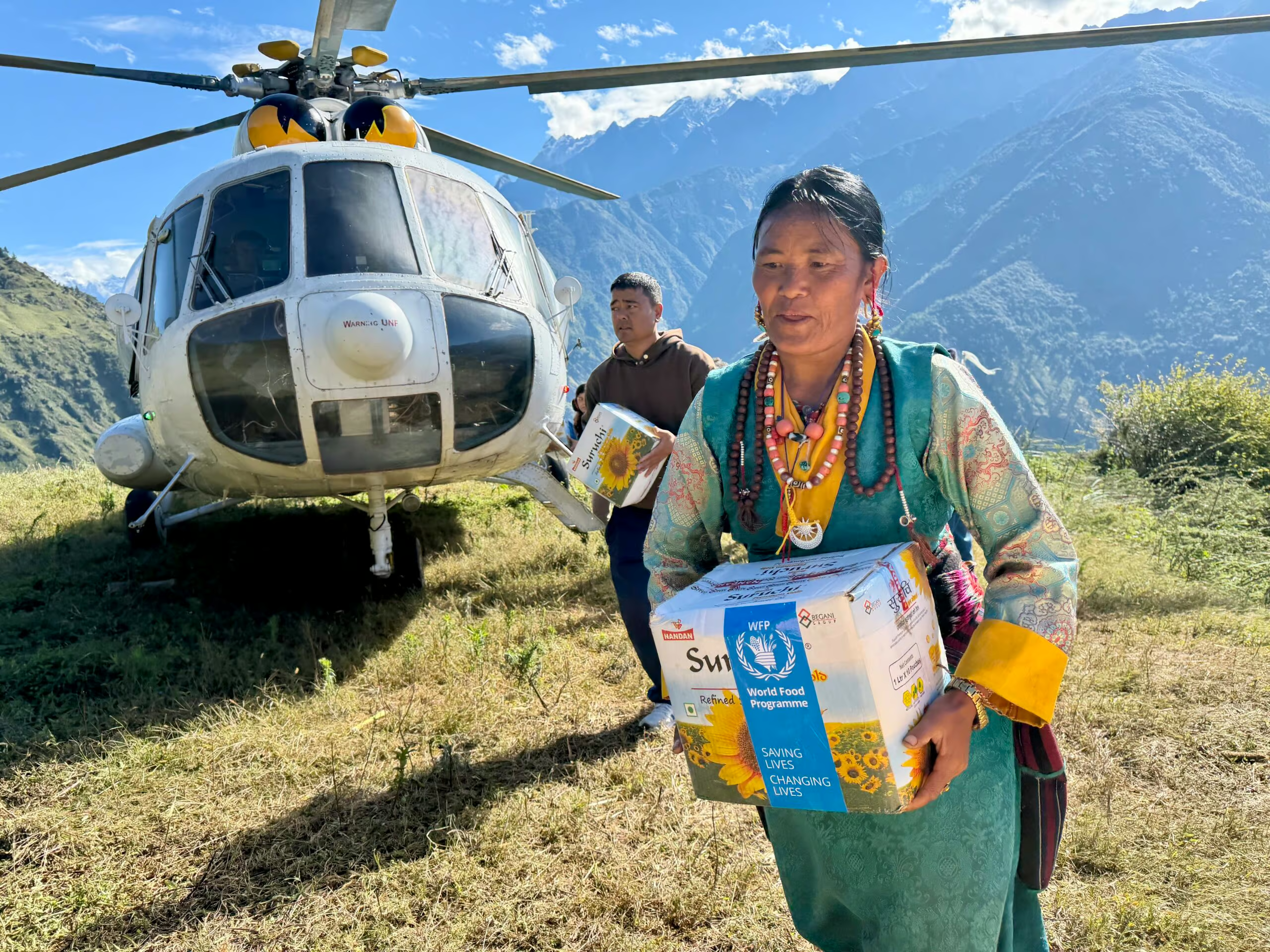
Decades of conflict and insecurity have derailed Afghanistan’s economic growth and torn communities apart. The withdrawal of international troops in 2021 upended the lives of millions of Afghan families who are now facing uncertainty and extreme hunger. More than 17 million Afghans are facing acute food insecurity.
Today, 3.2 million are internally displaced within the country, and 5.8 million are refugees. The vast majority have fled to Pakistan and Iran.

WFP has been working in Afghanistan since 1963 – with a special focus on women and girls – helping families, schoolchildren, IDPs and returning refugees get the food they need. With your help, they supported 12 million Afghans in 2025 with food and cash, nutrition support, school meals, skills training and infrastructure repair.
4. Democratic Republic of the Congo (DRC): 8.9 Million People Displaced
The DRC has experienced decades of conflict and instability. Violence surged again in 2024 between various groups and has taken a heavy toll on civilians caught in the crossfire. Around 7.8 million people are internally displaced, with 1.1 million refugees having fled the DRC.
A total of 26.5 million people are experiencing crisis levels of hunger. More than 3 million children are stunted from chronic malnutrition.
WFP is in the DRC providing emergency food assistance. It served nearly 5.3 million people in 2025. This year, they are scaling up in response to the Ebola outbreak in eastern DRC – providing emergency food and logistics support in affected areas.
5. Ukraine: 8.4 Million People Displaced
In early 2014, armed conflict broke out in eastern Ukraine following Russia’s annexation of Crimea. Fighting has simmered since despite efforts at diplomacy and ceasefires.
Since Russia launched a full-scale military invasion into Ukraine in February of 2022, more than 3.4 million people have been internally displaced, and more than 5 million are now refugees in neighboring countries like Moldova, Poland, Romania, Slovakia, Hungary and Belarus. Inside of Ukraine, 2 million people are facing hunger and need food assistance.
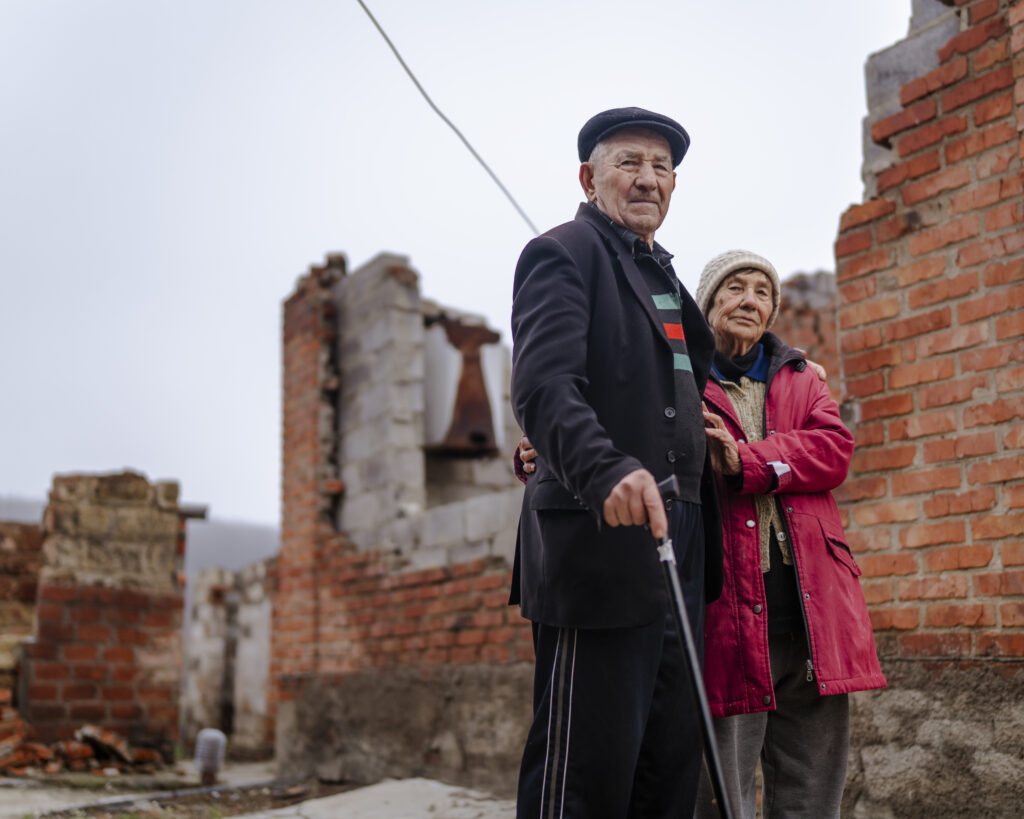
The war has transformed what is known as “the breadbasket of the world” into a global humanitarian crisis. Before the invasion, Ukrainian grain fed 400 million people around the world. Four years of war have turned farmland into deadly minefields and left farmers entirely dependent on humanitarian assistance.
WFP helped Ukrainians in 2014, and now they are back. In February of 2022, Ukraine’s government officials requested WFP’s help almost immediately. They reached over 4 million people within the first four months of their operations. Today, they continue to deploy both food and cash assistance to more than half a million people, including IDPs, every month. Food deliveries include bread, rice, oil, canned meat, and fortified biscuits.
6. Venezuela: 7.6 Million People Displaced
Mass displacement has unfolded in Venezuela over the past decade: 7.6 million Venezuelans have been forced to flee their homes after years of hardship, with an estimated 2,000 people leaving the country every day during the peak of the crisis.
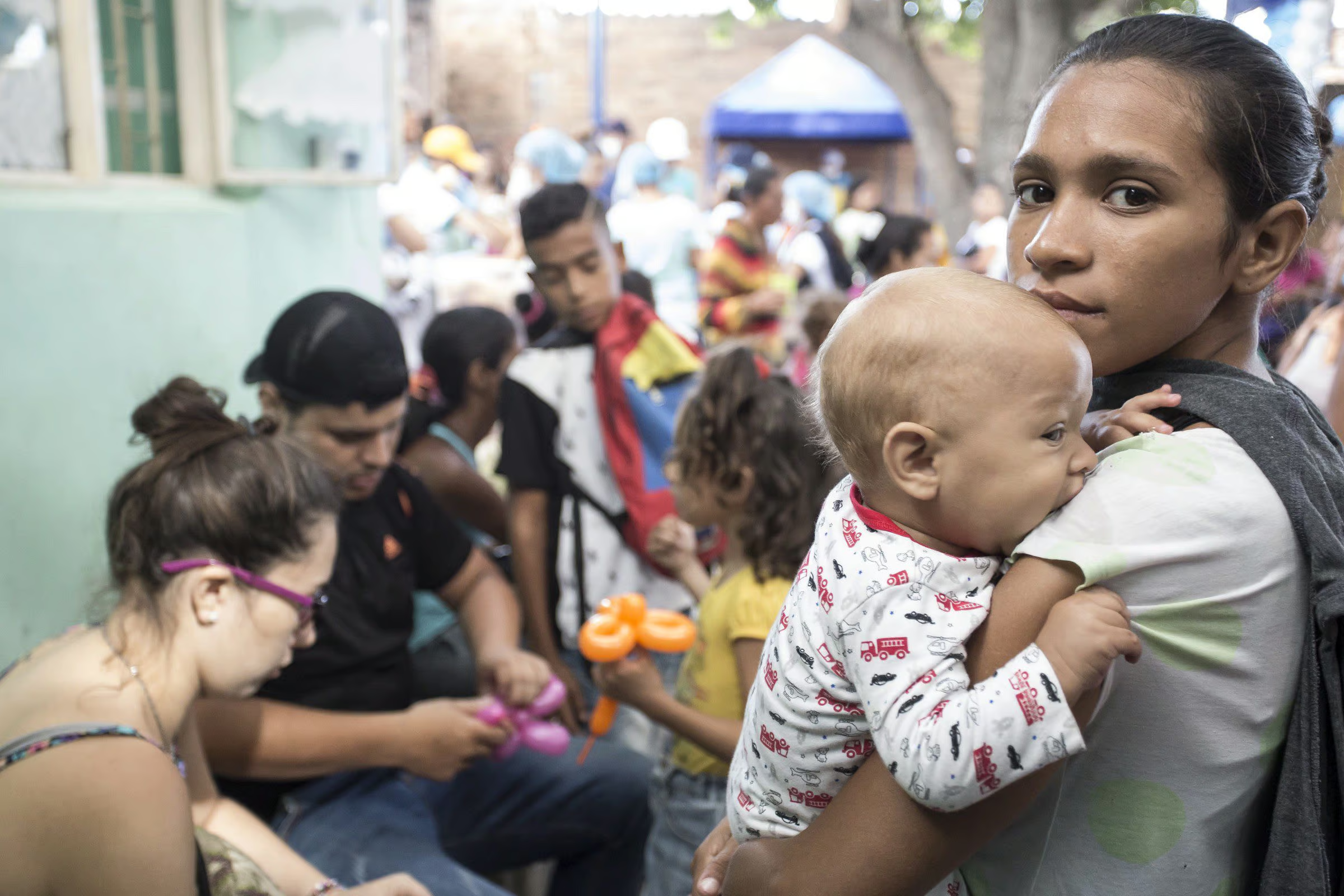
The recent earthquakes only forced more Venezuelans from their homes and into uncertainty. The quakes displaced more than 17,000 people and caused extensive damage to roads and homes. Some families fled on foot into the mountains, carrying nothing and searching for safety from the aftershocks.
Even before this disaster, Venezuela’s population faced overlapping needs and high levels of food insecurity. Many families cannot afford groceries because of high prices, and the average monthly salary barely covers the cost of one week of food.
In 2021 – after 40 years – WFP restarted their school meals program in Venezuela. Since then, WFP has become the backbone of the food security response in Venezuela. Their operations have expanded to include seasonal food assistance, resilience-building activities and logistics support. Communities, families, children and more than a dozen partners rely on WFP’s proven ability to reach even the most remote areas.
They’re also assisting migrants across Central America, offering food and other assistance.
7. Myanmar: 3.8 Million People Displaced
Myanmar, also known as Burma, has experienced decades of conflict that have displaced millions of people in recent years. Today, 3.7 million people are displaced within Myanmar and 1.6 million are refugees and asylum-seekers.
The most affected group by far is the Rohingya: an ethnic minority in the country that has suffered armed attacks, discrimination, targeted violence and human rights violations. The United Nations has described the Rohingya as “the most persecuted minority in the world.” They have been denied citizenship since 1982, making them the largest stateless population. These circumstances also make them extremely vulnerable to exploitation, abuse, and sexual and gender-based violence.
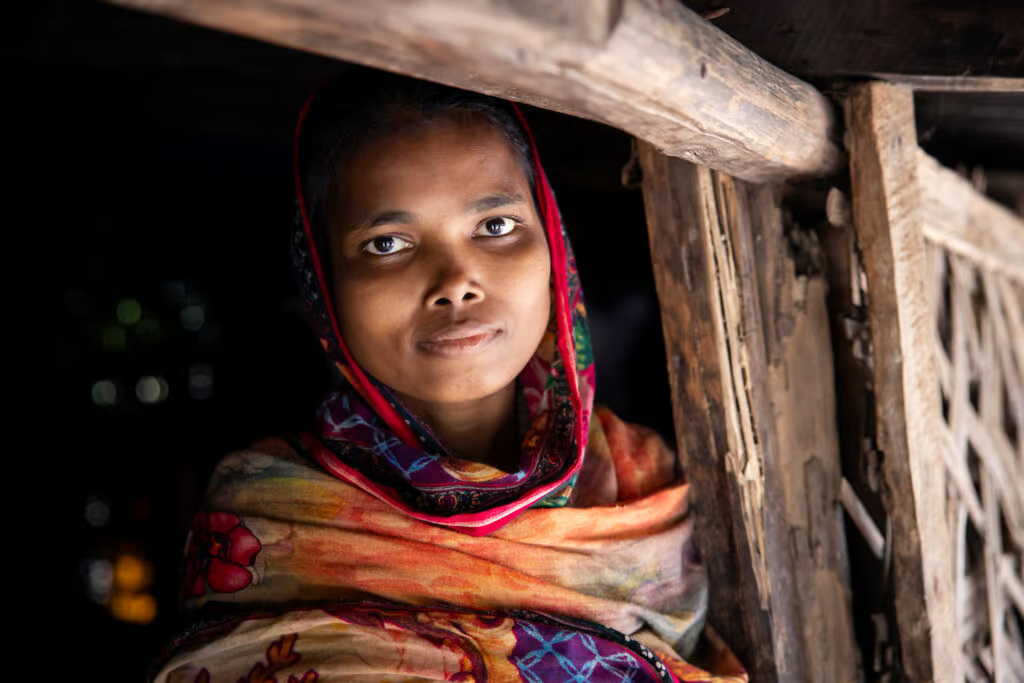
In 2017, the violence came to a head and sparked a mass exodus of Rohingya families out of Myanmar. In a matter of weeks, hundreds of thousands of people fled for the safety of Cox’s Bazar, a coastal town in neighboring Bangladesh.
Today, Cox’s Bazaar is the world’s largest refugee camp, home to around 1.2 million Rohingya. The camp itself presents many challenges. It hosts twice the population of Miami in an area six times smaller. Overcrowding leaves refugees vulnerable to hazards such as floods, landslides and disease. WFP is in Cox’s Bazaar, helping families survive with resources like food and cash. But their work goes beyond survival. They’re investing in the Rohingya’s long-term food security through projects like skills trainings and female entrepreneurship.
8. South Sudan: 4.4 Million People Displaced
After 20 years of struggle, South Sudan gained its independence from Sudan on July 9, 2011. High hopes for the future of the world’s newest country were shattered in 2013 when conflict within the ruling Sudan People’s Liberation Army (SPLA) plunged the country into war. Ongoing waves of violence have raged on since.
The conflict has killed thousands and driven more than 4 million people from their homes. 2 million people remain displaced inside the country, and nearly 2.4 million have fled to neighboring countries – mainly to Ethiopia, Sudan and Uganda – in a desperate bid to reach safety. A majority of the refugees are women and children. Many cross the border alone, weak and malnourished.
Today, more than half of South Sudan’s population, 7.8 million people are suffering from the most extreme levels of food insecurity, and many could starve without help. That’s why WFP has been providing lifesaving support to millions of people in virtually all areas of the country since 2011 (and as part of Sudan since 1963).
9. Central African Republic (CAR): 1.1 Million People Displaced
Since gaining independence in 1960, the Central African Republic (CAR) has endured decades of violence and instability. In 2013, an outbreak of conflict between armed groups forced more than 640,000 people to flee the country and about the same number to become internally displaced. Most of them sought refuge in neighboring countries: Cameroon, Chad, the Democratic Republic of the Congo (DRC) and the Republic of the Congo, with smaller numbers in Sudan and South Sudan.
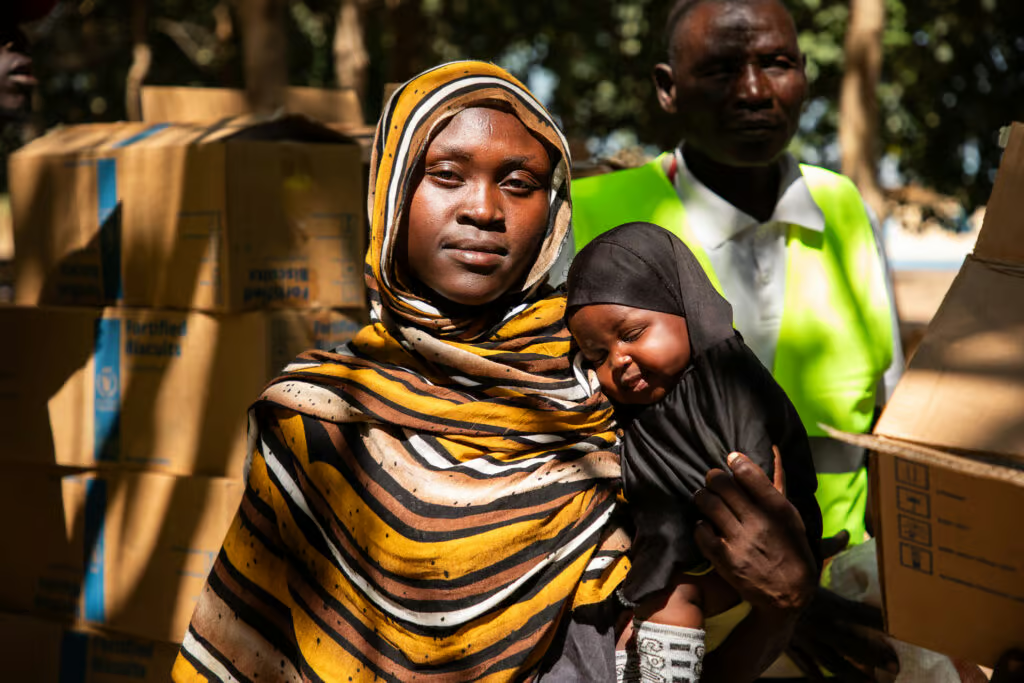
A decade later, more than 700,000 have fled the Central African Republic and 447,000 people are internally displaced. Within the Central African Republic, 2.2 million people are facing extreme hunger
WFP is in CAR and neighboring countries, providing food, cash and nutrition assistance. They also provide refugees and IDPs with school meals, malnutrition treatment for children, fortified food distribution and health training.
Refugees Across the Globe Need Your Support
Around the world, WFP focuses on proven, lifesaving interventions that provide food to the people at highest risk of hunger including refugees and internally displaced persons. Wherever they are, WFP helps lift up displaced families and communities by meeting their basic needs with dignity and care.
But they can’t do it alone. Please help displaced people by donating today.