Bhutan
Threatened by Natural Disasters
While economic progress is strong, the country is prone to natural disasters and extreme weather which impact development and hunger.
Make a difference in Bhutan
Hunger in Bhutan
27%
of households cannot afford a diet that meets their nutrient needs
86%
of Bhutanese do not eat enough vegetables and fruits7
44.1%
of children under 5 are anaemic
Bhutan Facts
New York
Show Places

New York
×
Geocoding Error Occured.
Tried to Geocode:
Error Type:
Please be sure to follow the tutorial on how to setup the Google APIs required for the Advanced Google Map Widget.
Google Map API Key Tutorial
Population: 763,000
Background: Bhutan transitioned from an absolute monarchy to a constitutional monarchy in 2008, and has focused on growth and modernization with its unique “Gross National Happiness” index.
Geography & Climate: Bhutan is a small, landlocked country in the Himalayas in Asia. Its terrain is predominantly mountainous, with steep valleys and dense forests. The climate varies by altitude—from humid subtropical in the lowlands to polar conditions in the mountains.
Economy: Bhutan has a small but growing economy. Many Bhutanese still rely on small farms and livestock for their livelihoods, especially in rural areas.
Causes of Hunger
Terrain & Agriculture
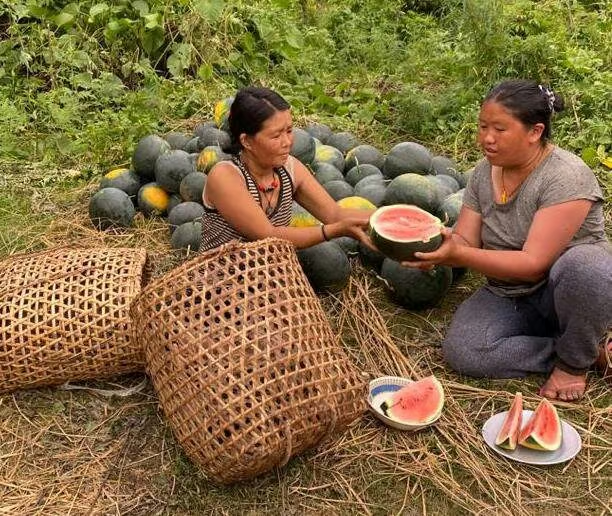
Since Bhutan is so hilly and mountainous, less than 3% of the land is actually farmable. This also makes it difficult for small farmers to get their crops to the market. About 50% of their food has to be imported.
Learn More Weather & Disasters
Bhutan is located in one of the most seismically active zones in the world. The country is prone to earthquakes, floods, landslides and forest fires. It is located in a region the climate has high variability.
Learn More
History of Hunger
1970s-1980s
Bhutan began opening to the outside world and investing in health, education, and agriculture. These reforms helped reduced extreme poverty, but rural communities were still food insecure.
2008-
Bhutan adopted a democratic constitution, improving governance and social services. However, poverty remained high in remote areas, prompting expanded WFP school feeding and nutrition programs.
2017-2020
Climate-related disasters, including monsoon floods and landslides, damaged farmland and roads, disrupting food supply chains and triggering disaster relief operations in rural regions.
2020-2022
Border closures and reduced tourism—the country’s key revenue source—slowed the economy, increased unemployment, and temporarily worsened food insecurity, leading the government and WFP to provide targeted assistance to vulnerable groups.
WFP’s Work in Bhutan
We’ve been present in Bhutan since 1974, supporting the government’s graduation from least developed country status to lower middle-income status by providing technical assistance and capacity support:
Nutrition
We support the national health system in the prevention and management of malnutrition, aiming to boost the availability, accessibility and consumption of fortified foods and to improve the health and diet of Bhutan’s children through school menu design, nutrition curriculum development, behavior change campaigns and supply chains. We also work with the Ministry of Agriculture and Forests to increase the production of nutritious crops and to link farmers directly to schools.
Resilience
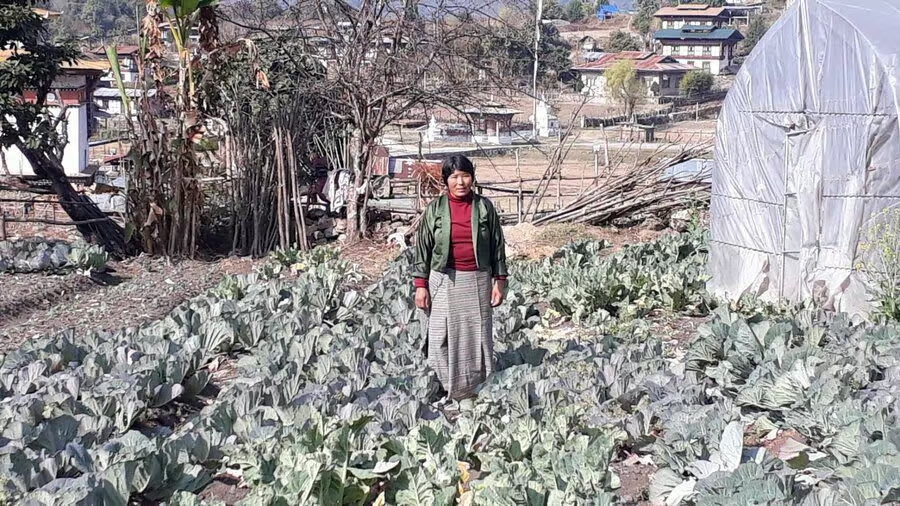
The U.N. World Food Programme is supporting the government as it strengthens livelihoods and climate resilient food systems across the country. Our assistance is implemented across the agriculture value chain by boosting demand for local food, building production capacity and refining post-harvest management, marketing, knowledge management, cost efficiency and coordination.
Disaster Preparedness
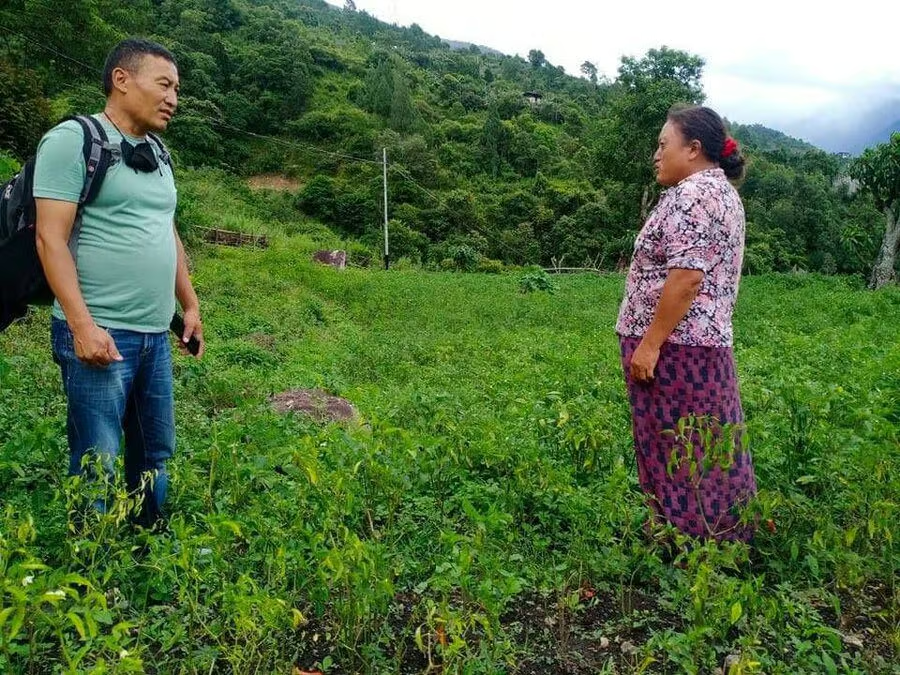
We’re building Bhutan’s resilience to disasters and climate change by assisting the government across five areas: governance and coordination, data preparedness, logistics, emergency telecommunications and food security. This includes the development of a National Road Map, the establishment of national capacity for a disaster response within 72 hours, earthquake impact modeling, contingency planning, strengthening emergency telecommunications, emergency logistics preparedness and the establishment of humanitarian staging areas.