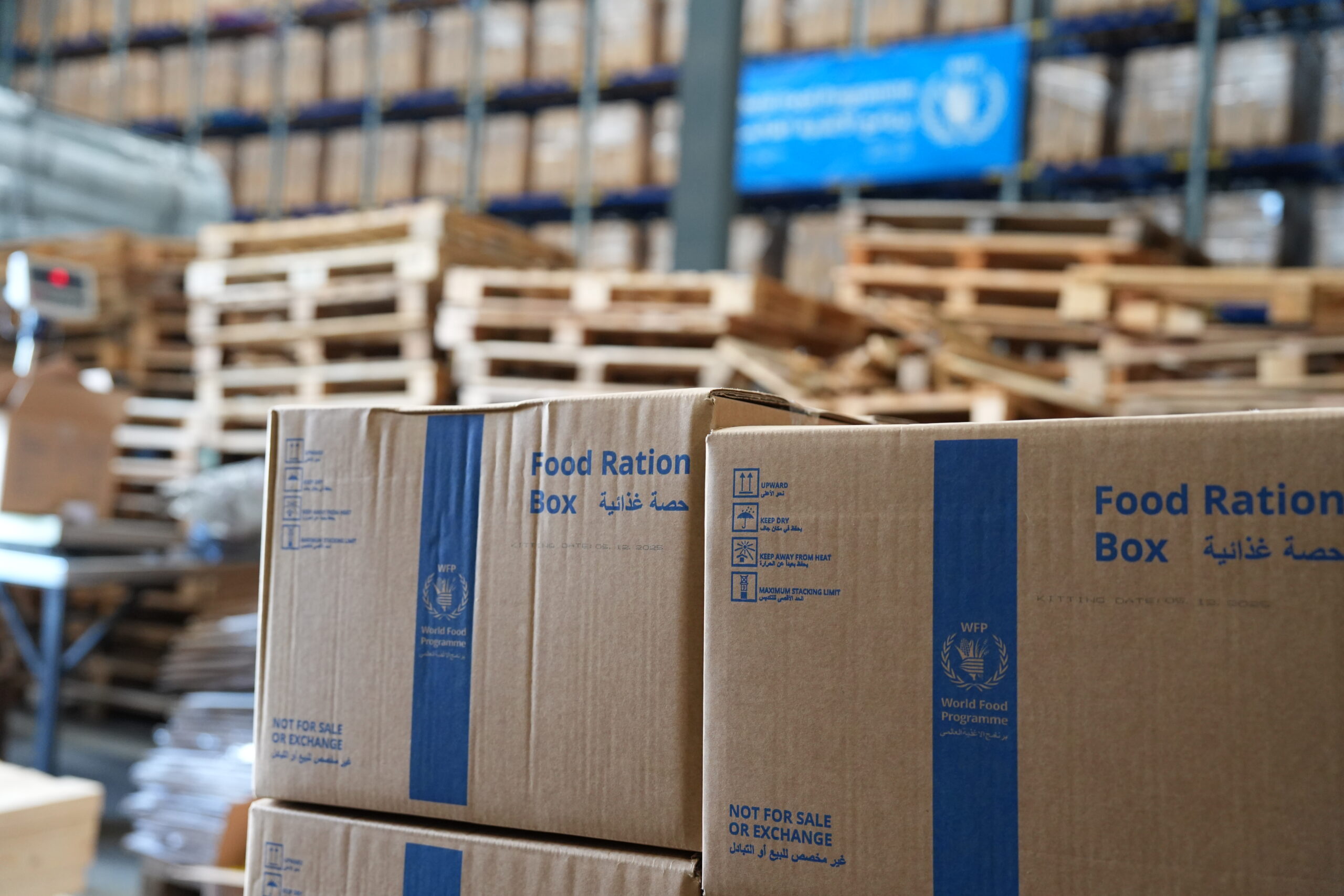
This week, the U.S. Department of Agriculture (USDA) announced its intent to enter into an agreement for up to $452 million in funding for international food aid to be delivered by the World Food Programme (WFP) in seven countries in 2026.
The agreement would unlock over 200,000 tons of U.S.-grown food (wheat, Corn-Soy Blend Plus, beans, peas, lentils, rice, sorghum, vegetable oil and Ready-to-use Supplementary Foods) administered by USDA through one of the United States’ most celebrated international relief programs, Food for Peace.
Since 1954, Food for Peace has served as a cornerstone of the United States’ fight to end global hunger, purchasing food from American farmers and providing it to those facing humanitarian emergencies around the world.
“Food for Peace is a powerful example of how American values and American agriculture work hand in hand. With strong bipartisan support, this program channels the bounty of U.S. farms to families facing hunger and crises worldwide. It supports American farmers while delivering hope, stability and lifesaving food to those who need it most. We are grateful to the U.S. Department of Agriculture, with support from the White House, for carrying on the legacy of the Food for Peace program,” said Barron Segar, President and CEO of World Food Program USA.

This aid would serve people in the Democratic Republic of the Congo (DRC), El Salvador, Ethiopia, Guatemala, Haiti, Kenya and Rwanda — places where resources are critically needed. In Ethiopia, for example, a place suffering from a combination of conflict, extreme weather events and high food prices, WFP was forced in October 2025 to reduce rations to nearly 800,000 refugees in 27 camps across the country. In DRC, meanwhile, 26 million people are facing crisis levels of hunger and nearly half of all children under 5 are stunted.
Food for Peace epitomizes the marriage of U.S. moral and economic interests and contributes to a safer, stronger and more prosperous world. It’s why generations of lawmakers from both sides of the aisle have lent their support to the program, and Congress continues to provide it with robust funding. America’s food aid protects U.S. interests, counteracts foreign threats, builds influence and supports our allies.
This announcement represents yet another chapter in the bipartisan legacy of the Food for Peace program and the United States’ important relationship with the world’s leading humanitarian organization fighting hunger, the World Food Programme.