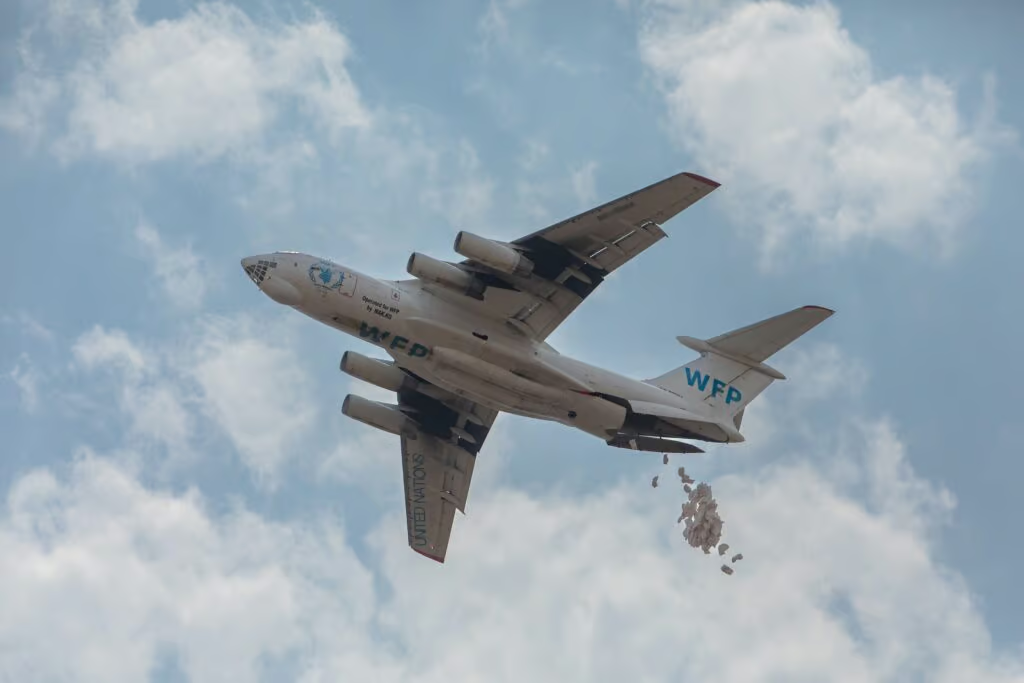
Airdrops are potentially hazardous, and they cost up to seven times more than road transport with far lower capacity. These are just a few of the reasons the World Food Programme (WFP) rarely takes to the skies to distribute food.
On any given day, WFP has up to 5,000 trucks, 80 aircraft, and 20 ships delivering lifesaving food to people facing the most extreme levels of hunger. Some of the most vulnerable communities are nearly unreachable, especially those trapped in violent conflict zones or cut off by extreme weather. In these worst–case scenarios, if all other conditions are right, WFP may turn to airdrops as a last resort.
Top Three Challenges of Humanitarian Airdrops
1.) Airdrops Are Potentially Dangerous
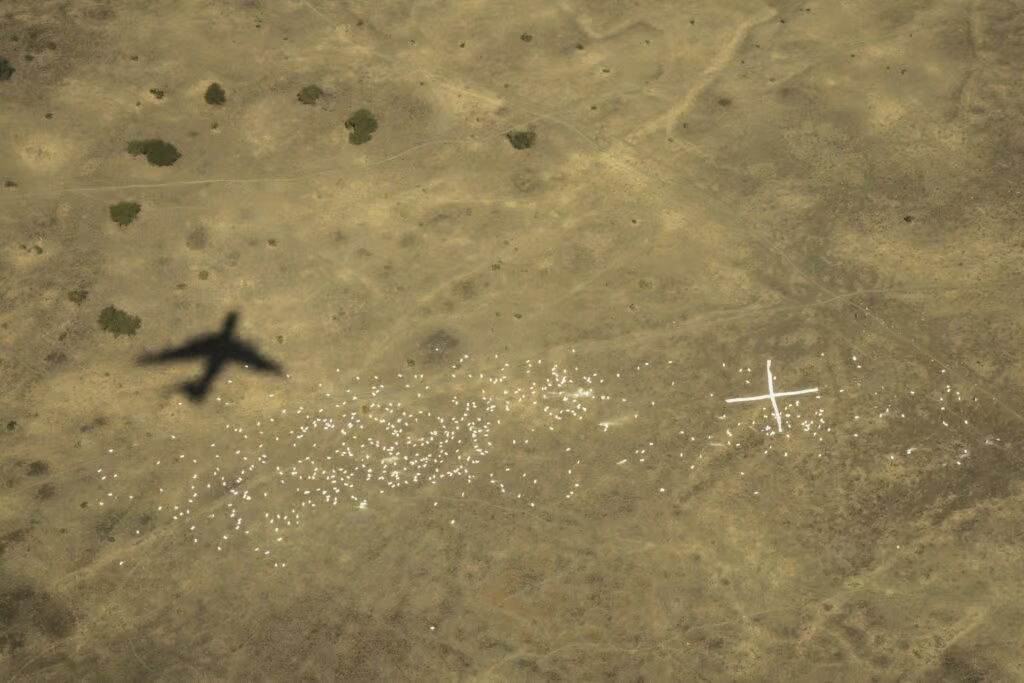
Imagine 50lb bags of food falling from the sky at speeds up to 180mph. They can injure or kill civilians and damage buildings. Drop zones need to be open areas, ideally flat and clearly visible from the air. The size of the drop zone varies depending on the plane’s altitude, ranging from one to 210 football fields.
Strong winds, sandstorms, and other adverse weather conditions can also affect the accuracy of the drop and jeopardize the safety of operations. Just one strong wind can blow the plane off course and over a body of water or buildings instead of open ground.
This is why airdrops in urban areas can be more dangerous than beneficial.
2.) Airdrops Don’t Ensure Fair Distribution
In addition to having the right landing conditions, a team must be on the ground to coordinate the drop and distribution of aid. Crowds may rush into the landing zone, desperately seeking food they may have gone days without. In the crush and chaos of the crowd, the most vulnerable people may not get the food that’s intended for them.
3.) Airdrops Cost More and Deliver Less
The cost of a single airdrop – including aircraft, fuel, food and personnel – can be seven times higher than the cost of road transport. At the same time, one convoy of trucks can deliver more food than dozens of flights.
So, When Does WFP Use Airdrops?
Given the risks and expenses involved, WFP rarely uses airdrops. However, we may consider airdropping food when:
- People are entirely cut off from aid and hunger is rising to lifethreatening levels.
- We can guarantee safe conditions in the air and on the ground with a team to coordinate the drop and oversee food distribution.
- We have detailed, up-to-the-minute information on the weather and nearby conflict so we can plan operations with extreme precision.
Across 123 countries and territories, WFP tailors its operations to the conditions and needs on the ground, so we can reach people safely and efficiently with the food they need to survive. In the most dire, challenging environments, airdrops may be the only way to save lives.
When Has WFP Used Airdrops Before?

The first U.N. airdrop of emergency humanitarian relief happened in August 1973. From 30 planes, the WFP-led operation dropped food into the western Sahel, where six years of drought had taken its toll on people throughout Chad, Mali, Mauritania, Niger, Senegal and Burkina Faso. Since then, WFP has intermittently turned to airdrops including:
- In 1989, WFP led a group of charities and U.N. agencies to airdrop 3.3 billion pounds of food across war- and drought-affected regions of what is now South Sudan. It is the largest humanitarian airdrop in history.
- In 2016, WFP conducted its first-ever high-altitude airdrop in response to the escalation of conflict in Syria that cut civilians off from humanitarian assistance. Over 18 months, we completed 309 drops to provide emergency food assistance to more than 100,000 people in northern Syria.
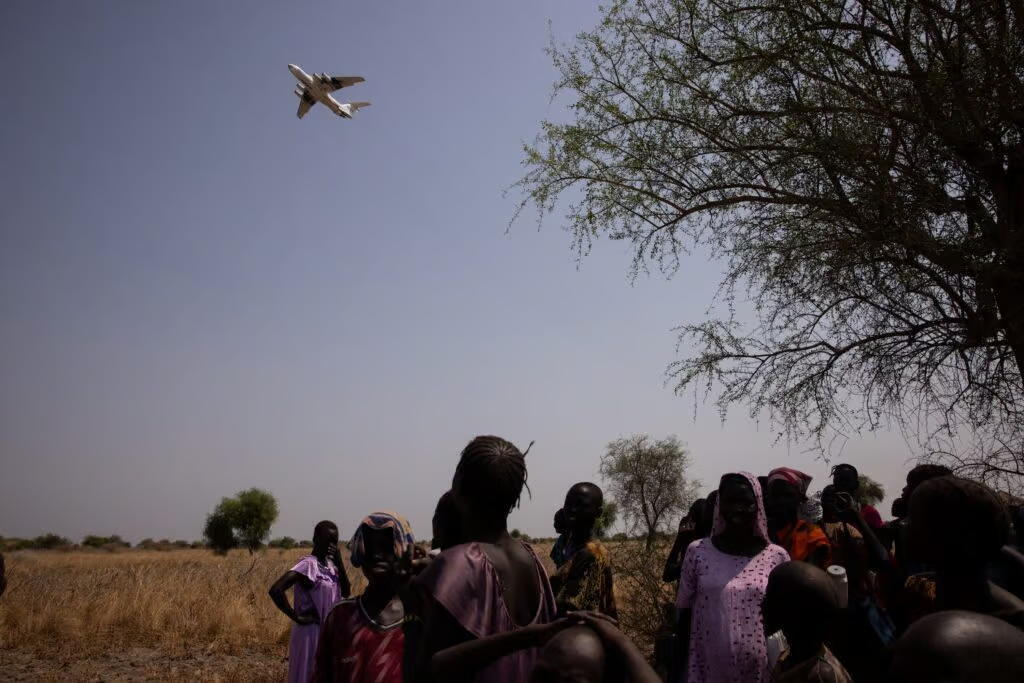
- In 2025, WFP airdropped nearly 1 million pounds of food to 40,000 people at risk of famine in South Sudan’s Greater Upper Nile region whowere inaccessible by river or road. As soon as access was possible, WFP resumed boat convoys via the White Nile River.
What Is the Process for a Humanitarian Airdrop?
The journey of an airdrop begins in a WFP warehouse, where each bag of food is reinforced with six layers of packaging to withstand ground impact, sewn together using a handheld, high-powered stitching machine. The color of the outer bag varies to signal different contents: white for grains, red for beans, and blue or green for specialized nutritious foods.
The bags are then loaded onto a truck – or trucks – and driven to the airfield where they’re transferred to the plane and secured for take-off. The drops can be performed from altitudes ranging from about 1,000 feet in peaceful settings to more than 18,000 feet in conflict zones, where there is a risk the aircraft might be hit.
A WFP team on the ground ensures the drop zone is clear and gives the flight crew the green light to release the cargo. Bags of tightly packed food will then drop out of the plane and onto the ground. That’s why an open area is needed – so the food can land safely, and the team can coordinate the distribution.
Airdrops Are a Tool of Necessity
Airdrops have saved countless lives in emergency situations where no other options are available. However, the expenses coupled with the limited capacity for delivery compared to a convoy of trucks render airdrops as a delivery method reserved solely for situations where all other means of reaching those in need are inaccessible.
____________________________________________________________________________________________
Sections of this blog originally appeared in this story published by WFP on August 20, 2025.