PORT-AU-PRINCE, Haiti – The World Food Programme (WFP) warned today that rising violence by armed groups in Haiti’s capital is restricting humanitarian access and pushing families deeper into hunger as extreme funding shortfalls force WFP to slash rations and suspend programs.
Reports indicate that armed groups now control nearly 90% of Port-au-Prince. As a result, more farmers are cut off from markets, further straining already fragile food systems and pushing food prices even higher with devastating consequences for food insecure families.
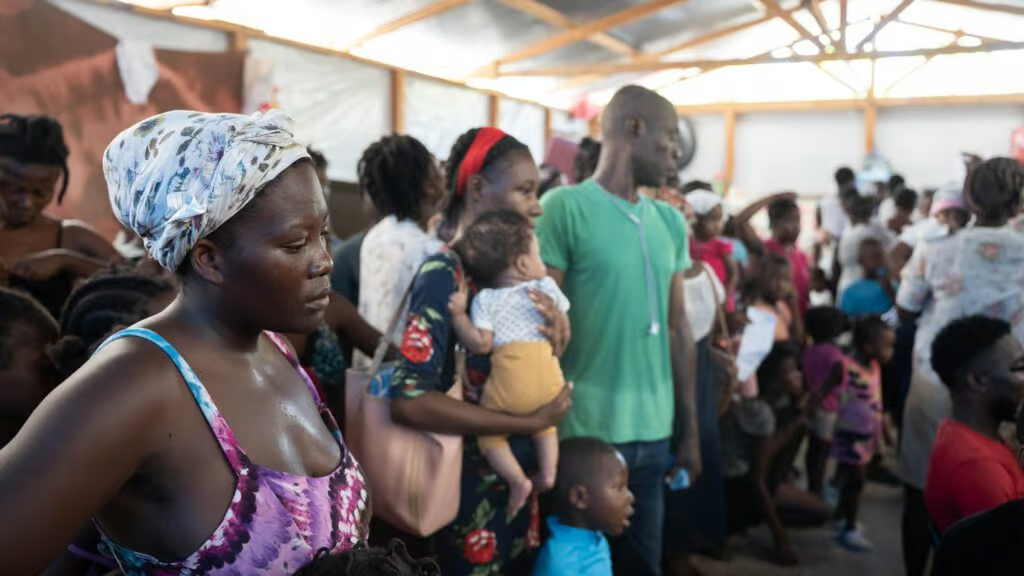
A staggering 1.3 million people have been forced to flee their homes in search of food and shelter. Thousands of families are crowded into schools and public buildings, cut off from income generating opportunities and education. More than half of those displaced are children, contributing to high rates of malnutrition, particularly in areas of the capital with minimal access to services.
Amidst the crisis, funding shortfalls have forced WFP to suspend hot meals for newly displaced families and slash food rations in half. And for the first time ever, the lack of resources has prevented WFP from pre-positioning food stocks to respond to a natural disaster during the Atlantic hurricane season.
This week’s U.N. Security Council resolution to support a larger multinational force to help restore security in Haiti is a critical and welcome step toward stability. WFP stresses that security efforts must go hand-in-hand with scaled-up humanitarian and development investments to prevent further social breakdown, displacement and regional spillover.
“Violence has consumed every corner of the capital, leaving no neighborhood untouched, and armed groups are now permeating previously peaceful rural areas,” said Wanja Kaaria, WFP country director and representative to Haiti. “The impact on food security has been extreme. Today, more than half of all Haitians don’t have enough to eat. With our current levels of funding, WFP and partners are struggling to keep starvation at bay for thousands of the most vulnerable – children, mothers, entire families who are running out of options and hope.”
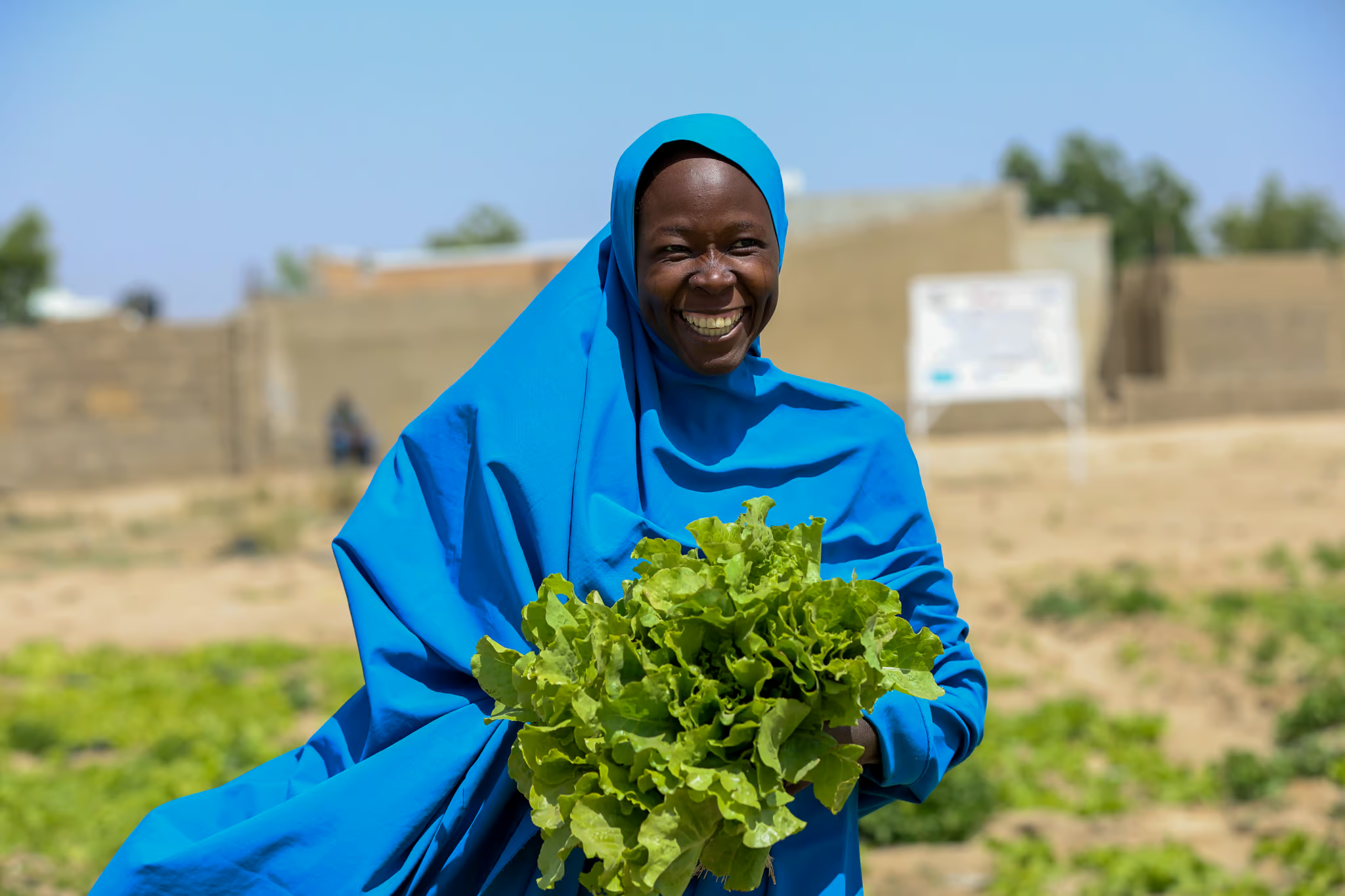
Despite restricted access and extreme insecurity, WFP is on the ground and has reached more than 2 million people with lifesaving assistance since January. Efforts to support longer term food security and reduce dependence on aid are also continuing as WFP works with the government to provide school meals for 600,000 Haitian students. Over 70% of school meals are prepared using locally grown ingredients that provide income opportunities for local farmers and suppliers. Alongside this, WFP has also been able to launch targeted community infrastructure projects, including in areas controlled by armed groups, to restore irrigation systems and boost local food production to help communities stabilize, rebuild livelihoods, and reduce reliance on aid.
Haiti is the only country in the Americas, and 1 of only 5 countries globally, with people facing catastrophic (IPC5) levels of hunger, which is equivalent to famine-like conditions. It remains one of the world’s most severe food crises with 5.7 million people facing acute food insecurity.
“Haiti is at a crucial juncture,” stressed Kaaria. “We urge international partners to step up to enable WFP and partners to provide not only lifesaving emergency assistance, but also to invest in programs addressing the root causes of hunger by channelling resources to support Haiti’s recovery and fuel new hope,” Kaaria added.
Haiti remains one of the most underfunded crises globally, particularly for food security. WFP requires $139 million for the next 12 months to reach the country’s most vulnerable families. Funding shortfalls threaten not only lives but also stability. Food assistance is a lifeline in Haiti’s volatile environment; it not only helps save lives today, but can also reduce the risk of social collapse, displacement and forced migration tomorrow.
# # #
Note to editors
Broadcast quality footage can be accessed here.
Photos can be accessed here.
WFP has produced a series of reports to examine the food security implications of the funding crisis, titled A Lifeline At Risk: Food Assistance at a Breaking Point. The Haiti-focused report can be accessed here.
The World Food Programme is the 2020 Nobel Peace Prize Laureate and the world’s leading humanitarian organization, saving lives in emergencies and using food assistance to build a pathway to peace, stability and prosperity for people recovering from conflict, disasters and the impact of climate extremes.
Follow WFP on X, formerly Twitter, via @wfp_Haiti
The article was originally posted on wfp.org