• Roughly 45 million more people could be pushed into acute hunger this year if conflict persists.
• Global numbers of food-insecure people could reach levels last seen at start of Ukraine war.
• Import-dependent countries in Africa and Asia are most at risk of increased hunger.
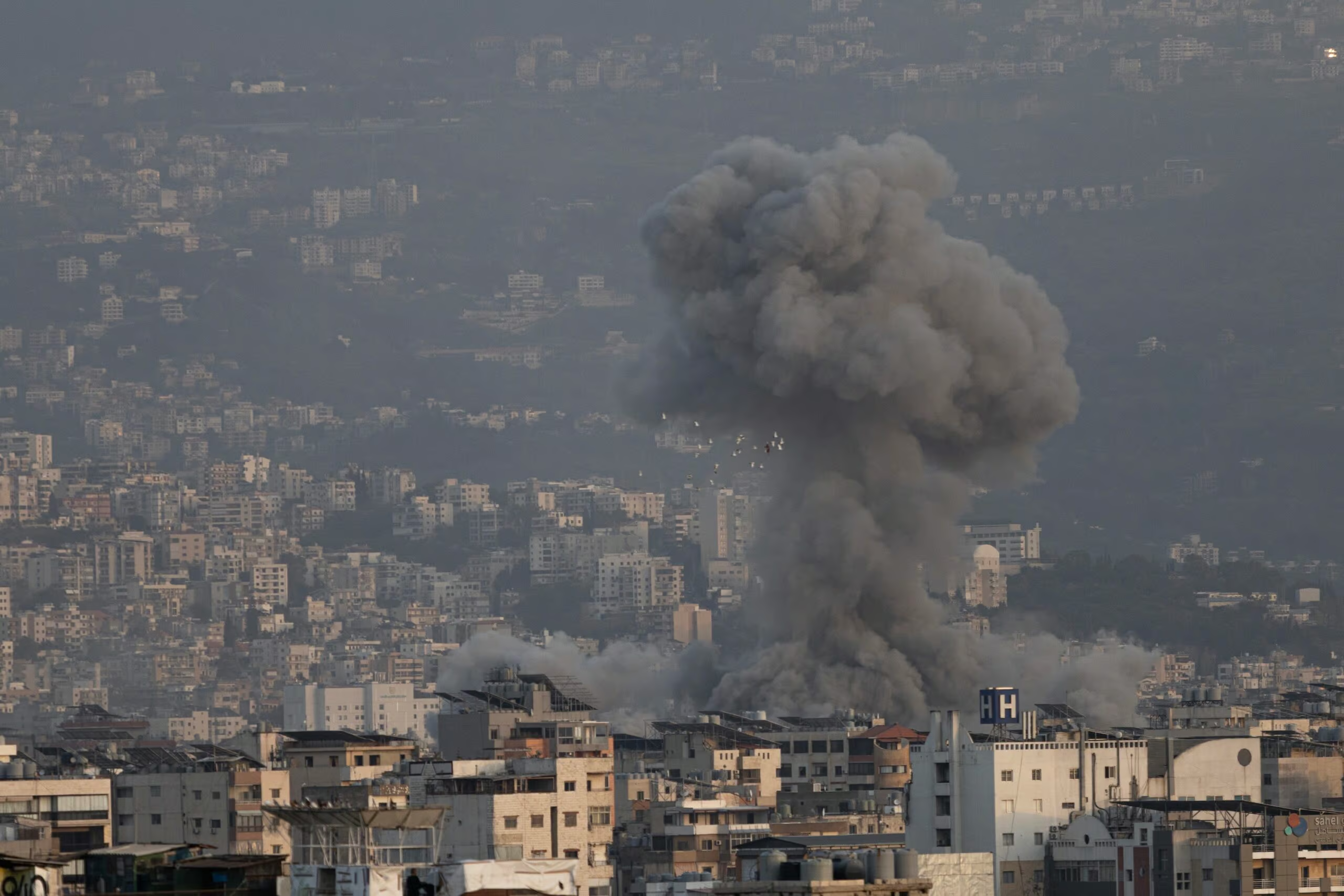
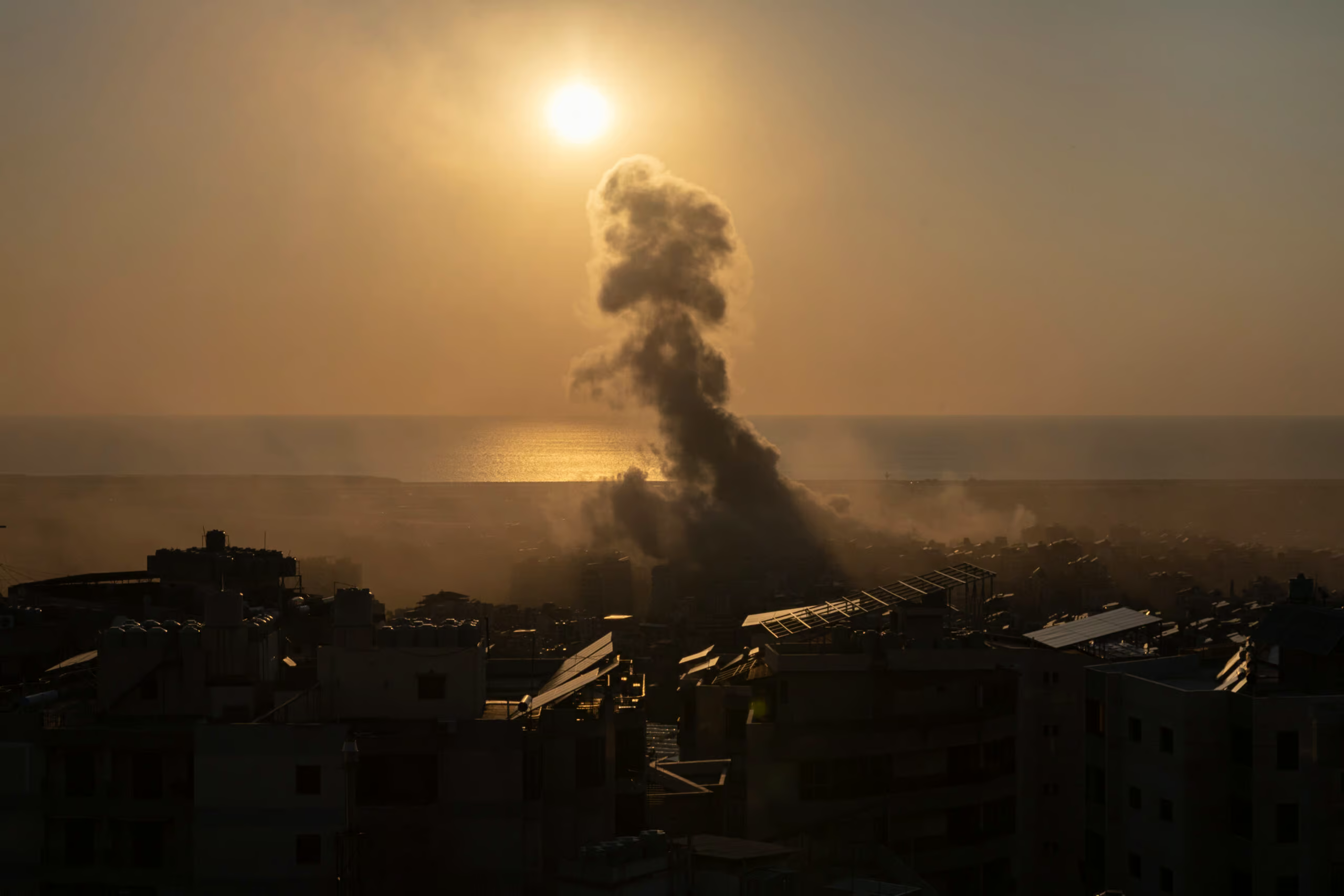
ROME, Italy – The World Food Programme (WFP) is warning today that the total number of people around the world facing acute levels of hunger could reach record numbers in 2026 if the escalation in the Middle East continues to destabilize the world’s economy.
New analysis by WFP estimates that almost 45 million more people could fall into acute food insecurity or worse (known as IPC3+) if the conflict does not end by the middle of the year, and if oil prices remain above $100 a barrel. These would add to the 318 million people around the world who are already food insecure.
When the Ukraine war began in 2022, triggering a cost-of-living crisis, global hunger reached record levels with 349 million people impacted. WFP’s latest projections indicate we are at risk of facing a similar situation in the months ahead if the Middle East conflict continues. During the 2022 period, food prices were fast to spike but slow to come down. This meant that vulnerable families already struggling with hunger were priced out of staple food items almost overnight, and for extended periods of time.
While the 2026 conflict affects a global energy hub — not a major breadbasket — the impact could be similar, since energy and food markets are closely connected.

In many parts of the world, families who can barely afford food today may soon not be able to afford enough to eat.
“If this conflict continues, it will send shockwaves across the globe, and families who already cannot afford their next meal will be hit the hardest,” said WFP Deputy Executive Director and Chief Operating Officer Carl Skau. “Without an adequately funded humanitarian response, it could spell catastrophe for millions already on the edge.”
The virtual shipping standstill in the Strait of Hormuz and mounting risks to Red Sea maritime traffic are already increasing energy, fuel and fertilizer costs, deepening hunger beyond the Middle East. The conflict is felt far and wide — and the world’s most vulnerable people are the ones who will be most exposed to its ripple effects.
According to WFP’s analysis, countries in sub-Saharan Africa and Asia are the most vulnerable due to a reliance on food and fuel imports. Projections indicate a 21% increase in extreme hunger in West and Central Africa and 17% for East and Southern Africa, with a 24% rise focus for Asia.
Sudan, for example, imports around 80% of its wheat – a higher price for this staple will push more families into hunger. In Somalia, a country in the midst of severe drought, the price of some essential commodities has risen by at least 20% since the conflict began, according to local reports. Both are countries with high levels of food insecurity that have also experienced famine in recent years.
This crisis comes amid severe funding shortfalls for WFP which has forced significant prioritization of programs across all continents, ultimately meaning that people in need of assistance are being left behind. Without more help, rising food insecurity could push some of the world’s most vulnerable countries closer to famine.
Note to editors:
To calculate the impact the conflict will have on global hunger, WFP analysts used the pre-crisis number of people unable to afford an energy sufficient diet (2,100 kcal/day), then modeled a sustained oil price shock at $100 that raises transportation costs and global food prices. Weighing impacts by each country’s dependence on imported energy and food, the number of people who can no longer afford that diet was recalculated and the difference is the projected increase in acute food insecurity.
The breakdown of the increases is as follows:
Asia: 10 countries analyzed; 9.1 million people could be pushed into acute food insecurity which is a 24% increase.
East and Southern Africa: 16 countries analyzed; 17.7 million people could be pushed into acute food insecurity which is a 17.7% increase.
Latin America and the Caribbean: Three countries analyzed; 2.2 million people could be pushed into acute food insecurity which is a 16% increase.
Middle East and North Africa: 12 countries analyzed; 5.2 million people could be pushed into acute food insecurity which is a 14% increase.
West and Central Africa: 12 countries analyzed; 10.4 million people could be pushed into acute food insecurity which is a 21% increase.
Video footage of WFP’s emergency operation in Lebanon can be accessed here.
High resolution photos can be accessed here and here.
# # #
The World Food Programme is the 2020 Nobel Peace Prize Laureate and the world’s leading humanitarian organization, saving lives in emergencies and using food assistance to build a pathway to peace, stability and prosperity for people recovering from conflict, disasters and the impact of climate extremes.
Follow us on X, formerly Twitter, via @wfp