The recent escalation of conflict in the Middle East has triggered far-reaching consequences for communities both within and beyond the region. The crisis is rapidly evolving. Below, we break down your frequently asked questions and make it easy for you to make a difference.
What Does the Middle East Conflict Affect?
- Since February 28, the Middle East has been engulfed in a series of military escalations. Nearly every country in the region has been impacted.

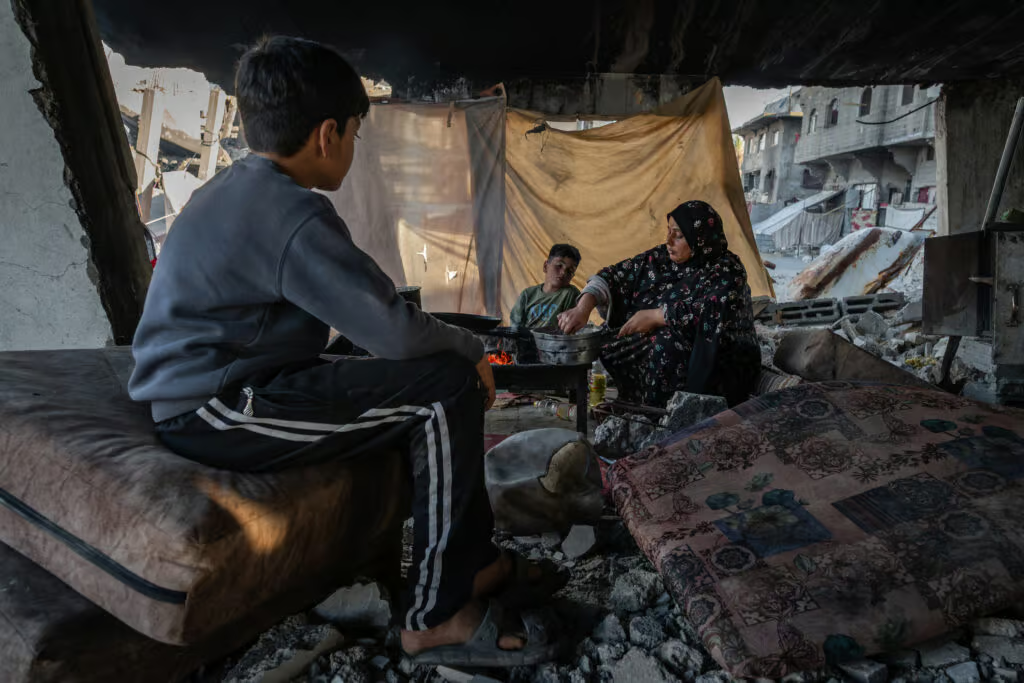
- Civilians are bearing the brunt of the conflict through mass displacement, loss of life, and extensive destruction of infrastructure including schools, hospitals and homes.
- Supply chain disruptions have caused oil prices to surge worldwide and heightened the risk of global inflation.
- This conflict is exacerbating hunger in the region and making it increasingly difficult for humanitarian organizations like the World Food Programme (WFP) to deliver essential aid.
- WFP estimates that an additional 45 million people could be pushed into extreme hunger this year if the conflict persists, equivalent to 2022 when the war in Ukraine triggered a global cost-of-living crisis and food insecurity reached record-breaking levels.
Help Families in Crisis
Across the Middle East and around the world, families are caught in conflict. You can help deliver lifesaving food to people in need.
DONATE NOWWhich Countries Are Affected by the Recent Conflict?
Iran
Number of people displaced by current conflict: 3.2M
Number of refugees in settlements: 33,000
In Iran, more than 3 million people have fled major cities such as Tehran to find safety in rural areas. Preexisting economic pressures are compounding the crisis for civilians. Stagnation, high food inflation and rapid currency depreciation had already weakened people’s ability to cope with turmoil before this conflict began.
Lebanon
Number of people displaced by current conflict: 800,000+ people
Number of people facing extreme hunger: 874,000 people
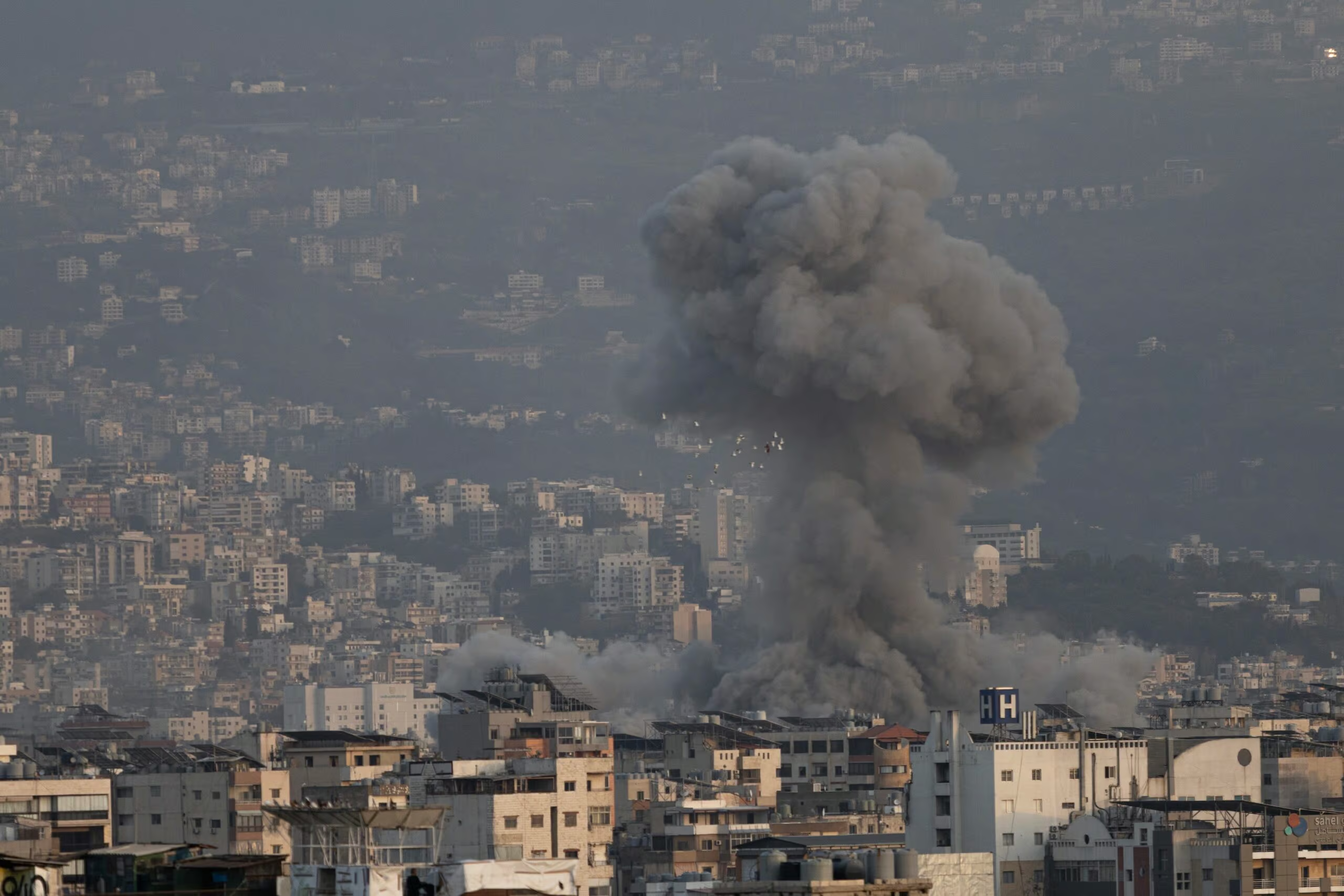
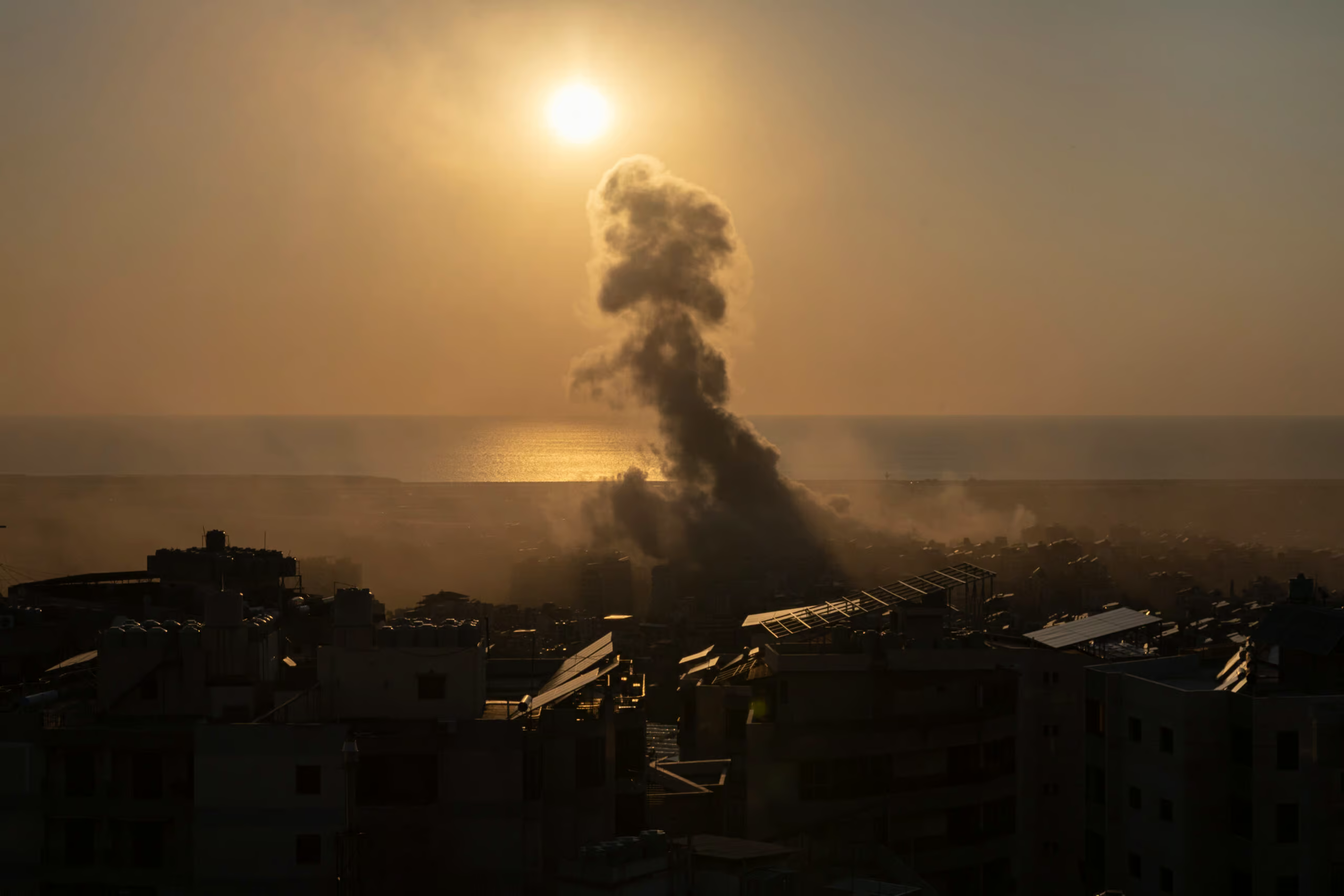
Before February 28, Lebanon was already suffering from a prolonged economic crisis and widespread food insecurity, with more than 874,000 people facing extreme hunger. The current conflict has exacerbated these challenges. Unabated airstrikes and unprecedented evacuation orders across the country have displaced more than 800,000 people – primarily from South Lebanon, the Bekaa and Beirut’s southern suburbs. Damage to health and essential services has placed further strain on displaced families and limited their access to food.
Gaza
Number of people facing extreme hunger: 1.6 million people
Number of people facing starvation: 100,000
For families in Gaza, this latest crisis has only brought more uncertainty. All crossings into the Strip closed on February 28, bringing humanitarian aid to a brief, abrupt halt. While the reopening of the Kerem Shalom crossing in southern Gaza offers some relief, consistent and unrestricted access is vital. More than 1.6 million people in Gaza – 77% of the population – still face crisis levels of hunger, including more than 100,000 people facing starvation. Famine was only pushed back in Gaza two months ago, and that fragile progress is now at risk as aid slows.
Afghanistan
Number of people projected to face extreme hunger: 17.4 million people
Number of malnourished mothers and children: 4.9 million
An escalation of conflict along Afghanistan’s western border could force large numbers of Afghan refugees to return from Iran. This surge in returnees would layer humanitarian needs onto an already dire crisis. For many, coming back to Afghanistan would mean poverty, unemployment, hunger and more instability. The conflict could also make food aid deliveries into Afghanistan more difficult and expensive. Disruptions to regional supply routes and potential border closures risk increasing transport costs and causing delays. WFP is doing everything it can to find alternative supply routes and reduce disruptions.
Syria
Number of people displaced: 10 million
Number of people facing severe hunger: Around 1 million
The escalation of conflict across the Middle East is deepening Syria’s displacement crisis. Tens of thousands of people are fleeing Lebanon for Syria — including 67,000 Syrians and more than 6,000 Lebanese returnees. Displaced families are crossing into Syria with little access to shelter, food or basic services. These movements are compounding an already massive displacement and hunger emergency in a country where millions remain uprooted after more than a decade of war.
Why Is the Cost of Oil Increasing?
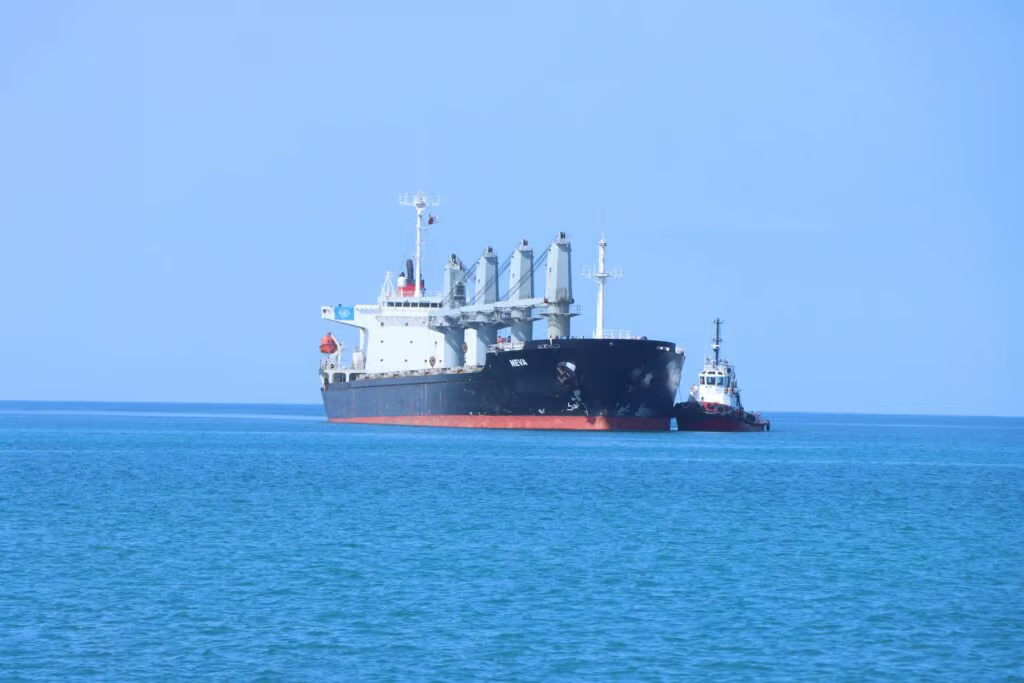
Oil prices are climbing because military activity in the Middle East is disrupting one of the world’s most important energy routes: the Strait of Hormuz. Roughly 20% of global oil and gas shipments pass through this narrow sea lane, but the strait is currently closed and commercial vessels are rerouting to avoid attacks and congestion. That’s making oil transportation longer and more expensive. A limited oil supply pushes prices up across the global economy, not only for fuel but also for delivering food and humanitarian assistance.
How Is the Middle East Conflict Causing Hunger?
Many countries surrounding Iran were already grappling with some of the world’s worst hunger emergencies and conflicts. Now, communities facing extreme food insecurity and poverty are at their breaking point. More instability will only push food further out of reach. In Gaza, many displaced people living in makeshift shelters and tents just survived brutal winter conditions only to face this new crisis. When the conflict began, food prices rose rapidly as families stockpiled what little food they could find and afford. In the span of two days, flour prices in Gaza increased by 270%.
The conflict is also causing a wider spike in global food prices. Disruptions to the Strait of Hormuz have affected fertilizer markets, which risks lower crop yields – hence higher food prices. Extended shipping routes and congestion are also jeopardizing WFP’s ability to reach vulnerable populations quickly and efficiently. Import-dependent countries in Africa and Asia face the highest risk with some countries experiencing a 24% rise in extreme hunger. If the conflict persists, 45 million more people around the world could be pushed into extreme hunger. This would push the total number of people experiencing extreme hunger to levels last seen at the start of the war in Ukraine.
“If this conflict continues, it will send shockwaves across the globe, and families who already cannot afford their next meal will be hit the hardest,” said WFP Deputy Executive Director and Chief Operating Officer Carl Skau. “Without an adequately funded humanitarian response, it could spell catastrophe for millions already on the edge.”
These devastating consequences are the most recent proof that conflict is the number one driver of hunger. Conflict forces people from their homes, destroys infrastructure, fuels inflation, and wipes out jobs. All of this makes it nearly impossible for people to find or afford enough food to survive. And children are always hit hardest: A child living in a country ravaged by conflict is more than twice as likely to be malnourished and out of school than their peers in peaceful settings.
What’s Being Done to Help Civilians in the Middle East?
WFP is on the ground, operational and scaling up lifesaving assistance across the region. No other agency can match WFP’s frontline operations and experience in emergency food assistance across the Middle East – whether Iran, Türkiye, Iraq, Syria, Lebanon, Jordan, Yemen, Gaza, Armenia or other impacted countries. Programming continues in all these countries, and WFP is ready to ramp up operations and respond rapidly as needs grow.
WFP first activated an emergency response in Lebanon as the number of people displaced from their homes skyrocketed. Within hours of shelters opening, they were on the ground — providing hot meals, ready-to-eat rations and bread to families who had nowhere else to turn. To date, WFP has assisted more than 240,000 displaced people in Lebanon with food and cash: Nearly 63,700 people in 251 shelters across Lebanon have received food assistance. In partnership with the government of Lebanon, WFP has activated emergency cash transfers for 192,300 people, prioritizing households from evacuated villages and areas with a high probability of being displaced or directly affected by airstrikes. WFP is also closely monitoring population movements from Lebanon into Syria and has started providing food assistance to around 24,500 newly displaced people.
Inside Iran, WFP has an ongoing operation to support Afghani refugees. In Gaza, WFP’s operations continue, but without sustained access, they will be forced to cut food rations to just 25% of daily nutrition requirements for 1.3 million people.
If the crisis continues, WFP will scale up. Within two weeks, they will have more warehouses, more routes to deliver food and more trucks on the road. If needed, they can operate their own flights to reach people through the WFP-managed United Nations Humanitarian Air Service. This is one of the most complex emergencies WFP has responded to in years, but they have the reach, expertise and logistics to keep food moving to people who urgently need it.
How Can I Help?
WFP remains operational, but its budget is stretched beyond limits. Funding shortfalls have already forced WFP to cut back assistance in many of the countries now affected by this recent escalation. WFP needs your support immediately to deliver meals to displaced families and keep their emergency response running. Please give your most generous gift right now to WFP’s lifesaving work in the Middle East.