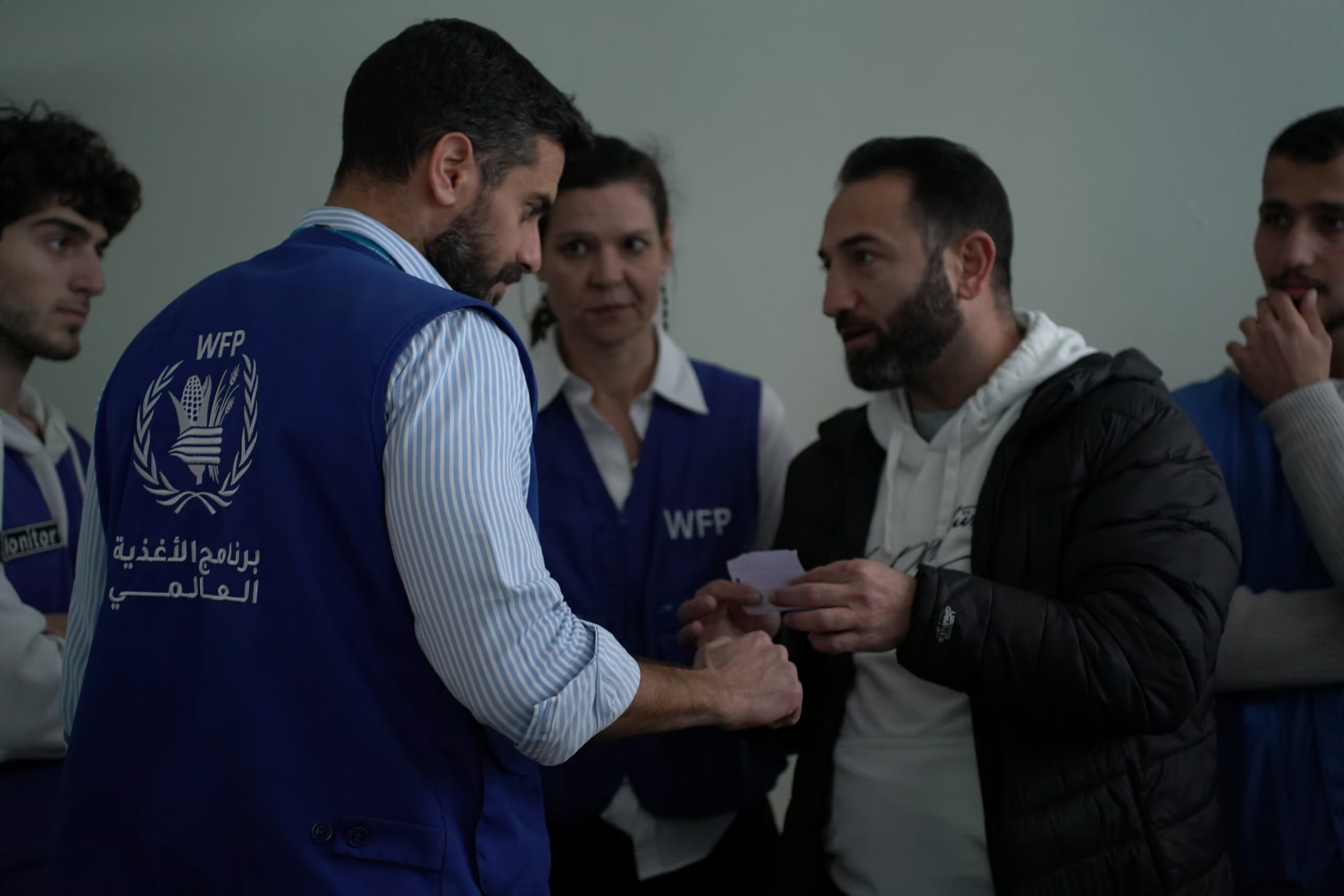
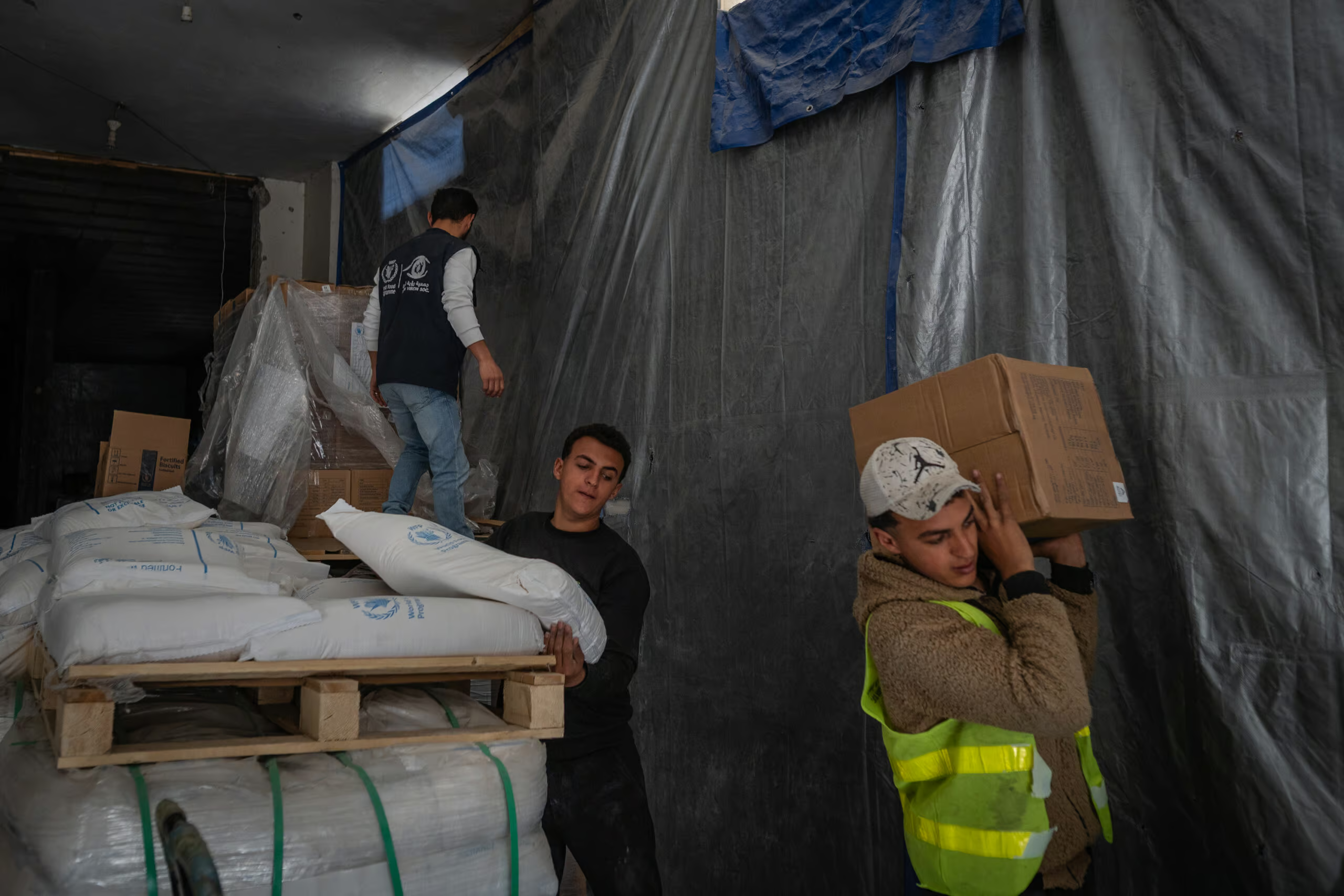
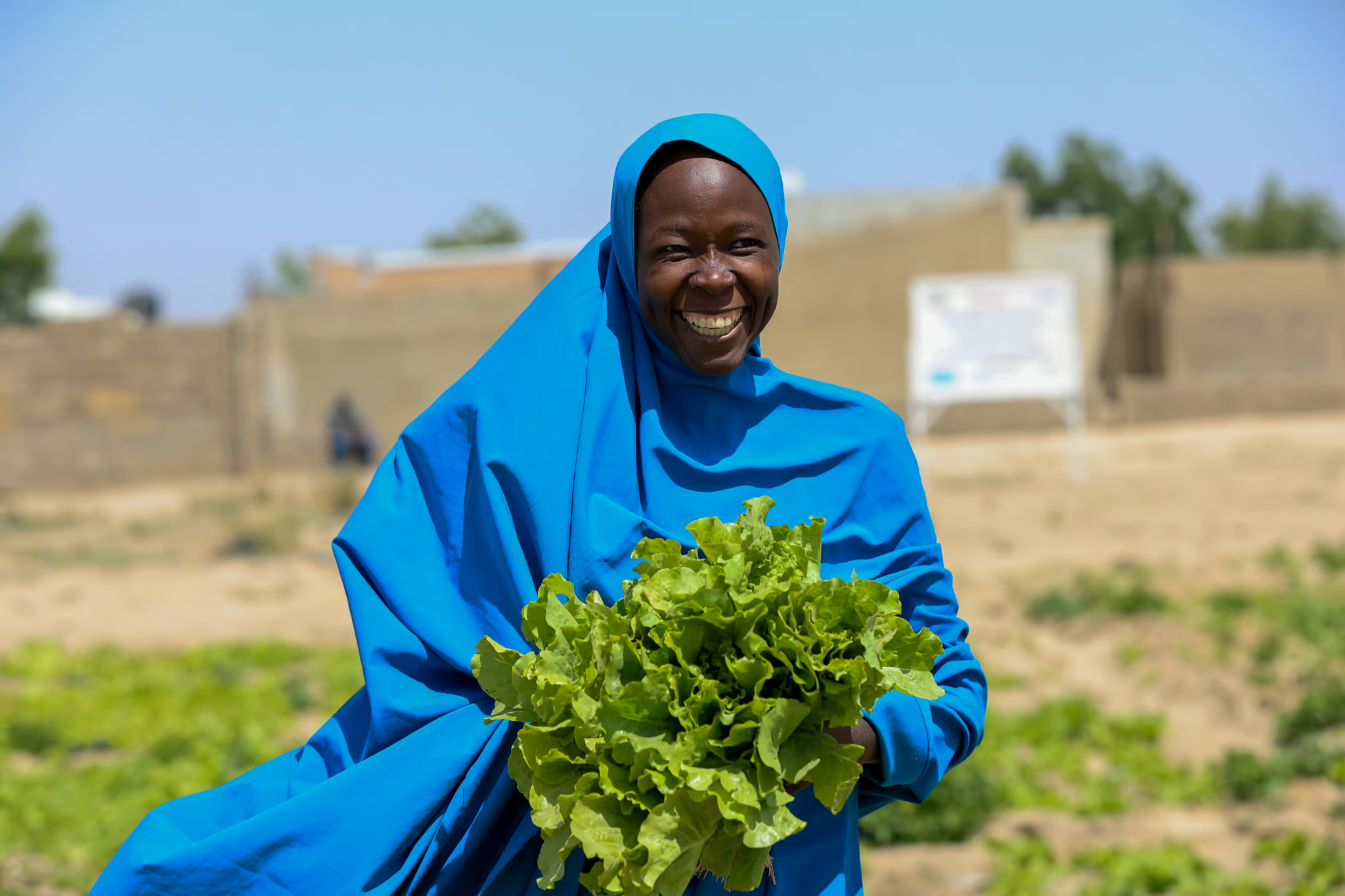
For more than 15 years, World Food Program USA and The UPS Foundation have partnered together to deliver food to those who need it most. Support from UPS and The UPS Foundation has helped the World Food Programme (WFP) advance innovation in its supply chain logistics and deliver lifesaving aid in more than 30 countries.
We recently sat down with Nikki Clifton, president of Social Impact and The UPS Foundation, to discuss our partnership, the importance of logistics in emergencies and how each of us can help build a world without hunger.
This transcript has been condensed and lightly edited.
BARRON SEGAR: The UPS Foundation supports many organizations and causes, with over $50 million invested in communities through grants, in-kind donations, sponsorships, and employee contributions. How does an organization like WFP fit into the vision and mission of the foundation and UPS as a company?
NIKKI CLIFTON: Our vision at The UPS Foundation is to deliver a more equitable and just world. That means bringing our scale, our scope and our reach to meet the world’s greatest needs, especially in moments where logistics saves lives. That’s why WFP is such a natural partner.
WFP is the U.N.’s lead logistics agency, and UPS is one of the world’s largest logistics leaders and a provider of supply chain solutions – so we speak the same language, right? Timely delivery, just-in-time operations, precision logistics. We also have the same ethos and obsession: making sure that we’re getting essential goods to the right place at the right time. Whether the roads are washed out, the power is down, or there’s no GPS to be found, our organizations know how to get the work done. And when tech fails, we have the muscle memory of people who know how to get it done.
You all are the Nobel Peace Prize Laureate, you are the platinum standard organization for impact and integrity. We choose partners who share our standards, our urgency and our commitment to dignity.
BARRON SEGAR: UPS recently renewed its support for the World Food Programme’s efforts in India, where we are working together — and with the government — to develop innovative approaches to food warehousing that reduces spoilage. These Smart Warehouses that UPS supports leverage cutting-edge technologies to improve monitoring and security, and the warehouses deployed so far have benefited more than 10 million people annually. Why is innovation like this so important to the work of The UPS Foundation?
NIKKI CLIFTON: Well, think about the number that you just described: 10.8 million people annually are supported because we were able to partner on a solution that has a lasting impact. That kind of work at scale is so important.
We are trying to really hone in on the things that matter most. When you think about tackling the root problem with the exact capabilities that UPS is built on — human capital, logistics expertise — that’s what makes me really proud to be a part of the Smart Warehouse solution. We’re looking at root problems, because there is enough food, there is enough grain. It’s about keeping it safe, keeping it away from the rodents and keeping it climate protected.
Our colleagues at our India Technology Center consult, co-design and help optimize. That helps you all and the end-user, but it also gives our employees an incredible sense of purpose beyond what they do every day.
I think equally important is the partnership with the public sector. When you can demonstrate a proof of concept that aligns with government priorities — safe, more reliable food systems — you can create a path to scale that is sustainable in partnership with governments that you need and want to support as a business engine.
WATCH: How Smart Warehouses reduce food losses through smart sensors and AI-enabled CCTV
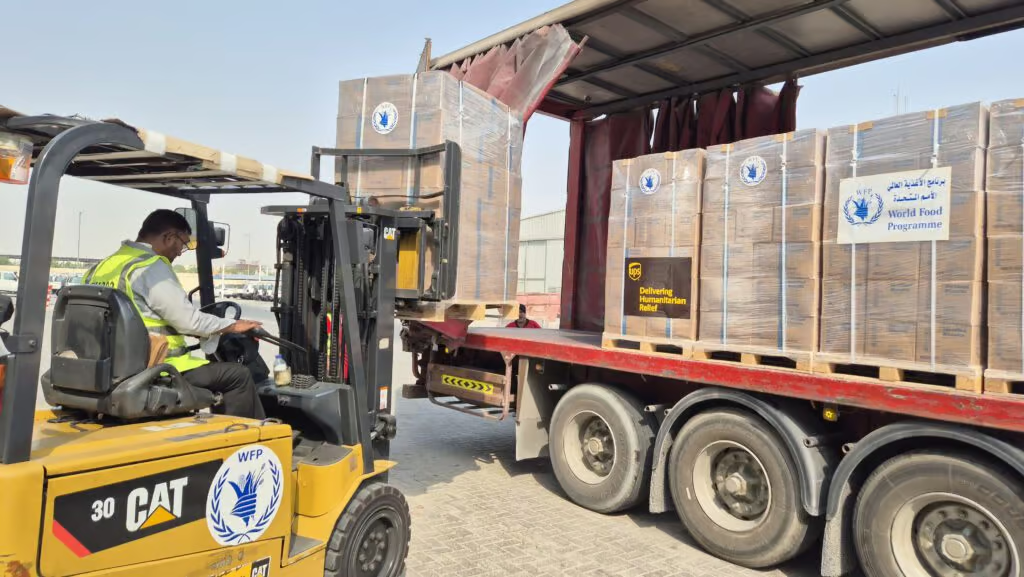
BARRON SEGAR: As I mentioned earlier, UPS has been a crucial partner in helping the World Food Programme in emergencies. Earlier this year, UPS helped WFP ship emergency biscuits to approximately 40,000 refugees entering Uganda. In just the last five years, UPS has airlifted over 730,000 pounds of lifesaving aid to at least nine countries, reaching more than 9.1 million people worldwide. We are so grateful for that support. What role do you think the private sector can play in responding to these types of humanitarian situations?
NIKKI CLIFTON: I think the private sector’s role is to use our scale, scope and reach and what we do best in partnership with your expertise. To make sure we are leveraging our planes and our trucks to get emergency supplies when it matters. Regardless of what business sector you’re in, understand what your secret sauce is and then listen to the experts to leverage those capabilities to save lives.
You mentioned an example of us supporting a WFP emergency shipment of High-Energy Biscuits (HEBs) for refugees arriving at border entry points. Why biscuits? These are nutrient dense, ready-to-eat food designed for people who have no utensils, no fuel, no storage. HEBs are truly a lifeline in those first hours and days. So the shipment is an example of how the private sector can turn operational strengths into lifesaving action, fast and at scale.
That’s the obligation that I think the private sector has – to use our infrastructure, networks and expertise to mobilize quickly.

BARRON SEGAR: Global hunger rates are simply alarming, but as we know, hunger is the world’s most solvable problem. What have you learned about hunger and the efforts to create a world without hunger that has made a lasting impact on you?
NIKKI CLIFTON: Reflecting on the statement that you just made — that hunger is a solvable problem. Why is that? We know that hunger isn’t inevitable, but in many places it’s a logistics problem. There is enough food in the world. The challenge is getting the right food to the right place at the right time and keeping it safe along the way. That’s why organizations like WFP and partners like UPS matter.
Everybody has a piece of the puzzle they can solve. I tell the team, we can’t boil the ocean, but we can work on our part, which is the logistics piece, and support nonprofits like you all who are the experts.
While these issues are complex, they are not without immediate actions that all of us can take. You can volunteer locally, support your food bank or mentor a young person. When each of us brings our piece — governments, NGOs, businesses, individuals — that picture starts to come together, and we can create a blueprint for a world where no one goes hungry.