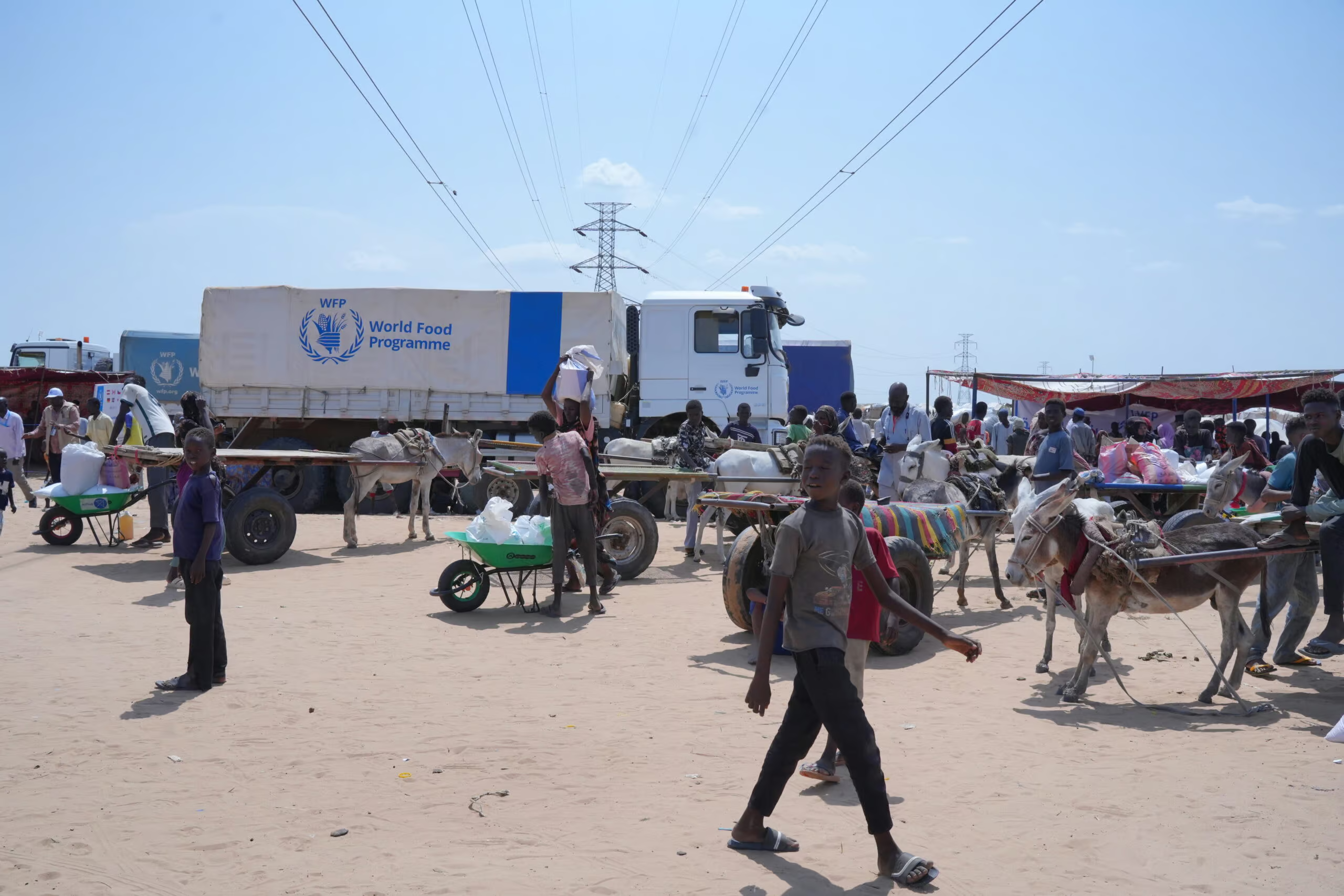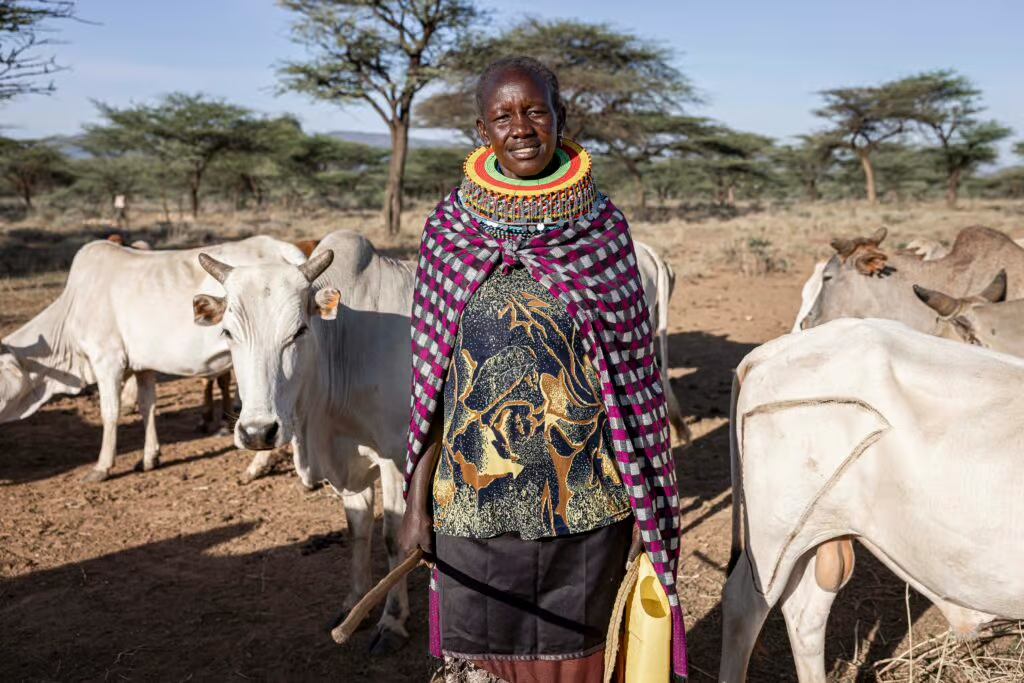
Since 2023, the Zoetis Foundation has supported World Food Program USA with grant funding to help the World Food Programme (WFP) connect livestock farmers and pastoral communities with the resources they need to withstand hunger, extreme weather and economic shocks.
The Zoetis Foundation’s partnership has helped WFP provide more than 150,000 people across Kenya and Ethiopia with access to livestock insurance and veterinary services to keep their animals healthy and safe and financial training to diversify their incomes. Thanks to the Zoetis Foundation’s continued support, this first-of-its-kind program expanded in 2025 to Somalia, in addition to a continued focus in Kenya.
We recently sat down with Jeannette Ferran Astorga, president of the Zoetis Foundation, to discuss how this innovative program helps support livestock farmers and advance long-term food security in their communities.
This transcript has been condensed and lightly edited.
Dorota Amin: How does an organization like the World Food Programme fit into the vision and mission of the Zoetis Foundation and the vision of Zoetis as the company?
Jeannette Ferran Astorga: When I think about the work you do at the World Food Programme, it is incredibly interlinked with our mission at the Zoetis Foundation and our commitment to supporting communities, especially in the areas of education and livelihoods.
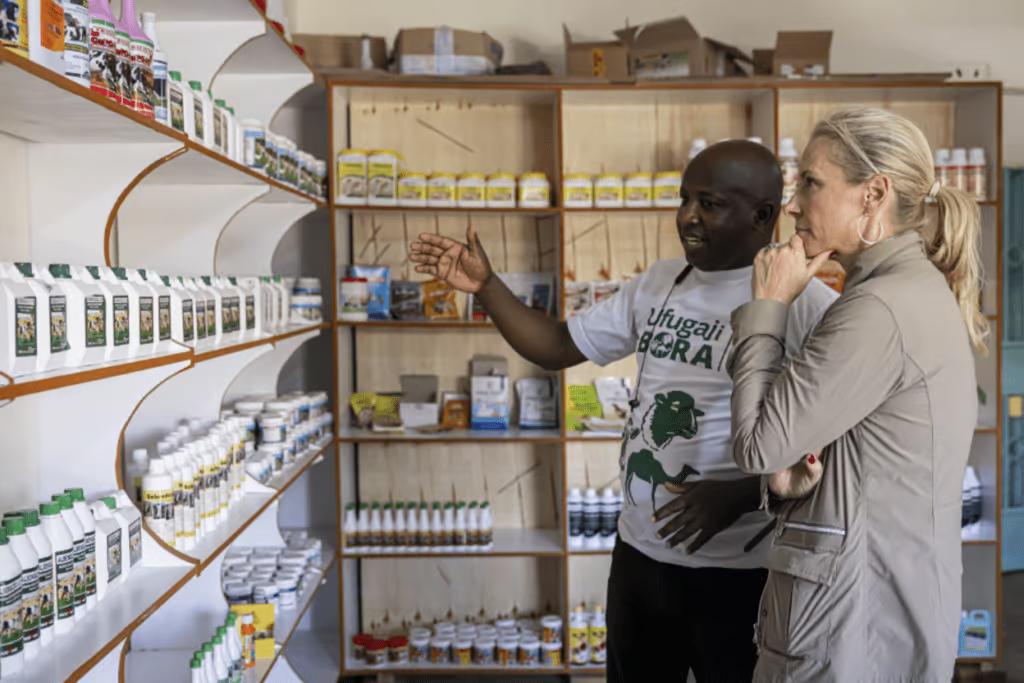
The Zoetis Foundation launched a focus on livelihoods because we know the importance of delivering veterinary services, especially in areas that are impacted by natural disasters and food insecurity. We felt we had an important role to play through the foundation’s grantmaking, and there is no better program than the World Food Programme to focus on the access that some of these communities need.
That’s particularly relevant when you think about the work that you have been doing through the World Food Programme in Africa: We know that Africa has one of the fastest growing populations globally, expected to surpass 2.5 billion by 2050. Ensuring producers have access to the tools, expertise and veterinary care they need to raise healthy livestock, while at the same time supporting local communities, is an opportunity for us to partner closely with your organization.
This is where veterinary care and animal health are so interconnected in uplifting communities and livelihoods. When you create access to veterinary care, you not only improve animal health and productivity, but you also impact the livelihoods of smallholder famers by creating an income stream, expanding local access to nutrition and offsetting the impact disease and animal loss can have on communities.
That’s why this approach we’ve designed together around improved veterinary services is so critical as we think about the needs of that community.
Dorota Amin: What excites you most about the program and how it serves farmers?
Jeannette Ferran Astorga: Your team has done an outstanding job on the ground, reaching over 150,000 livestock farmers during the time of our grant. The dedication of teams on the ground, which I had the opportunity to witness myself when we were in the region together, is profound. It’s having an impact on communities today and will have a lasting impact on communities for generations to come.
Two-thirds of the world’s extreme poor are living in Sub-Saharan Africa, and many are dependent on smallholder farming mechanisms as their main source of income. Keeping animals healthy and supporting their livestock, that’s providing up to 45% of their family’s income. They are also raising crops and managing other programs in their communities, but livestock plays a pivotal role in terms of income and people’s ability to advance the next generation, helping some mothers send their kids to school as a result. Your team has been instrumental in helping us deliver an integration of veterinary services in very remote areas that are far from any sort of village or organized veterinary service center.
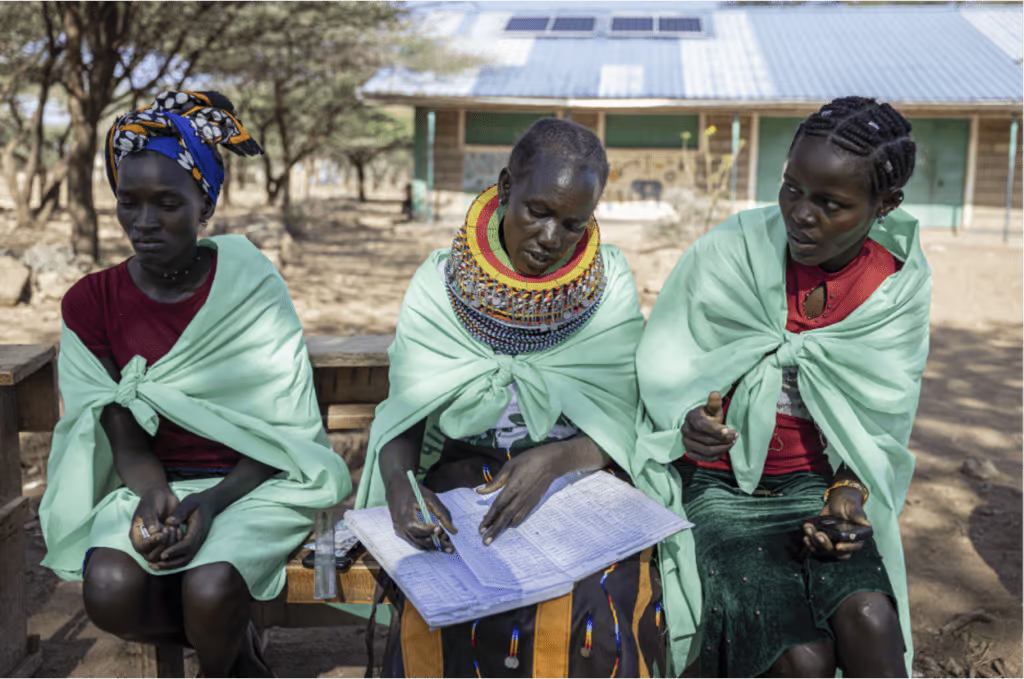
What I was able to see together with you, Dorota, is the community disease reporter network that this grant has also been able to deliver. The network has helped farmers access veterinary care and anticipate and prepare for when there could be disease outbreaks that affect their communities. I think the access to these community disease reporters in these very remote areas has been an instrumental part of the impact of this grant. That is in addition to some of the insurance programs and financial literacy trainings that have also been delivered on the ground.
The work we’ve done together has helped bring critical access to veterinary services to some of the most hard-to-reach areas in these poverty-stricken regions.
Dorota Amin: What surprised you the most during the visit? What moment has stayed with you the most?
Jeannette Ferran Astorga: We traveled to areas I never thought I’d have an opportunity to see firsthand — these incredibly beautiful, remote villages where community is everything — and we were able to sit together with female livestock producers, hand-in-hand, arm-in-arm, as they met to talk about increasing their financial literacy and understanding of disease preparedness. We were able to engage directly with the community disease reporters.
It was beautiful to be welcomed into their homes and see the work they are doing every day to provide for their families and raise their livestock in the healthiest way possible. But what was profound to me was hearing their stories – stories of financial independence, veterinary care, disease prevention and preparations for their children to have access to education. It was profound to see this impact on the ground and know it will continue for generations to come.
Dorota Amin: Zoetis has customers all over the world. What would you like them to know about initiatives like this one and the broader environmental and social impact Zoetis creates with its partners?
Jeannette Ferran Astorga: At its core, Zoetis is incredibly committed to our customers globally, and we know that when you are in the livestock production business, it is incredibly important to manage, anticipate and prevent, where possible, disease. It becomes even more acutely apparent when you are in some of the most remote parts of the world where access to veterinary care is even more challenging.
For us, it’s been a privilege to work through the Zoetis Foundation to provide critical access to veterinary care that ultimately can have a tremendous impact on the livelihoods of a community of producers – and importantly, female producers, especially as we saw firsthand.
Having our customers at the center of everything we do is the motto we live by every day. It is even more impactful to not only deliver the products but also, through our foundation, provide access to the services, the capabilities, and the expertise that wouldn’t normally be available to a lot of these producers.
It’s my honor to serve as the president of the Zoetis Foundation, and I’m privileged to serve with other leaders across the organization, including our chief medical officer and other leaders who know firsthand the value of providing access to veterinary care and the impact of animal health. We have seen incredible impact to date, and we know this work will have a lasting effect. I’m excited to see how these communities can continue to be resilient and thrive.
###
To learn more about our partnership with the Zoetis Foundation, visit wfpusa.org/organization/zoetis-foundation/