The latest World Food Program USA Statement of Impact covers the United Nations World Food Programme’s response to humanitarian emergencies and work disrupting the root causes of hunger. Below are highlights from the report.
The State of Hunger in 2024

In Kenya, Farhiya Abdullahi prepared a meal with the rice provided by WFP for her daughter Johori Abrahaman.
In 2024, more than 300 million people faced the uncertainty of where their next meal may come from. Conflicts, the effects of the climate crisis and economic shocks eroded people’s access to food and economic opportunities.
WFP Kept Focus on Emergency Settings
Conflict is the main driver of today’s hunger crisis. War displaces people from their land and livelihoods, disrupts food systems and increases food prices. The devastating impact of conflict can be seen in places like Gaza, Sudan, the Democratic Republic of Congo, Ukraine and Yemen. Nearly 80% of WFP’s time and resources are allocated to crisis settings, where WFP helps restore people’s access to food by providing hot meals, ready-to-eat rations, cash and nutrition support.

Suliman and Nour Azab, along with their four children, have been displaced more than three times. Everyone in Gaza is hungry and struggling to find food, water, shelter and other necessities.
WFP Bolstered Food Systems in Sudan and Ukraine
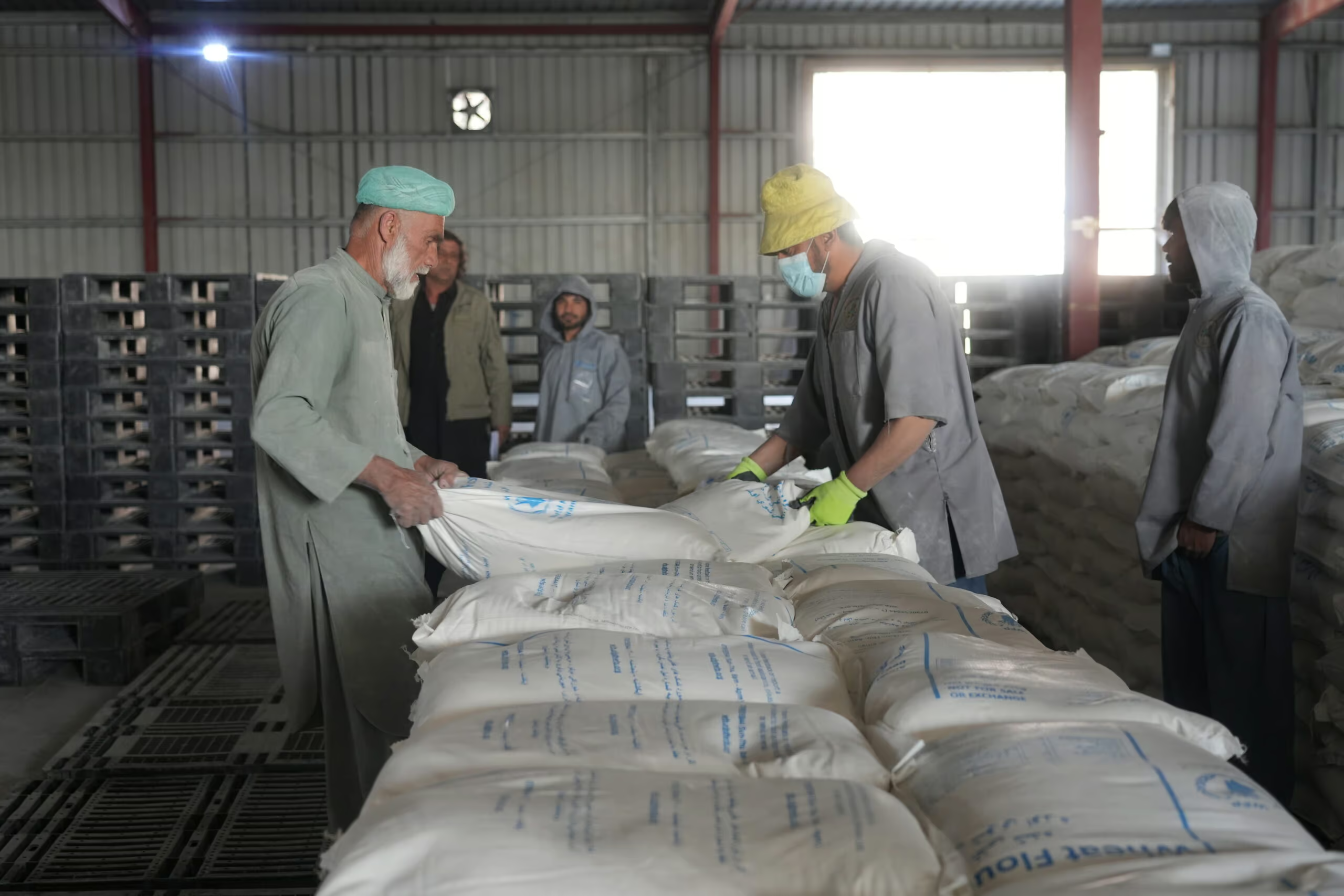
In Sudan, violent conflict has triggered the world’s largest hunger crisis, with over 24 million people—more than half the population—facing acute hunger. The country’s agricultural sector, a breadbasket for Africa, has been shattered as the conflict destroyed farmland and displaced farmers. To mitigate the war’s impact on agriculture, WFP supported the Sudan Emergency Wheat Production Project which provided 171,000 small-scale farmers with climate-resilient seeds, fertilizers, and equipment. These efforts have led to a 70% increase in wheat production, providing a critical lifeline for communities facing severe levels of hunger.
Through the Grain from Ukraine Initiative, WFP has sourced crops from farmers in Ukraine for its global operations. Through this initiative, WFP has transported 623.9 million pounds of food products for its emergency food assistance in hunger hotspots like Gaza, Sudan and Yemen. By purchasing food from farmers, WFP is supporting food systems in Ukraine and the local economy. Since March 2022, WFP has injected more than $360.7 million into the Ukrainian economy.
School Meals Change Lives for Students Like Hapsa
In places like Malawi, Madagascar and Haiti, WFP supports school meals programs. These daily meals improve school enrollment and attendance. School meals programs not only benefit students but also strengthen local food systems and improve community resilience. Through its homegrown school meals program, WFP connects local farmers with schools to ensure farmers have a reliable and consistent market for their crops and schools receive fresh, nutritious food for their meals.

Hapsa, 14, can focus on her teacher’s lesson due to the WFP-supported homegrown school meals program. Since 2021, Hapsa’s mother Matrida has been part of a cooperative that supplies food to schools including vegetables, beans, groundnuts, corn and rice. Matrida said, “The food I supply to schools has contributed to improving children’s nutrition and school attendance, including for my own children.”
In 56 countries, WFP sources food for school meals programs from local small-scale farmers. In Malawi, over 250,000 students received daily hot meals through WFP. These meals serve as an incentive for parents to send their children to school: For families, the value of school meals is equivalent to about 10% of their household income, allowing for substantial savings.
Thank You to Our Community of Supporters
The dedication of our supporters makes this work possible. We hope that this report can connect you to the people impacted by WFP’s work. Your support makes all the difference as we work towards our mission to end hunger.
Read the full report to review other highlights and learn more about the transformational impact of WFP’s work.