Government of Bangladesh and WFP Working Together to Lift Rural Women Out of Extreme Poverty
With an investment of $72 million, the Government is set to reach 100,000 women with livelihood training, behavior change education and food assistance.

With an investment of $72 million, the Government is set to reach 100,000 women with livelihood training, behavior change education and food assistance.

This first-of-its-kind data exchange involves IOM’s BRaVE and WFP’s SCOPE systems, which will improve efficiency in the delivery of assistance.

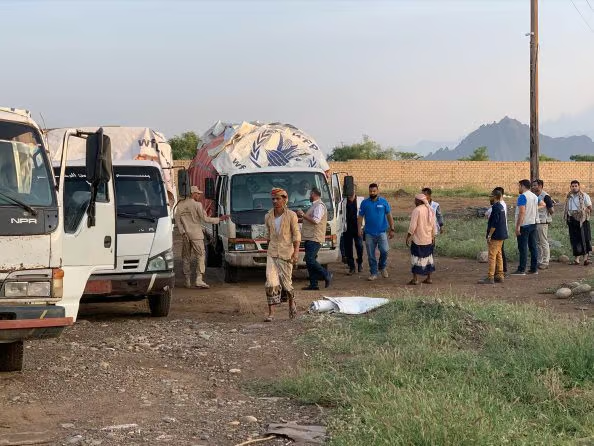
The decision was taken as a last resort after lengthy negotiations stalled on an agreement to prevent the diversion of food away from some of the most vulnerable people in Yemen.
“WFP USA has an incredibly strong team, committed to supporting WFP’s efforts and to making a difference in the fight against hunger. I am honored to call them colleagues and lead them through this important transition,” said Karsting.

Three UN agencies warn that 61% of the population – the highest rate ever – is projected to face crisis levels of food insecurity or worse by the end of July.

World Food Program USA announced today that its founding president and CEO, Richard (Rick) Leach, will be stepping down from leadership of the organization at the end of July.

The 400-foot long bridge will connect tens of thousands of people and is key not only for humanitarian operations but is expected to boost farm-to-market access and commercial activities in the region as well.

Recent results from WFP’s food security analysis show that WFP food assistance has lifted more than one third of targeted refugees above the national income poverty line and has significantly contributed to their food security status.

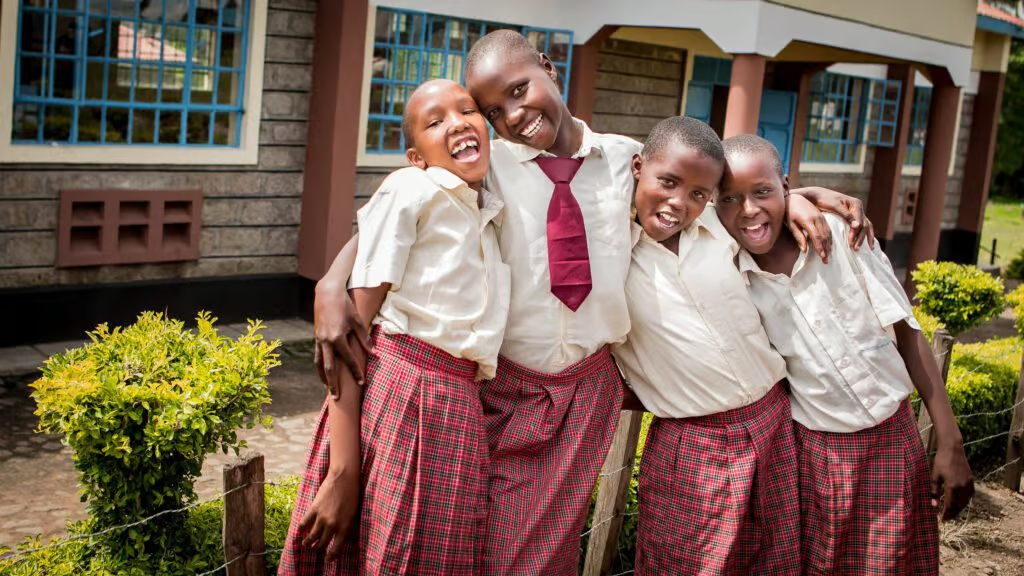
“We know that for every U.S. dollar invested, the economic return is more than six dollars in improved health and educational outcomes. Also, children who receive school meals tend to stay in school one year longer than those who don’t,” said U.S. Ambassador Rena Bitter.

The impacts of conflicts, natural disasters and crop failures are not ‘gender neutral’. Gender considerations are critical to humanitarian action as crises impact the lives of women and men, girls and boys in different ways.