YANGON – As Myanmar marks one year since the devastating earthquake last March, the World Food Programme (WFP) warns that communities struggling to rebuild are now being hit by renewed hardship: The effects of the ongoing Middle East crisis on fuel, food and fertilizer prices are pushing vulnerable families closer to hunger.
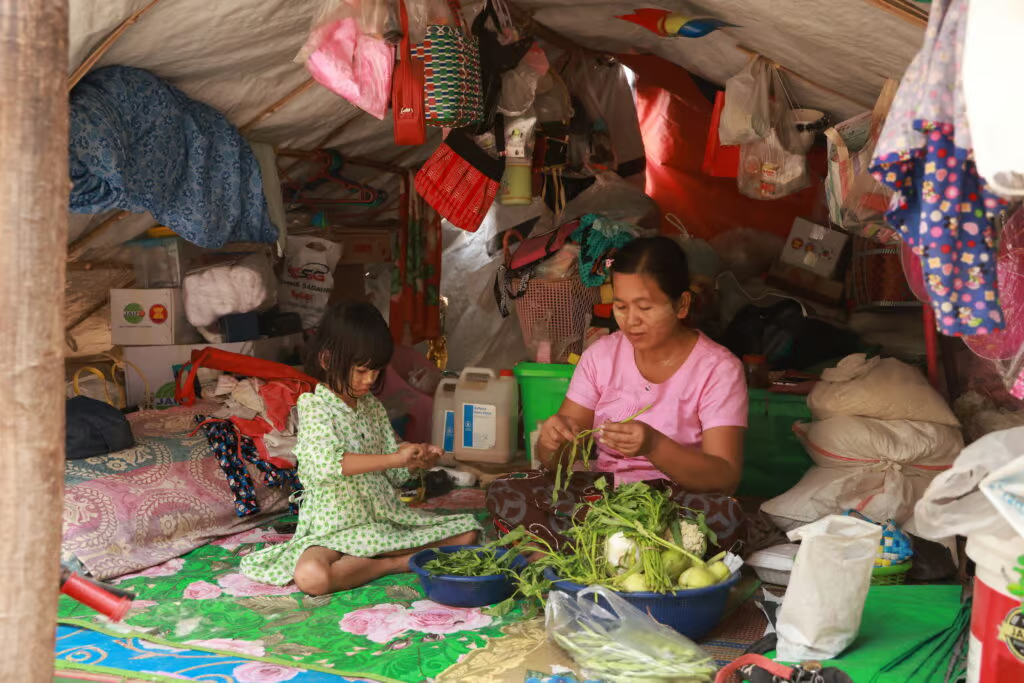
WFP’s latest monitoring shows a fragile recovery from the earthquake. In the affected regions of Sagaing and Mandalay, one in six households continue to face moderate to severe food insecurity. Half of all families remain only marginally food secure – surviving day to day and unable to absorb even the smallest shock. That additional shock is now taking starting to be felt.
“People who survived the earthquake have barely begun to stand again, and now another blow is knocking them back down,” said Michael Dunford, WFP country director and representative in Myanmar. “This new wave of global instability is hitting Myanmar at the worst possible moment.”
The conflict in the Middle East is disrupting transportation and driving fuel shortages across Myanmar. Rising fuel prices are pushing up the cost of moving food and agricultural goods, placing additional strain on households already struggling to afford basic staples.
The crisis is also striking Myanmar’s farmers as they prepare for monsoon crops. With fertilizer demand expected to rise over the next three months, fuel shortages and rising input costs are threatening to push production expenses to double last year’s levels.
These compounding shocks are expected to hit hardest in conflict- and earthquake-affected areas, such as Chin, Kachin, Kayah, Rakhine, Sagaing and Shan, worsening hunger in a country where 12.4 million people – nearly one quarter of the population – are already facing acute hunger.
Over the past year, WFP reached half a million earthquake survivors with relief and recovery support. WFP has now transitioned from emergency relief to restoring community infrastructure that provides long-term stability.
WFP needs $150 million in funding for 2026 to assist 1.5 million people across the country with lifesaving assistance and resilience support. Without sufficient funding, WFP will be forced to prioritize the most urgent lifesaving needs, potentially scaling back recovery efforts that help earthquake survivors rebuild livelihoods and reduce long-term dependence on aid.
“The people of Myanmar have endured shock after shock — conflict, climate disasters, the devastating earthquake and now a global fuel crisis,” Mr. Dunford warned. “We must stand with them now. One year after the earthquake, they cannot afford another fall.”
About WFP
The World Food Programme is the 2020 Nobel Peace Prize Laureate and the world’s leading humanitarian organization, saving lives in emergencies and using food assistance to build a pathway to peace, stability and prosperity for people recovering from conflict, disasters and the impact of climate extremes.
Follow us on X, formerly Twitter, via @wfp_media @WFPAsiaPacific
This article was originally published on wfp.org