Mozambique
Rebuilding After Disaster
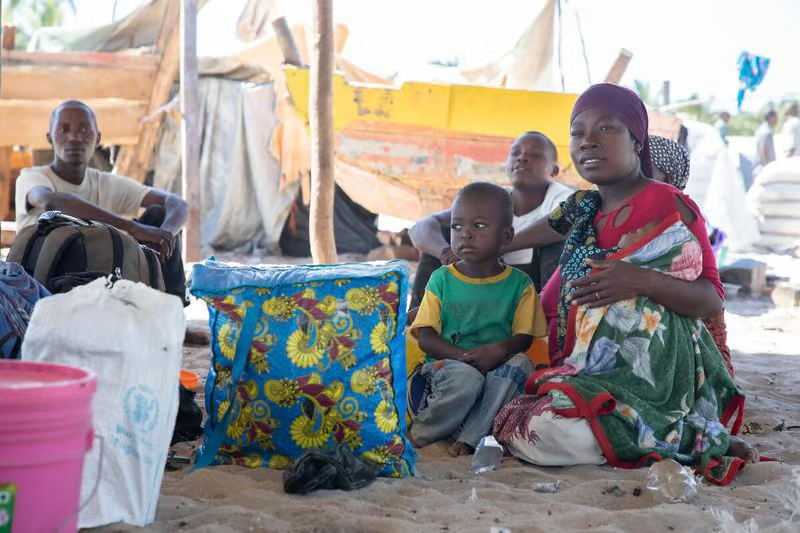
Mozambique is facing overlapping food-security shocks from conflict, repeated climate disasters, high food prices, and deep poverty.
Make a difference in Mozambique
Hunger Stats
2.7M
people in Mozambique are extremely hungry
37%
of children under the age of 5 are malnourished
82%
of the population live in extreme poverty
Mozambique Facts
New York
Show Places

New York
×
Geocoding Error Occured.
Tried to Geocode:
Error Type:
Please be sure to follow the tutorial on how to setup the Google APIs required for the Advanced Google Map Widget.
Google Map API Key Tutorial
Population: 34 million people.
Background: Mozambique gained independence in 1975. The country experienced a prolonged civil war between 1977 and 1992 that followed independence and severely affected political stability and development. It continues to face political tensions and periodic insecurity, particularly in recent years.
Geography & Climate: Mozambique is a large country in southeastern Africa, with a long coastline along the Indian Ocean. The country has a predominantly tropical climate, characterized by a hot, rainy season and a cooler, drier season, with conditions varying by region and along the coast.
Economy: Mozambique’s economy is largely agricultural, with farming supporting a significant share of the population. Despite fertile land and natural resources, food production is frequently disrupted by climate shocks, such as cyclones, floods and droughts, as well as conflict‑related displacement and limited access to markets and infrastructure. As a result, many households remain vulnerable to food insecurity and increasingly rely on markets to meet their food needs.
Causes of Hunger in Mozambique
Conflict
Armed conflict in Cabo Delgado has displaced large numbers of people and disrupted farming, markets, schools, and health services. OCHA estimates 945,000 people are internally displaced by the conflict, while WFP continues food assistance for conflict-affected households in the north. Displacement often means families lose land, crops, livestock, jobs, and access to normal food markets.
Climate Shocks
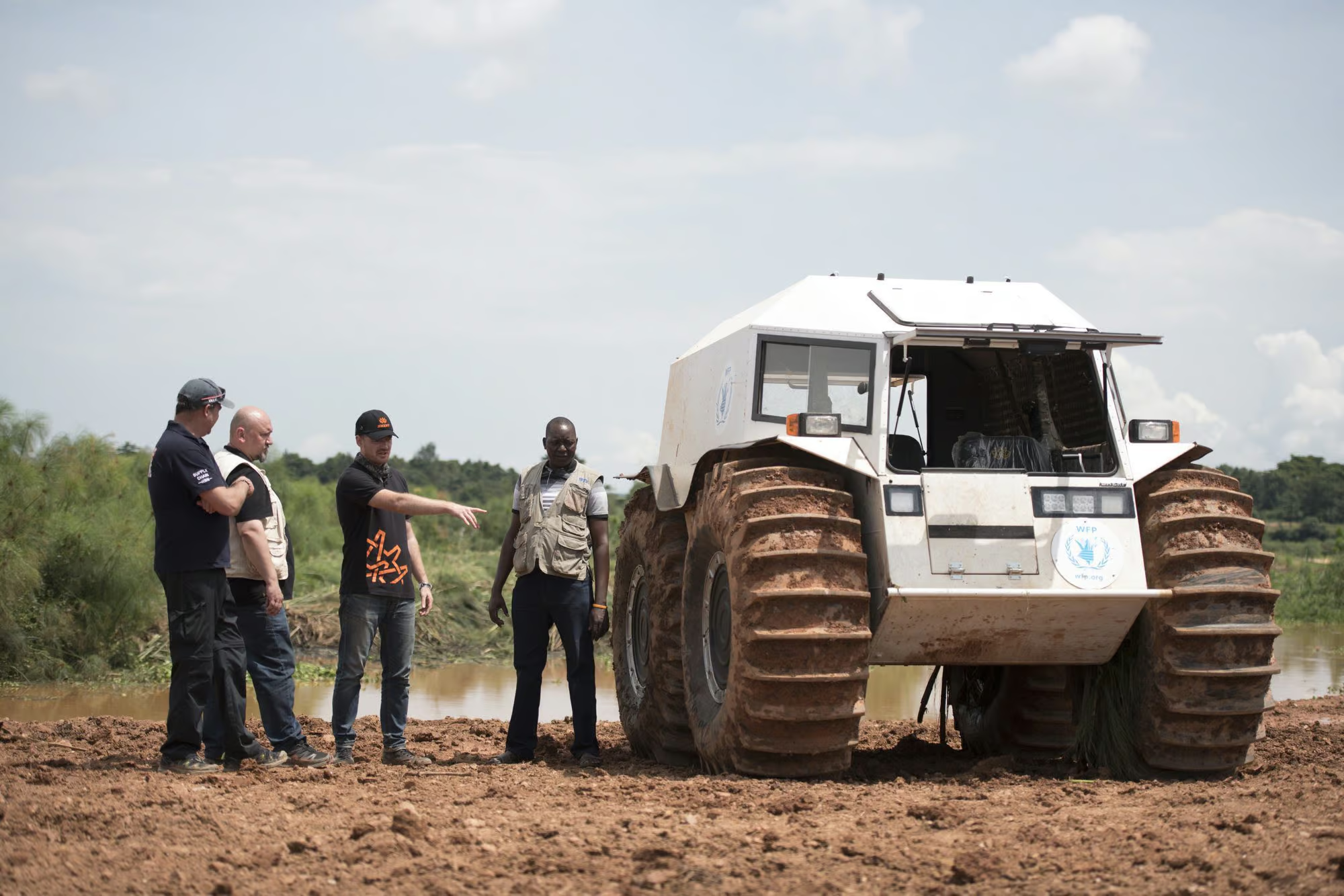
Mozambique is highly exposed to cyclones, floods, droughts, and erratic rainfall. Cyclone Chido struck in December 2024 and affected nearly 454,000 people, while WFP later scaled up food assistance after severe floods left families stranded soon after the country’s worst recent drought. These shocks destroy crops, damage homes and roads, contaminate water sources, and push food prices higher.
Poverty
Deep poverty limits families’ ability to buy food, recover from shocks, or invest in seeds, tools, irrigation, and livestock. Growth remains fragile, with limited job creation and weak non-extractive growth. Since much of the population depends on low-productivity agriculture, a bad harvest can quickly become a hunger crisis
History of Hunger in Mozambique
1977-1992
Mozambique’s post-independence civil war devastated transport routes, schools, health facilities, and rural livelihoods. The war left long-term effects on poverty, displacement, and agricultural recovery.
2000-
Severe floods triggered a large humanitarian response; WFP launched an emergency operation providing 53,000 metric tons of relief food and food-for-work assistance for 650,000 flood-affected people.
2017-Present
Violence in northern Mozambique began in 2017 and has repeatedly displaced civilians. WFP has warned that displaced families often abandon crops and become dependent on humanitarian assistance.
2019-
Cyclones Idai and Kenneth caused massive destruction across central and northern Mozambique, killing hundreds and leaving about 2.2 million people in urgent need. WFP provided food assistance to more than 625,000 people in affected provinces.
2023-
Cyclone Freddy, floods, and cholera created a “triple crisis,” with OCHA reporting 1.1 million people affected and urgent assistance needs for hundreds of thousands. Disease and flooding threatened food access, clean water, and nutrition.
2024-2026
Intense drought, followed by Cyclone Chido and later severe floods deepened humanitarian needs. WFP assisted 2.64 million people in 2025 and scaled up support in 2026 for flood-affected families.
WFP’s Response in Mozambique
WFP is doing whatever it takes to reach people who are in desperate need of food and other lifesaving assistance.
Humanitarian Response
Due to limited resources, WFP is providing food rations every other month to people affected by the conflict in northern Mozambique, through both food and cash-based assistance. In 2025, funding shortfalls forced WFP to further scale down its support from 1 million people in 2024 to 345,000. In addition, WFP assisted 118,000 people affected by cyclones and an additional 250,000 food-insecure people affected by the El Niño-induced drought in central and southern provinces during the 2024–2025 season.
School Meals
WFP supports the Government’s National Homegrown School Meals Program, providing hot meals to over 250,000 students in 340 schools in 2024. Complementary WFP-run programs reach an additional 110,000 students across 140 schools, and boxes of dry food are distributed in emergency and recovery settings to ensure children’s access to nutritious meals after shocks.
Climate Resilience
WFP promotes sustainable agriculture, climate solutions, financial inclusion and disaster risk financing, to help communities adapt to extreme weather. In 2024, more than 10,000 farmers, over half of them were women, adopted climate-smart farming techniques, and 34,000 received training in post-harvest management, including the use of low-cost technologies such as airtight storage bags.
Latest News From Mozambique
- News Release
- February 28, 2025
- News Release
- February 6, 2022
- News Release
- July 6, 2021